Why are Kashmiri Hindu groups in the US renewing their justice call on Exodus Day?
Synopsis
On January 19, Kashmiri Hindu advocacy groups in the US reiterated their demands for justice and rehabilitation, marking Exodus Day. The day serves as a reminder of the ethnic cleansing faced by the community and their ongoing struggle for recognition and restitution.
Key Takeaways
Kashmiri Hindu groups are advocating for justice and rehabilitation.
January 19 is recognized as Exodus Day, marking their historical displacement.
Claims of ethnic cleansing are central to their narrative.
Community leaders emphasize historical truth over fabricated narratives.
Restitution of properties sold under distress is a major demand.
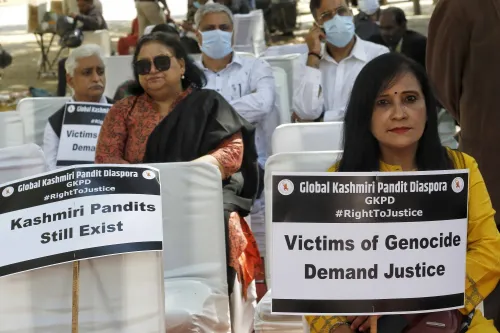
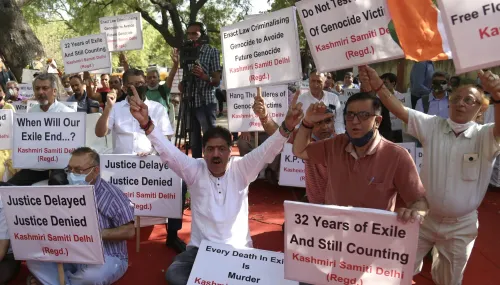
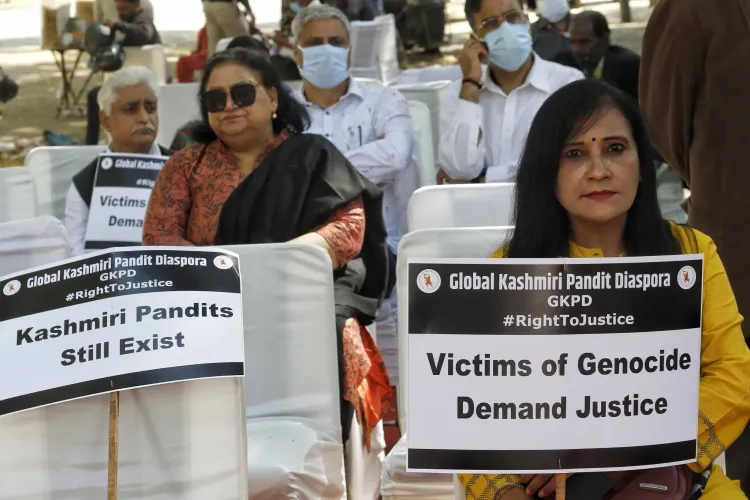
Washington, Jan 20 (NationPress) Kashmiri Hindu advocacy organizations in the United States have once again emphasized their demand for justice, restoration, and secure rehabilitation of their community, commemorating January 19 as Exodus Day.
The Kashmir Hindu Foundation and Panun Kashmir issued a statement highlighting this date as a stark reminder of the systematic displacement endured by Kashmiri Hindus from the Valley.
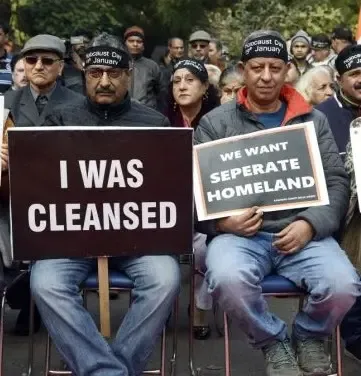
According to the groups, January 19 represents a deliberate and sustained process of ethnic cleansing that displaced an indigenous population. They stated that Kashmiri Hindus lost not just their homes but also their roots and civilizational identity.
They criticized what they termed as symbolic gestures, selective amnesia, and tourism-driven narratives, asserting that these are insufficient responses.
Sunanda Vashisht, a writer and political commentator and Chairperson of the Jonaraja Institute of Genocide and Atrocities Studies, remarked that these crimes should not be viewed as a single historical event.
"Genocide is not merely an event; it is a process aimed at eradicating or significantly undermining specific identity-based groups perceived as threats to the offenders' identity or dominance," she stated.
Dr. Agnishekhar, Convener of Panun Kashmir, asserted that the return and rehabilitation of displaced Kashmiri Hindus can only be achieved through the implementation of the Margdarshan Resolution by the Government of India.
He added that any other approach fails to address the political, security, and civilizational dimensions of the situation.
Nitin Dhar, representing the Panun Kashmir Youth Wing, dismissed the narrative of "Kashmiriyat," asserting that Kashmir traditionally adhered to a distinct civilizational and cultural ethos known as "Kashmir Deshachar," which has been destroyed over time.
He emphasized that fabricated narratives cannot alter historical truths.
Deepak Ganju, founder of the Kashmir Hindu Foundation, called for all movable and immovable properties sold by displaced Kashmiri Pandits since 1989 to be officially recognized as distress sales.
He insisted that these transactions should be declared null and void, and rightful ownership should be restored based on land records.
KHF President Anit Monga also demanded a comprehensive ban on the acquisition or encroachment of abandoned properties.
The groups articulated that justice, restitution, and secure rehabilitation are both constitutional and moral imperatives. They urged India, civil society, and the international community to acknowledge the genocide and take decisive steps to facilitate the dignified return of Kashmiri Hindus.
Point of View
It is crucial to recognize the historical and ongoing struggles faced by Kashmiri Hindus. Their call for justice is rooted in a significant past that deserves acknowledgment. It is imperative for society and the government to engage constructively in addressing these issues to foster healing and reconciliation.
NationPress
22 Sept 2026
Frequently Asked Questions
What do Kashmiri Hindu groups in the US demand?
They demand justice, restoration, and secure rehabilitation for the displaced community, as well as acknowledgment of the genocide they faced.
Who are the key organizations involved?
The Kashmir Hindu Foundation and Panun Kashmir are the primary advocacy groups leading the calls for justice.
What is the Margdarshan Resolution?
The Margdarshan Resolution is a proposal for the rehabilitation and return of displaced Kashmiri Hindus, advocated by community leaders.
Why do they reject the narrative of 'Kashmiriyat'?
They believe that 'Kashmiriyat' undermines the distinct cultural identity of Kashmiri Hindus, which they argue has been historically overlooked.