J&K L-G Manoj Sinha champions nature-based solutions for Himalayan climate resilience
Synopsis
J&K L-G Manoj Sinha used an IUST conference in Srinagar to sound a stark warning: the Himalayas recorded a natural disaster almost every day between January and August last year. His call to embed nature-based solutions — from watershed management to wetland conservation — into mainstream development planning signals a policy shift that could reshape how the region responds to accelerating climate risk.
Key Takeaways
J&K L-G Manoj Sinha addressed the IUST conference on Himalayan climate resilience in Srinagar on 3 August .
The Himalayas recorded a natural disaster nearly every day between January and August last year, according to Sinha.
Flash floods and cloudbursts in Jammu & Kashmir damaged roads, water supply schemes, and power feeders.
The Green Jammu Kashmir Drive launched in 2020 reportedly raised forest cover to nearly 55 per cent .
Sinha inaugurated the Civil and Mechanical Engineering Block , Larmoo Campus , and Law School at IUST.
He called for nature-based solutions to be taught as a multidisciplinary subject spanning ecology, engineering, economics, and traditional knowledge.
Jammu & Kashmir Lieutenant Governor Manoj Sinha on Monday, 3 August called for placing nature-based solutions at the heart of development planning to build climate resilience across the Himalayan region. Speaking at a conference organised by the Islamic University of Science & Technology (IUST) in Srinagar, Sinha warned that the pace of climate change in the Himalayas had reached an alarming threshold, with the mountain range recording a natural disaster nearly every day between January and August of last year.
Key Developments at the IUST Conference
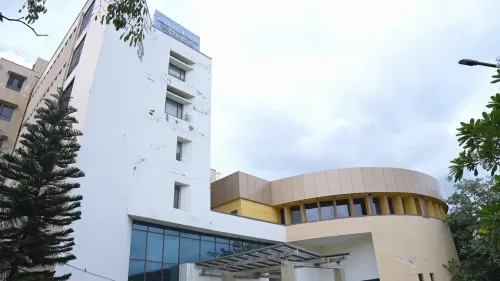
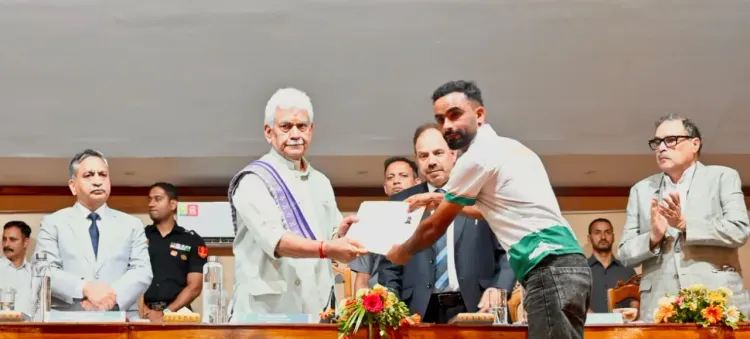
The conference, themed Strengthening Climate Resilience and Livelihoods in the Himalayan Region through Nature-based Solutions, brought together scientists, domain experts, and policymakers. On the sidelines, L-G Sinha inaugurated the Civil and Mechanical Engineering Block at IUST's main campus, the Larmoo Campus, and the university's Law School. He also commended IUST for its policy brief supporting the Drug-Free Jammu Kashmir campaign.
The Climate Crisis in Jammu & Kashmir
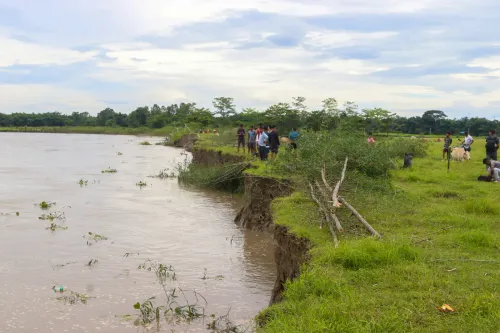
Sinha cited the severe impact of extreme weather events on Jammu & Kashmir specifically, noting that flash floods and cloudbursts have repeatedly damaged public infrastructure — disrupting roads, water supply schemes, and power feeders. He argued that natural systems are themselves a form of infrastructure: watersheds function as flood-control mechanisms, wetlands act as reservoirs, and dense forests stabilise mountain slopes.
'When we destroy these natural systems, we are playing with the future. But when we conserve and restore them, we are investing in a bright future,' Sinha said. He stressed there is no contradiction between development and conservation, framing ecological preservation as an economic and safety imperative.
What the L-G Urged Universities and Scientists to Do
Sinha called on academic institutions to elevate nature-based solutions into a multidisciplinary subject, integrating ecology, hydrology, engineering, economics, disaster management, and traditional knowledge. He urged scientists and domain experts to ensure these approaches are embedded in mainstream development planning rather than treated as peripheral concerns.
Recalling the Green Jammu Kashmir Drive launched in 2020, which reportedly raised the region's forest cover to nearly 55 per cent, Sinha reiterated the importance of sustainable living as a governance priority.
The Vision for a Resilient Himalaya
The Lieutenant Governor articulated a long-term vision in which Himalayan watersheds are healthier, wetlands thrive, and rivers flow naturally — sustaining both biodiversity and cultural heritage. 'By placing nature at the centre of development, integrating modern technology with traditional wisdom and involving communities as equal partners, the Himalayan region can build resilience against climate change,' he said.
He added: 'We must remember that the Himalayas are not merely a geographical entity but a living heritage that demands foresight, patience and responsibility.' With climate projections for the Hindu Kush-Himalayan range continuing to worsen, the push to institutionalise nature-based solutions at the policy level is expected to gain urgency in the months ahead.
Point of View
The risk is that ecological commitments remain aspirational while infrastructure continues to be built in ecologically fragile zones.
NationPress
18 Sept 2026
Frequently Asked Questions
What are nature-based solutions and why is J&K L-G Sinha promoting them?
Nature-based solutions use ecosystems — such as forests, wetlands, and watersheds — as functional infrastructure to manage climate risks like floods and landslides. L-G Sinha is promoting them because the Himalayan region recorded a natural disaster nearly every day between January and August last year, and conventional infrastructure alone has proved insufficient.
What was the IUST conference about?
The Islamic University of Science & Technology (IUST) conference in Srinagar focused on Strengthening Climate Resilience and Livelihoods in the Himalayan Region through Nature-based Solutions. It brought together scientists, domain experts, and policymakers to discuss integrating ecological approaches into development planning.
What is the Green Jammu Kashmir Drive launched in 2020?
The Green Jammu Kashmir Drive was an initiative launched in 2020 aimed at expanding the region's forest cover, which reportedly reached nearly 55 per cent as a result. L-G Sinha cited it as evidence that conservation and development can advance together.
How has climate change affected Jammu & Kashmir's infrastructure?
Flash floods and cloudbursts have repeatedly damaged public infrastructure across Jammu & Kashmir, disrupting roads, water supply schemes, and power feeders. Sinha noted the Himalayas experienced a natural disaster almost every day during a recent eight-month period.
What did L-G Sinha inaugurate at IUST during the conference?
L-G Sinha inaugurated the Civil and Mechanical Engineering Block at IUST's main campus, the Larmoo Campus, and the university's Law School. He also praised IUST's policy brief on the Drug-Free Jammu Kashmir campaign.