CM Himanta pays tribute to Chipko pioneer Sunderlal Bahuguna

Synopsis
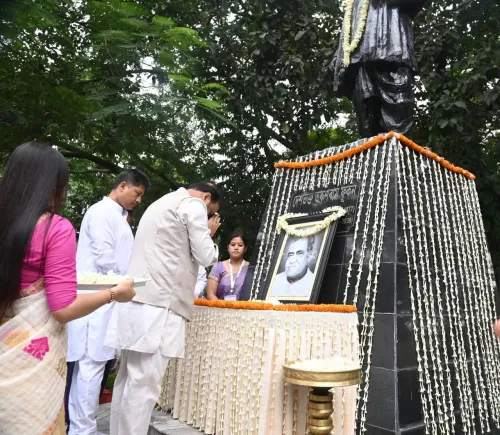
Assam Chief Minister Himanta Biswa Sarma marked the Punyatithi of Sunderlal Bahuguna on May 21, 2026, honouring the Chipko Movement pioneer as a lifelong environmental advocate whose commitment to protecting nature continues to inspire generations across India.
Key Takeaways
Assam CM Himanta Biswa Sarma paid tribute to Sunderlal Bahuguna on his Punyatithi, May 21, 2026 .
Bahuguna led the Chipko Movement of 1973–74 , where villagers in Uttarakhand embraced trees to halt commercial logging.
The Chipko protests contributed to a 15-year moratorium on green felling in parts of the Uttarakhand Himalayas.
India's Forest (Conservation) Act, 1980 drew momentum from Chipko and similar grassroots environmental movements.
Bahuguna also campaigned against the Tehri Dam on the Bhagirathi river , extending his activism beyond forests.
The tribute is particularly resonant for Northeast India , where forest communities face ongoing ecological pressures in the Brahmaputra valley .
Assam Chief Minister Himanta Biswa Sarma on Thursday, May 21, 2026, paid tribute to Sunderlal Bahuguna, the Gandhian environmentalist who led the iconic Chipko Movement, marking the activist's Punyatithi with a post on X that called him 'a lifelong advocate for environmental conservation.'
Context
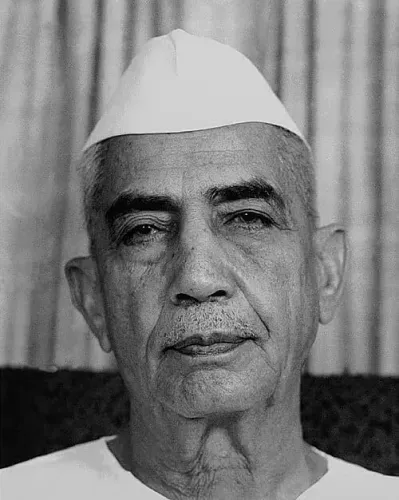
Bahuguna, born in 1927 in the Tehri Garhwal region of present-day Uttarakhand, became one of India's most recognised environmental voices through decades of grassroots activism. His Punyatithi — the annual death anniversary observed on May 21 — draws tributes from across the political spectrum each year. CM Sarma's post described him as someone whose 'commitment to protecting nature continues to inspire generations.'
Bahuguna is best remembered for galvanising the Chipko Movement of the 1970s, a non-violent protest in the Uttarakhand hills where villagers — many of them women — embraced trees to prevent commercial logging. He later extended his activism to a prolonged campaign against the Tehri Dam on the Bhagirathi river.
Policy Backdrop
The Chipko protests of 1973–74 had tangible legislative consequences: they contributed to a 15-year moratorium on green felling in parts of the Uttarakhand Himalayas and helped build the momentum that led to India's Forest (Conservation) Act, 1980. That law remains a cornerstone of India's forest governance framework, requiring central government clearance before forest land can be diverted for non-forest use.
Bahuguna's philosophy — rooted in Gandhian non-violence and a rejection of extractive development — placed him in a tradition of ecological activism that predated the global environmental movement and influenced both policy and popular consciousness in South Asia.
Stakeholders and Impact
The legacy of the Chipko Movement remains directly relevant to forest communities, tribal groups, and environmental activists across India's Himalayan and northeastern states. Assam and the broader Northeast share ecological vulnerabilities — the Brahmaputra valley and its flanking hill forests face pressures from infrastructure expansion, riverbank erosion, and climate-linked flooding.
Regional leaders invoking Chipko-era icons signal an awareness of these ecological sensitivities, particularly at a time when the Northeast is seeing accelerated investment in roads, hydropower, and urban infrastructure. For Northeast tribal communities, whose livelihoods and cultural identities are closely tied to forests, such remembrances carry symbolic weight beyond ceremonial tribute.
What's Next
Assam's upcoming budget and climate action planning cycles will be watched for concrete commitments on afforestation targets and sustainable development norms in the Brahmaputra basin. Whether tributes to environmentalists like Bahuguna translate into measurable policy choices — on forest clearances, wetland protection, or community forestry — will be the metric by which observers assess the depth of such acknowledgments. Bahuguna's enduring influence suggests that the tension between development imperatives and ecological stewardship he embodied remains as live a debate in India today as it was in the hills of Uttarakhand half a century ago.
Point of View
Even as the Northeast undergoes rapid infrastructure expansion. The gesture is symbolically significant: the Chipko Movement's legacy — community rights over forests, resistance to extractive development — speaks directly to concerns in Assam's Brahmaputra valley and its hill districts. Whether such tributes are accompanied by substantive policy choices on forest clearances and wetland protection will determine how they are read by environmental groups and tribal communities. For now, the acknowledgment keeps Bahuguna's conservation philosophy visible in mainstream political discourse at a moment when it remains urgently relevant.
NationPress
14 Sept 2026
Frequently Asked Questions
Who was Sunderlal Bahuguna?
Sunderlal Bahuguna was a Gandhian environmental activist from Uttarakhand who led the Chipko Movement in the 1970s and later campaigned against the Tehri Dam. He is widely regarded as one of India's most influential environmental voices.
What was the Chipko Movement?
The Chipko Movement was a non-violent protest in the Uttarakhand hills during 1973–74 in which villagers, especially women, hugged trees to prevent commercial logging. It contributed to a 15-year moratorium on green felling and helped shape India's Forest (Conservation) Act, 1980.
Why is May 21 observed as Sunderlal Bahuguna's Punyatithi?
May 21 marks the death anniversary of Sunderlal Bahuguna, observed annually as his Punyatithi. It is a day when political leaders, activists, and citizens pay tribute to his contributions to environmental conservation.
Why did Assam CM Himanta Biswa Sarma pay tribute to Bahuguna?
CM Sarma posted a tribute on X marking Bahuguna's Punyatithi on May 21, 2026, calling him a pioneer of the Chipko Movement and a lifelong advocate for environmental conservation whose commitment continues to inspire generations.
What is the legacy of the Chipko Movement for India's forests?
The Chipko Movement's legacy includes a 15-year moratorium on green felling in parts of the Uttarakhand Himalayas and contributed to the Forest (Conservation) Act, 1980, which requires central clearance before forest land can be diverted for non-forest use.