Lalan Singh addresses Ministry of Cooperation 5-year event
Synopsis
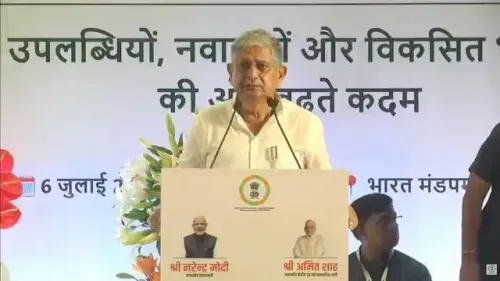
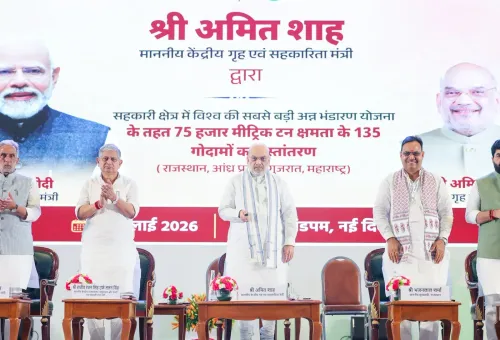
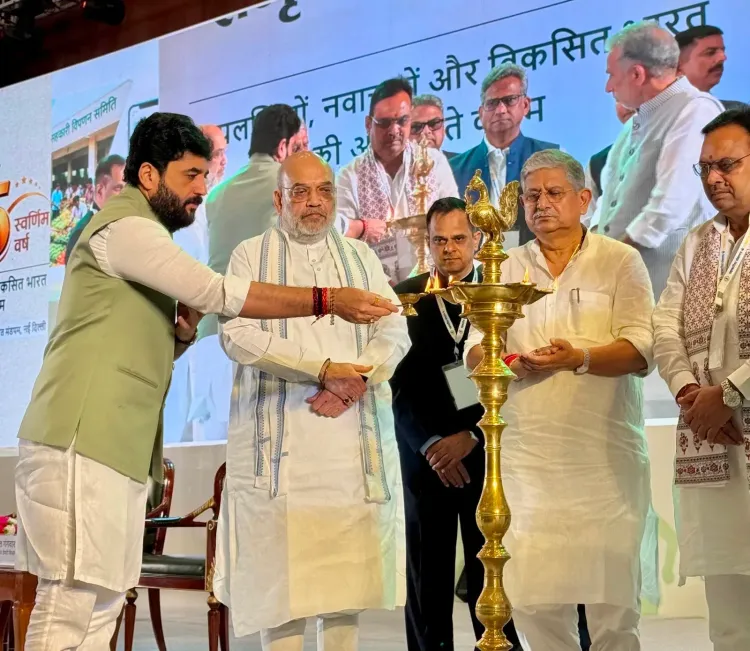
Union Minister Lalan Singh addressed the Ministry of Cooperation's five-year anniversary ceremony in New Delhi on July 6, 2026. Home Minister Amit Shah outlined achievements and the future roadmap under the 'Sahkar se Samridhi' vision, reaffirming the government's push to strengthen cooperatives as a pillar of rural and agrarian prosperity.
Key Takeaways
Union Minister Lalan Singh addressed the Ministry of Cooperation 's five-year anniversary event in New Delhi on July 6, 2026 .
Union Home and Cooperation Minister Amit Shah presided, sharing historic achievements and the future roadmap.
The Ministry of Cooperation was established in July 2021 as India's first dedicated central ministry for the cooperative sector.
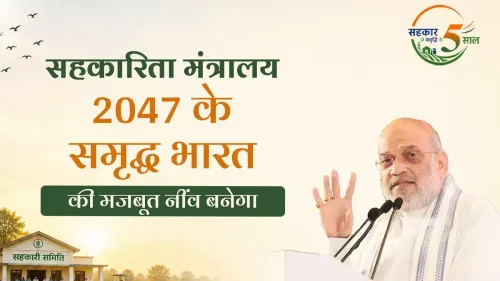
The event centred on the vision of 'Sahkar se Samridhi' — prosperity through cooperation — as a driver of rural and agrarian welfare.
The cooperative movement is being positioned as a key instrument of the Atmanirbhar Bharat agenda, connecting farmers to markets, credit, and inputs.
Singh's participation highlights cross-ministry alignment, given his Panchayati Raj and Dairying portfolio's direct overlap with cooperative institutions.
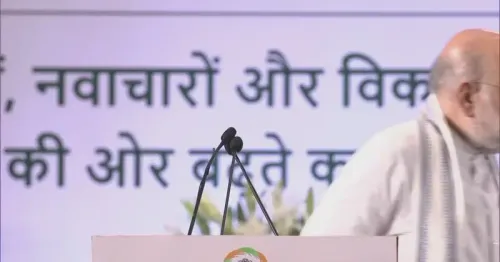
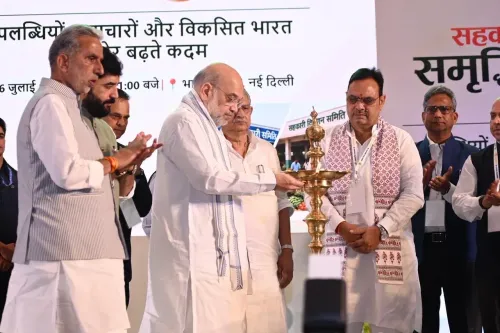
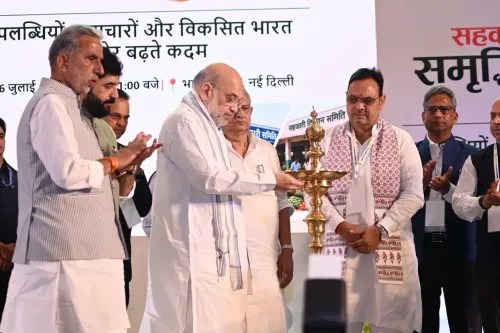
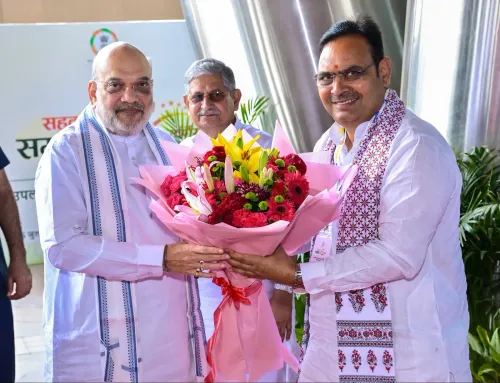
Union Panchayati Raj and Fisheries Minister Rajiv Ranjan Singh, popularly known as Lalan Singh, addressed a grand ceremony in New Delhi on Monday, July 6, 2026, marking the completion of five years of the Ministry of Cooperation. Union Home and Cooperation Minister Amit Shah presided over the event, outlining the ministry's historic achievements and the roadmap ahead under the 'Sahkar se Samridhi' (Prosperity through Cooperation) vision.
Context
Singh took to X to share his experience at the event, writing: 'Aaj Nayi Dilli mein Sahkarita Mantralaya ke Swarnim 5 Varsh poorn hone ke upalakshya mein aayojit bhavya samaroh ko sambodhit karne ka avsar prapt hua' — 'Today I had the opportunity to address the grand ceremony organised in New Delhi to mark the golden completion of five years of the Ministry of Cooperation.' He noted that Amit Shah expressed his thoughts on the five years of historic achievements and the future action plan to realise the 'Sahkar se Samridhi' pledge.
Singh added that the cooperative movement is today emerging as a strong foundation for farmers, the rural economy, and the nation's prosperity, and reaffirmed a collective resolve to accelerate the building of a self-reliant and prosperous India through the cooperative route.
Policy Backdrop
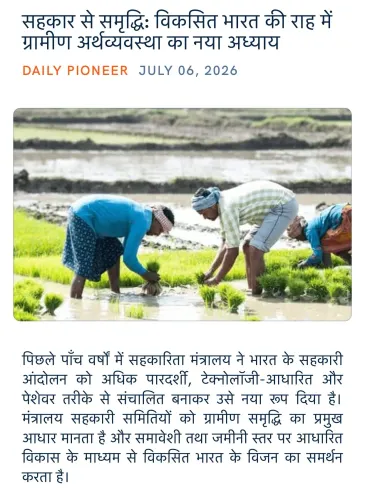
The Ministry of Cooperation was established in July 2021 — the first dedicated central ministry for the sector — to give focused policy attention to India's vast cooperative network spanning agriculture, dairy, and rural credit. The creation of the ministry was itself a signal of the government's intent to mainstream cooperatives within the Atmanirbhar Bharat agenda. The fifth-anniversary event marks a formal stock-taking of that institutional experiment.
India's cooperative sector has historically underpinned rural credit and dairy supply chains alongside formal banking. Since 2021, the central government has pursued deeper integration of cooperatives into digital and formal economic frameworks, positioning them as instruments of last-mile rural prosperity.
Stakeholders and Impact
Farmers and rural cooperatives are the primary beneficiaries of the ministry's five-year push. The cooperative model connects smallholder farmers to markets, credit, and inputs in ways that individual enterprise cannot easily replicate, making the sector critical to agrarian welfare. The presence of a senior Janata Dal (United) minister at an event led by the BJP's Amit Shah also signals the continued alignment of NDA coalition partners on rural economic policy.
Singh's participation underscores the cross-ministry interest in cooperative-led rural development, given that his own portfolio — Panchayati Raj, Fisheries, Animal Husbandry and Dairying — intersects directly with the cooperative sector at the grassroots level.
What's Next
The event's emphasis on a 'future action plan' suggests that the Ministry of Cooperation is moving beyond its foundational phase toward a second-generation reform agenda. Observers will watch for follow-up announcements at the state level and any new parliamentary measures that translate the anniversary commitments into legislative or budgetary action. The convergence of Panchayati Raj institutions with the cooperative network remains a key policy lever for deepening rural economic inclusion across India.
Point of View
And the five-year milestone gives the coalition an opportunity to consolidate that narrative ahead of any electoral cycle. The convergence of Panchayati Raj, dairying, and cooperative policy under a single event frame suggests a deliberate effort to present rural institutions as an integrated reform story. The real test will be whether the 'future action plan' flagged at the event translates into measurable outcomes for smallholder farmers and rural credit access.
NationPress
5 Oct 2026
Frequently Asked Questions
What is the Ministry of Cooperation and when was it established?
The Ministry of Cooperation is India's first dedicated central ministry for the cooperative sector, established in July 2021 to give focused policy attention to agriculture, dairy, and rural credit cooperatives.
What is 'Sahkar se Samridhi'?
'Sahkar se Samridhi' means 'Prosperity through Cooperation' and is the central government's guiding vision for using the cooperative movement to drive rural economic growth and farmer welfare.
Why did Lalan Singh attend the Ministry of Cooperation event?
As Union Minister for Panchayati Raj, Fisheries, Animal Husbandry and Dairying, Lalan Singh's portfolio overlaps directly with cooperative institutions at the grassroots level, making his participation a natural fit for a cross-ministry rural development agenda.
What did Amit Shah say at the Ministry of Cooperation 5-year event?
According to Lalan Singh's post, Amit Shah spoke about the historic achievements of the past five years in realising the 'Sahkar se Samridhi' pledge and outlined the ministry's future action plan, though specific details have not been independently verified.
How does the cooperative sector benefit Indian farmers?
India's cooperative sector connects smallholder farmers to markets, credit, and agricultural inputs, and supports dairy supply chains, offering economic inclusion in ways that individual enterprise often cannot replicate in rural areas.