Lalan Singh hails FSSAI ban on selling analogue paneer as 'paneer'

Synopsis
FSSAI has issued a notification banning the sale of analogue paneer under the name 'paneer'. Union Minister Lalan Singh has welcomed the move, calling it a sign of the central government's commitment to public health. The order targets dairy substitutes made with vegetable oils or non-dairy ingredients being passed off as traditional paneer.
Key Takeaways
FSSAI has issued a notification prohibiting manufacturers from selling analogue paneer under the name 'paneer'.
Union Minister Rajiv Ranjan Singh (Lalan Singh) publicly welcomed the order on September 26, 2026 , linking it to the government's public-health agenda.
Analogue paneer uses vegetable oils or non-dairy proteins to mimic real paneer, often at lower cost and with inferior nutrition.
FSSAI derives its authority from the Food Safety and Standards Act, 2006 , which sets compositional standards for all food products including dairy.
On-ground enforcement will rest with state food safety authorities , making implementation the next critical test of the notification's impact.
The move is part of a broader regulatory pattern of FSSAI tightening labelling rules to prevent dairy adulteration and misleading product claims.
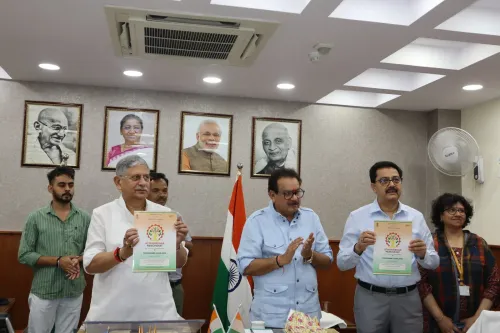
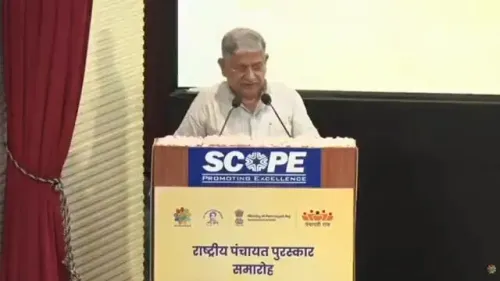
A quiet but consequential rule has landed in India's dairy market: Union Minister Rajiv Ranjan Singh (Lalan Singh) on Saturday, September 26, 2026, welcomed a fresh notification from the Food Safety and Standards Authority of India (FSSAI) barring manufacturers from selling analogue paneer under the name 'paneer' — a move the minister called a reflection of the central government's deep sensitivity toward public health.
Posting in Hindi on X, the Union Minister for Panchayati Raj, Fisheries, Animal Husbandry and Dairying wrote: 'FSSAI ka yah kadam swagat yogya hai' — 'This step by FSSAI is worthy of welcome.' He added that the government has been 'very sensitive' about the health of citizens and will continue to act in public interest.
What analogue paneer actually is — and why the label matters
Analogue paneer is a product made by partially or wholly replacing milk fat and milk protein with cheaper vegetable oils, starches, or other non-dairy ingredients, while mimicking the look and texture of traditional dairy paneer. For decades, it has found its way into restaurant kitchens, packaged food lines, and retail shelves — often without clear disclosure to the consumer.
The gap between analogue and real paneer is nutritional as well as economic. Genuine paneer is a significant source of protein and calcium; the analogue variant delivers neither at the same level. For a country where dairy is deeply embedded in everyday diet — from sabzi to mithai — the distinction is not cosmetic. It goes straight to the plate of millions of households.
FSSAI's authority and the regulatory trail behind this notification
FSSAI was established under the Food Safety and Standards Act, 2006, which consolidated a clutch of older food laws into a single science-based regulatory framework. The authority sets compositional standards for food articles including milk and milk products, and its notifications carry the force of law for manufacturers, distributors, and retailers across the country.
This is not the first time FSSAI has moved against substitutes masquerading as traditional dairy. Successive notifications over the years have tightened rules on synthetic milk, vegetable-fat-based cheese, and imitation butter. The analogue paneer order follows that lineage — part of a broader regulatory tightening on food labelling and anti-adulteration measures that has accelerated in recent years.
Dairy sector stakes — and what enforcement will determine
India's dairy economy is vast. Millions of small and marginal farmers depend on milk prices that are, in turn, influenced by demand for value-added products like paneer. When cheaper analogues crowd the market under the same name, they undercut both genuine dairy producers and the consumer's right to know what they are buying.
The real test now falls to state food safety authorities, who are responsible for on-ground enforcement. A notification from FSSAI sets the standard; it is district-level food safety officers who must inspect, sample, and penalise non-compliant producers and sellers. Industry observers will watch whether the centre follows through with implementation timelines, capacity-building for state inspectors, and clear labelling guidelines for plant-based dairy alternatives that can exist legally — just not under protected dairy names.
For Lalan Singh, endorsing this notification also fits a ministerial brief that spans both fisheries and animal husbandry — sectors where authentic produce and accurate labelling are recurring concerns. The minister's signal is clear: the government sees food-standard enforcement not as bureaucratic housekeeping, but as a health priority with political weight.
If the notification holds under implementation, every packet labelled 'paneer' on an Indian shelf will have to be the real thing. That is a promise made to the consumer — and now, a legal obligation on the producer.
Point of View
A JD(U) heavyweight whose portfolio spans animal husbandry and dairying, publicly endorsing the order reinforces the NDA coalition's pro-farmer, pro-consumer messaging ahead of a season of state elections where rural and semi-urban voters pay close attention to dairy prices and food quality. The real policy question, however, is whether this notification translates into field enforcement — past FSSAI rules on dairy substitutes have often outpaced the capacity of state food safety machinery to implement them. Analysts will watch whether a follow-up enforcement calendar and penalties for violators materialise in the weeks ahead.
NationPress
26 Sept 2026
Frequently Asked Questions
What is analogue paneer and how is it different from real paneer?
Analogue paneer is a product made by replacing milk fat and milk protein with cheaper vegetable oils, starches, or non-dairy ingredients to mimic the look and texture of traditional dairy paneer. Real paneer is made exclusively from whole milk and is a natural source of protein and calcium, whereas analogue paneer provides lower nutritional value.
What has FSSAI decided about analogue paneer?
FSSAI has issued a notification prohibiting manufacturers and sellers from marketing or labelling analogue paneer under the name 'paneer'. Products made with non-dairy substitutes can no longer use the protected dairy name.
Who is Lalan Singh and why did he comment on this FSSAI order?
Lalan Singh is the popular name of Rajiv Ranjan Singh , a senior JD(U) leader who serves as Union Minister of Panchayati Raj, Fisheries, Animal Husbandry and Dairying. His portfolio covers the dairy sector directly, making FSSAI's action on dairy labelling a natural ministerial concern for him.
What law gives FSSAI the power to regulate paneer standards?
FSSAI derives its regulatory authority from the Food Safety and Standards Act, 2006, which consolidated older food laws and empowered the authority to set science-based compositional standards for food articles, including all milk and milk products.
Will the FSSAI notification actually be enforced on the ground?
Enforcement of FSSAI notifications is carried out primarily by state food safety authorities and district-level inspectors. While the notification sets a binding national standard, the practical impact will depend on inspection capacity, sampling drives, and penalties imposed by state-level officials on non-compliant producers and retailers.