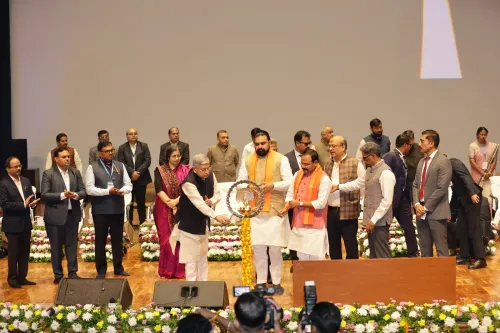
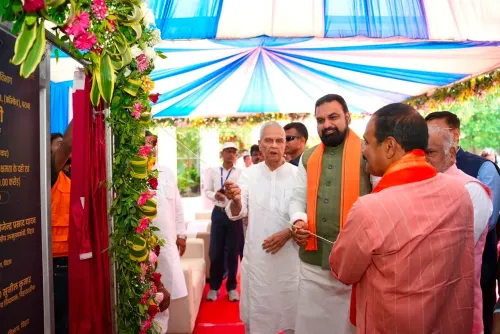
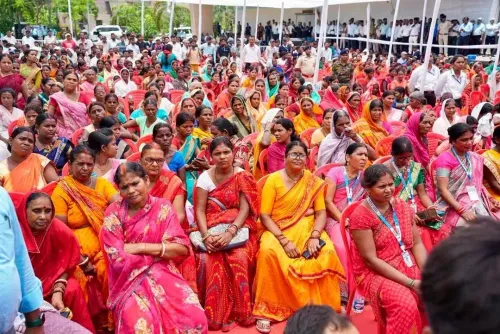
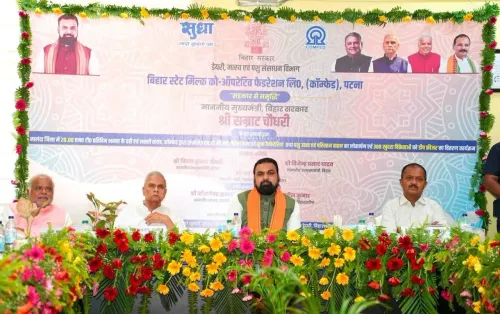
Lalan Singh: Take Sudha, COMFED further on National Milk Day

Synopsis
On National Milk Day, Union Minister Rajiv Ranjan Singh said Bihar's Sudha products are gaining popularity and that COMFED and the brand must be taken further. He said milk output in Bihar has risen and the Centre is helping the state. The 26 November observance marks Verghese Kurien's birth anniversary.
Key Takeaways
Union Panchayati Raj and Fisheries Minister Rajiv Ranjan Singh posted on National Milk Day, 26 November 2026, about Bihar's Sudha brand and COMFED.
He said Sudha products are becoming popular across the country and the world and that COMFED and the brand must be taken further.
He said milk production in Bihar has increased and the Government of India is helping the Bihar government raise it further.
National Milk Day marks the birth anniversary of Verghese Kurien, architect of India's White Revolution and Operation Flood (1970).
COMFED is the Bihar State Milk Co-operative Federation Ltd, which markets dairy products under the Sudha brand.
Wider central dairy instruments include the Rashtriya Gokul Mission (2014) and the National Programme for Dairy Development.
Union Panchayati Raj and Fisheries Minister Rajiv Ranjan Singh chose National Milk Day on Thursday, 26 November 2026, to argue that Bihar's cooperative dairy brand is no longer a local secret. Sudha products, he said, are becoming popular across the country and the world, milk output in Bihar has risen, and the Centre is helping the state government push it higher. COMFED and Sudha, the minister added, have to be taken further.
Singh, a senior Janata Dal (United) leader from Bihar popularly known as Lalan Singh, put it in plain terms. Bihar's dairy brand Sudha's products, he wrote, देश-दुनिया में लोकप्रिय हो रहे हैं (are becoming popular across the country and the world). Quite good work is under way in the state's dairy sector, milk production has increased, and the Government of India is helping the Bihar government take that rise further. He tagged the Department of Animal Husbandry and Dairying.
Sudha, COMFED and Bihar's milk pitch
COMFED — the Bihar State Milk Co-operative Federation Ltd — is the state apex body that markets dairy products under the Sudha brand. Village societies collect the milk. The federation processes, packs and sells it. Farmers are meant to keep more of the value. That is the cooperative bargain India has run for decades.
The minister did not table a new plant, a new outlay or a new procurement figure. He made a political and policy claim: the brand is travelling, output is up, and New Delhi is standing with Patna. Independent confirmation of how far Sudha has travelled abroad, or by how much production has jumped, was not in the post.
From Operation Flood to Bihar's collection grid
National Milk Day falls every year on 26 November, the birth anniversary of Verghese Kurien, architect of India's White Revolution. Operation Flood, launched in 1970, set out to copy the Anand cooperative model nationwide and stitch together a national milk grid. State federations grew on that template. Bihar's Sudha network is one of those later nodes.
The cooperative route is still the main vehicle for raising rural incomes from dairying. More milk at the society means more throughput at the plant and a stronger label in the market. Singh's message places Bihar inside that longer story — a late expander trying to turn collection into a brand that sells far from the farm gate.
Gokul Mission and the Centre's dairy toolkit
Central policy has stacked new tools on that old spine. The Rashtriya Gokul Mission, started in 2014, aims to conserve indigenous breeds and lift productivity across states, including Bihar. The National Programme for Dairy Development has, since the 2010s, sent central assistance to state cooperatives for infrastructure and capacity building.
Singh said the Centre is helping the Bihar government. He did not spell out a fresh package. The pattern is familiar: breed improvement, processing capacity, branding support — and a claim that the partnership is working for dairy farmers and milk cooperatives.
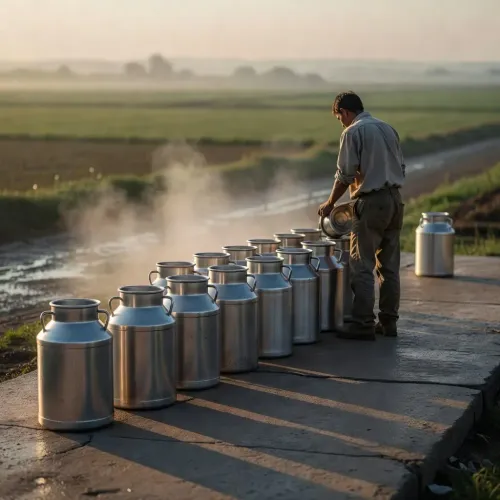
On Kurien's birth anniversary, the test is not a hashtag. It is whether more cans at the collection centre still mean higher village incomes as Sudha tries to travel farther from Bihar's dairy belt.
Point of View
And Bihar is being pitched as a rising node on that grid. The post supplies a direction, not a new number or a new package; the next test is whether budget papers match the claim of rising output and a brand travelling farther.
NationPress
26 Nov 2026
Frequently Asked Questions
What did Lalan Singh say on National Milk Day?
Union Minister Rajiv Ranjan Singh said Bihar's Sudha dairy products are becoming popular across the country and the world and that COMFED and the Sudha brand must be taken further. He also said milk production in Bihar has increased and the Centre is helping the Bihar government push it higher.
What is COMFED and the Sudha brand?
COMFED is the Bihar State Milk Co-operative Federation Ltd, the state apex dairy cooperative that markets products under the Sudha brand. It follows the village-society and state-federation model used across India's cooperative milk sector.
Why is National Milk Day observed on 26 November?
National Milk Day is observed every year on 26 November to mark the birth anniversary of Verghese Kurien, the architect of India's White Revolution. The day is used to highlight dairying, cooperatives and milk production.
Which central schemes support dairy development in states like Bihar?
The Rashtriya Gokul Mission, started in 2014, focuses on indigenous breeds and milk productivity, while the National Programme for Dairy Development has provided central assistance to state cooperatives for infrastructure and capacity building since the 2010s. Singh said the Centre is helping the Bihar government but did not detail a new package in the post.
Who is Rajiv Ranjan Singh?
Rajiv Ranjan Singh is the Union Minister of Panchayati Raj, Fisheries, Animal Husbandry and Dairying and a senior Janata Dal (United) leader from Bihar, popularly known as Lalan Singh. He used National Milk Day to highlight Bihar's dairy cooperatives.