CM Nitish Orders Sudha to Triple Bihar's Daily Milk Output
Synopsis
Chief Minister Nitish Kumar has ordered Sudha (COMFED) to more than triple Bihar's organised milk procurement from 40 lakh litres to 1.25 crore litres per day, directing a sweeping scale-up of the state's cooperative dairy infrastructure to boost rural farm incomes.
Key Takeaways
CM Nitish Kumar issued the directive during a formal review of the Sudha (COMFED) dairy cooperative on 24 May 2026 .
The target is to raise daily milk production from 40 lakh litres to 1 crore 25 lakh litres — a more than three-fold increase.
COMFED was established in 1983 on the Anand cooperative model and operates the Sudha brand across Bihar.
The scale-up will require new chilling plants, expanded procurement networks, and strengthened district-level milk unions.
The primary beneficiaries are dairy farmers and rural households across Bihar's milk-producing districts.
Bihar has consistently used cooperative dairy as a tool for rural income diversification under CM Nitish Kumar's administration since 2005 .
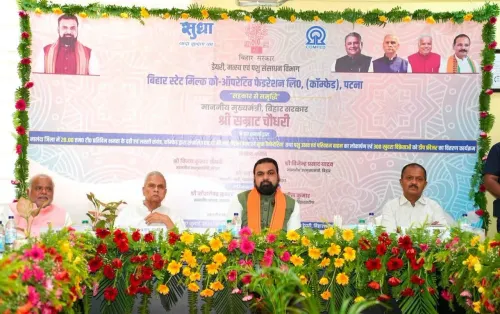
The Chief Minister's Office of Bihar announced on Sunday, 24 May 2026 that Chief Minister Nitish Kumar has directed the state's dairy cooperative Sudha (COMFED) to more than triple its daily milk production — from the current 40 lakh litres per day to 1 crore 25 lakh litres per day — during a high-level review meeting.
Context
The directive emerged from a formal review session chaired by CM Nitish Kumar, in which he assessed the current performance of Sudha, the consumer-facing brand of the Bihar State Milk Co-operative Federation (COMFED). The post states: 'Samiksha ke kram mein mananiya Mukhyamantri ji ne Sudha ke madhyam se dugdh utpadan ko vartaman 40 lakh litre pratidin se badhaakar 1 crore 25 lakh litre pratidin karne ka nirdesh diya' — meaning, 'In the course of the review, the honourable Chief Minister directed that milk production through Sudha be increased from the current 40 lakh litres per day to 1 crore 25 lakh litres per day.'
The target represents a more than three-fold increase in organised dairy output and signals an ambitious push to scale cooperative dairy infrastructure across Bihar.
Policy Backdrop
COMFED was established in 1983 to replicate the Anand cooperative dairy model — pioneered in Gujarat — across Bihar's milk-producing districts. The state subsequently launched the Bihar Dairy Development Project in the 2000s to strengthen district-level milk unions, expand chilling plant capacity, and improve procurement logistics.
Under CM Nitish Kumar, who has helmed Bihar since 2005, rural development and agriculture-linked cooperatives have been a consistent policy focus. The dairy sector has been positioned as a key instrument for supplementing farm incomes, particularly for small and marginal cultivators who maintain livestock alongside crop agriculture.
Stakeholders and Impact
Dairy farmers and district-level milk unions across Bihar stand to be the most directly affected by the scale-up directive. A successful expansion would mean higher procurement volumes, potentially translating into better prices and more stable incomes for rural households engaged in milk production.
For Sudha as a brand, meeting the 1.25 crore litre per day target would place Bihar's cooperative dairy among the larger state-level operations in the country, strengthening its competitive position in both retail and institutional supply chains. Consumers in urban centres such as Patna could also benefit from increased supply and price stability.
What's Next
Achieving the stated target will require significant downstream action: construction of new chilling plants, expansion of district procurement networks, investment in cold-chain logistics, and capacity-building at the village cooperative level. Follow-up reviews are expected to set granular, district-wise procurement targets aligned with the overall goal.
The directive signals that the Bihar government intends to treat organised dairy not as a supplementary rural programme but as a core economic driver — a trajectory that will be closely watched by cooperative sector stakeholders and agricultural policy observers across the country.
Point of View
Placing Bihar's cooperative model in direct competition with Gujarat's Amul-led ecosystem. For CM Nitish Kumar, the move fits a long-standing political economy strategy of channelling rural welfare through cooperative institutions rather than direct cash transfers — a model that builds both economic resilience and organisational loyalty among farming communities. The scale of the target, however, means execution risk is high: cold-chain gaps and uneven district-level union capacity have historically constrained COMFED's growth. Whether this review translates into budgetary allocations and time-bound infrastructure milestones will determine whether the directive is transformative policy or aspirational signalling.
NationPress
8 Oct 2026
Frequently Asked Questions
What is Bihar CM Nitish Kumar's new milk production target for Sudha?
CM Nitish Kumar has directed Sudha (COMFED) to increase Bihar's daily milk production from 40 lakh litres to 1 crore 25 lakh litres per day, as announced on 24 May 2026.
What is Sudha dairy in Bihar?
Sudha is the consumer brand of the Bihar State Milk Co-operative Federation (COMFED), which handles milk procurement, processing and marketing across Bihar on a cooperative model established in 1983.
How will Bihar increase milk production to 1.25 crore litres per day?
Achieving the target will require building new chilling plants, expanding district-level procurement networks, strengthening milk unions, and investing in cold-chain logistics across Bihar's dairy-producing regions.
Who benefits from Bihar's dairy expansion plan?
Dairy farmers and rural households across Bihar's milk-producing districts stand to benefit most, through higher procurement volumes and potentially better prices for their milk.
When was COMFED established in Bihar?
COMFED was established in 1983 to replicate the Anand cooperative dairy model across Bihar, and it operates the Sudha brand that is central to the state's organised dairy sector.