Assam CM Announces Land Rights for Millions of Indigenous Families

Synopsis
On March 16, Assam's CM Himanta Biswa Sarma declared that lakhs of indigenous families have received land rights, fulfilling a longstanding commitment to protect their identity and homes. This initiative marks significant progress in land governance and community empowerment.
Key Takeaways
Assam's CM Himanta Biswa Sarma announces land rights for millions of indigenous families.
Over 230,000 families have benefited from the land settlement program.
The initiative aims to protect "Jati, Mati, Bheti" (identity, land, and home).
Approximately 3.5 million tea garden families are also receiving land pattas.
The program addresses long-standing issues of land ownership and encroachment.
Guwahati, March 16 (NationPress) The Chief Minister of Assam, Himanta Biswa Sarma, announced on Monday that the state has successfully granted land rights to millions of indigenous families through its flagship land settlement programs, emphasizing that this initiative upholds the government's pledge to safeguard "Jati, Mati, Bheti" (identity, land, and home).
In a message shared on the social media platform X, CM Sarma highlighted the significant measures taken by the government to secure land ownership for indigenous communities as well as tea garden laborers, while also working to reclaim land from illegal encroachments.
Discussing the achievements of 'Mission Basundhara', he noted that over 230,000 families have gained land ownership through this initiative, which aims to simplify land records and extend land rights to eligible beneficiaries.
"Remaining committed to our promise of protecting 'Jati, Mati, Bheti', our administration has not only liberated land from encroachers but also granted land rights to indigenous populations for the first time since Independence," CM Sarma stated.
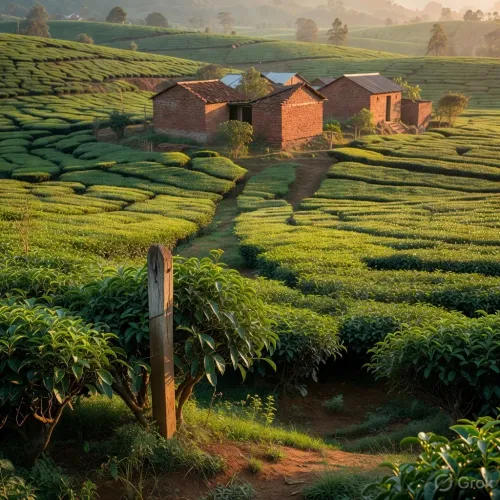
He further mentioned that approximately 3.5 million tea garden families have been issued land pattas for tea estate line lands, a measure designed to provide legal ownership and security to workers who have resided in tea estates for generations.
According to CM Sarma, the state's land reforms aim to tackle longstanding challenges concerning land ownership, enhance socio-economic stability, and empower communities that historically lacked legal rights over their land.
He also reaffirmed the government's stance against illegal encroachment, insisting that land in Assam is meant for its rightful inhabitants. "The land of Assam belongs to its people, not encroachers," he stated in his post on X.
The Assam government introduced 'Mission Basundhara' as a comprehensive approach to addressing land-related challenges, including the settlement of land rights, correction of land records, and the distribution of land pattas to eligible families.
This initiative plays a crucial role in the state government's broader strategy aimed at enhancing land governance while ensuring that indigenous communities and tea garden workers receive legal acknowledgment and protection of their land holdings.
Point of View
The announcement by Assam's Chief Minister represents a significant step towards rectifying historical injustices related to land ownership among indigenous communities. It reflects a commitment to social equity and legal recognition, aligning with broader national goals of empowerment and development.
NationPress
24 Sept 2026
Frequently Asked Questions
What is 'Mission Basundhara'?
'Mission Basundhara' is an initiative launched by the Assam government aimed at resolving land-related issues, including granting land rights and correcting land records for eligible families.
How many families have received land rights in Assam?
Over 230,000 families have gained land ownership through the 'Mission Basundhara' initiative.
What are the benefits of the land rights initiative?
The initiative aims to enhance legal ownership, provide socio-economic security, and empower historically marginalized communities and tea garden workers.
Why is land ownership important for indigenous families?
Land ownership is crucial for indigenous families as it provides them with legal rights, identity, and security, ensuring their socio-economic stability.
What measures are being taken against illegal land encroachment?
The Assam government has taken a firm stance against illegal encroachments, asserting that land should be preserved for its rightful residents.