Lashkar operative killed, ₹3,000 crore drug haul in intelligence-first ops
Synopsis
Two operations, one week — a Lashkar-e-Taiba terrorist neutralised in Budgam and ₹3,000 crore in narcotics seized near Lakshadweep. Both were entirely intelligence-driven, and officials say they are the visible proof of India's quiet shift to an intelligence-first security doctrine that fuses AI-powered prediction with irreplaceable ground-level human networks.
Key Takeaways
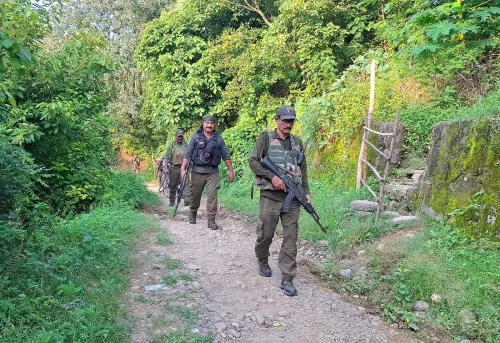
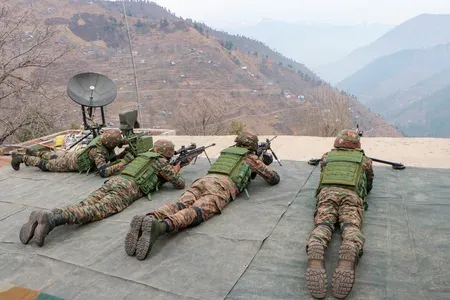
The Army's 15 Chinar Corps killed Lashkar-e-Taiba terrorist Mohammad Asif (alias Hashim Moosa Ali Asif Fauji) in Budgam, Jammu and Kashmir on Tuesday night.
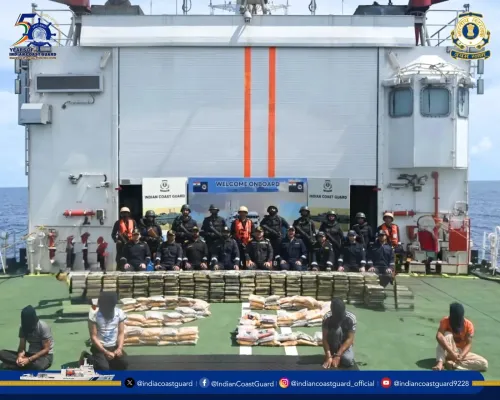
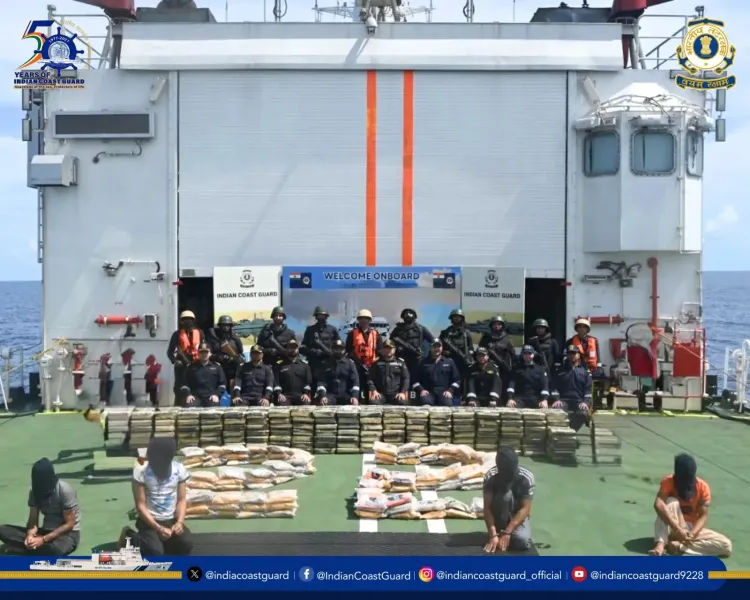
The Indian Coast Guard and Gujarat ATS intercepted an Iranian dhow on 25 September , seizing 526 kg of heroin and methamphetamine worth over ₹3,000 crore ; five Pakistani nationals were onboard.
Both operations were driven entirely by actionable intelligence, officials confirmed.
Home Minister Amit Shah and NSA Ajit Doval have reportedly directed agencies to continuously strengthen India's intelligence grid.
The MAC platform now integrates AI and machine learning for predictive threat analysis, supporting the HUMINT-TECHINT fusion model.
Officials say India's intelligence architecture is being built to remain effective through 2047 .
Indian security agencies executed two high-impact operations in the week of 2 October 2026, neutralising a senior Lashkar-e-Taiba operative in Jammu and Kashmir and seizing narcotics worth over ₹3,000 crore near Lakshadweep — both driven entirely by actionable intelligence inputs. Officials say the back-to-back successes underscore India's shift toward an intelligence-first security model that blends ground-level human intelligence with advanced technological tools.
The Budgam Encounter
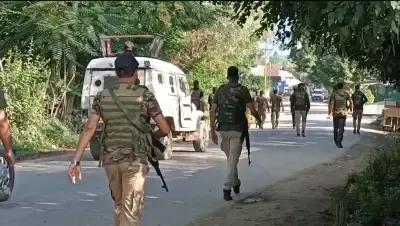
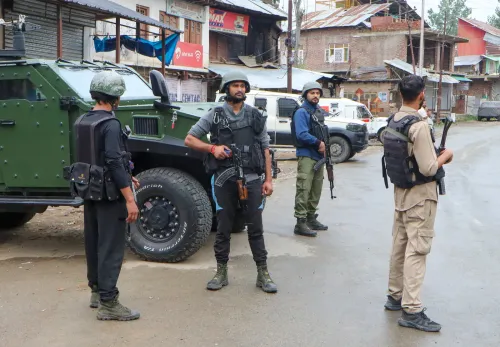
On Tuesday night, the Army's 15 Chinar Corps acted on precise intelligence about the presence of Lashkar-e-Taiba terrorist Mohammad Asif, alias Hashim Moosa Ali Asif Fauji, in Budgam, Jammu and Kashmir. The rapid response resulted in his killing. According to officials, the entire operation was intelligence-driven, with no gap between information receipt and field execution.
The ₹3,000 Crore Drug Seizure
On 25 September, the Indian Coast Guard (ICG) and Gujarat Anti-Terrorism Squad (ATS) intercepted an Iranian dhow carrying 526 kg of heroin and methamphetamine valued at over ₹3,000 crore. The vessel was stopped near Lakshadweep with five Pakistani nationals onboard. This operation, too, was initiated on the basis of credible, actionable intelligence, officials confirmed.
The Intelligence-First Model
Officials say India's intelligence architecture has undergone a significant transformation over the last five years. The Multi Agency Centre (MAC) and military networks have integrated Artificial Intelligence (AI) and machine learning software to predict escalation risks, classify threat signals, and detect emerging dangers in real time. Home Minister Amit Shah has reportedly issued clear directives to upgrade intelligence systems continuously to keep pace with evolving threats.
At the recently held National Security Strategies (NSS) conference, Shah directed agencies to develop standard operating procedures based on AI-driven analysis of data available on the MAC platform. National Security Advisor (NSA) Ajit Doval has also reportedly emphasised the strengthening of India's intelligence grid, according to officials.
HUMINT and TECHINT: A Bidirectional Flow
Security analysts describe the integration of Human Intelligence (HUMINT) and Technological Intelligence (TECHINT) as the defining shift in India's security approach. Rather than operating on parallel tracks, the two streams now actively feed each other. An Intelligence Bureau official noted that ground-level intelligence remains irreplaceable — particularly for operations against naxalites and in Jammu and Kashmir — but technology amplifies its reach and speed. 'What the algorithm predicts is being validated by humans, and this allows the security agencies to outpace threats with high speed and verifiable decisions,' the official said.
Officials also flagged the growing use of AI by terror groups as a significant challenge in the months ahead. Beyond traditional terrorism, India's security apparatus now contends with propaganda warfare, disinformation campaigns, narcotic smuggling, drone technology, and illegal infiltrations — all requiring multi-dimensional intelligence responses.
The Long View: Securing India to 2047
Officials say the Modi government's intelligence investments are not merely reactive but forward-looking, with a stated goal of building a system strong enough to protect India's national security through 2047. The MAC platform's predictive capabilities and the bidirectional HUMINT-TECHINT model represent the backbone of this long-term framework. As threat vectors multiply — from physical infiltration to cyber and narrative-based attacks — officials stress that neither technology nor human judgment alone can substitute for the other; it is their calibrated combination that defines India's emerging security doctrine.
Point of View
One narcotics — arriving in the same week are as much a communication as they are security outcomes; they signal that India's intelligence architecture has measurably improved in both speed and cross-agency coordination. What deserves scrutiny, however, is the near-total attribution of success to unnamed officials, with no independent verification of the intelligence processes described. The emphasis on AI-driven prediction at the MAC platform is notable, but the gap between institutional aspiration and ground-level capacity in under-resourced districts remains a real and underreported vulnerability. The Pakistani-nationals angle in the drug seizure also points to a narco-terror nexus that successive governments have acknowledged but not yet systematically dismantled.
NationPress
2 Oct 2026
Frequently Asked Questions
Who was the Lashkar-e-Taiba operative killed in Jammu and Kashmir?
The operative killed was Mohammad Asif, also known by the alias Hashim Moosa Ali Asif Fauji. He was neutralised by the Army's 15 Chinar Corps in Budgam, Jammu and Kashmir, on Tuesday night following precise intelligence inputs.
What was seized in the Lakshadweep drug bust?
The Indian Coast Guard and Gujarat ATS seized 526 kg of heroin and methamphetamine worth over ₹3,000 crore on 25 September after intercepting an Iranian dhow near Lakshadweep. Five Pakistani nationals were found onboard the vessel.
What is India's intelligence-first security model?
India's intelligence-first model refers to an approach where security operations are initiated and executed based on precise, actionable intelligence rather than reactive force deployment. It combines Human Intelligence (HUMINT) with Technological Intelligence (TECHINT), integrating AI and machine learning on the Multi Agency Centre (MAC) platform.
What role did Amit Shah play in upgrading India's intelligence systems?
Home Minister Amit Shah has reportedly directed agencies to continuously upgrade India's intelligence systems to keep pace with evolving threats. At the recent National Security Strategies (NSS) conference, he instructed agencies to develop standard operating procedures based on AI-driven analysis through the MAC platform.
What emerging threats are India's intelligence agencies focused on?
Beyond traditional terrorism, officials say Indian agencies are now addressing propaganda warfare, disinformation campaigns, narcotic smuggling, drone technology misuse, illegal infiltration, and the growing use of AI by terror groups. The integration of HUMINT and TECHINT is seen as central to countering these multi-dimensional threats.