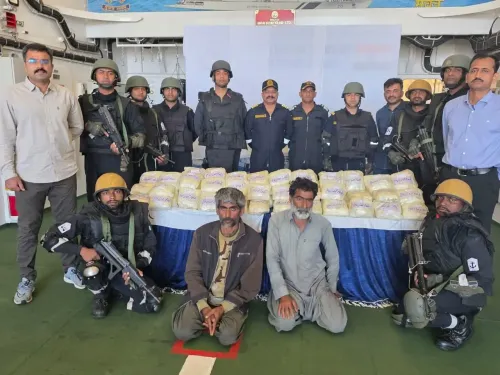
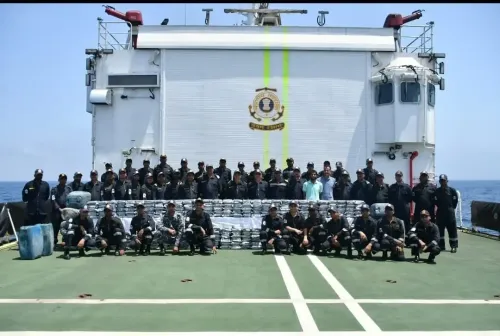
Iranian boat 'Azad': 526-kg drug haul worth ₹3,000 crore seized near Lakshadweep, 5 Pak nationals arrested
Synopsis
A joint Gujarat ATS–Coast Guard operation intercepted the Iranian boat 'Azad' 160 nautical miles off Lakshadweep on 25 September, seizing 526 kg of methamphetamine and heroin worth ₹3,000 crore and arresting five Pakistanis from Peshawar. The twist: the vessel used a Starlink device for encrypted communication with handlers in Pakistan — a signal that transnational drug networks are now deploying commercial satellite tech to outpace maritime surveillance.
Key Takeaways
The Iranian boat 'Azad' was seized on 25 September 2026 , around 160 nautical miles northwest of Lakshadweep in the Arabian Sea .
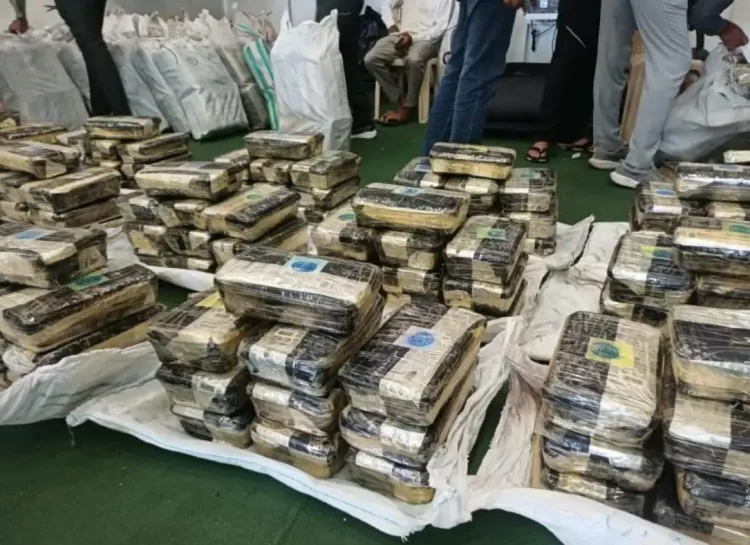
The consignment comprised ~400 kg of methamphetamine and 126 kg of heroin , valued at over ₹3,000 crore .
Five Pakistani nationals from Peshawar — Mohammad Yakub Balochi, Shakirullah, Faridullah, Ahmad Khan and Wahidullah Khan — were arrested and the vessel brought to Mumbai .
Gujarat ATS has linked the consignment to Pakistan -based smuggler Haji Salim , described as the key supplier with a network in Punjab .
The boat was equipped with a Starlink satellite device , reportedly used for WhatsApp communication with handlers in Pakistan while at sea.
A Nigerian national allegedly acted as an intermediary between a Gujarat-based wanted accused and the wider network; investigation is ongoing.
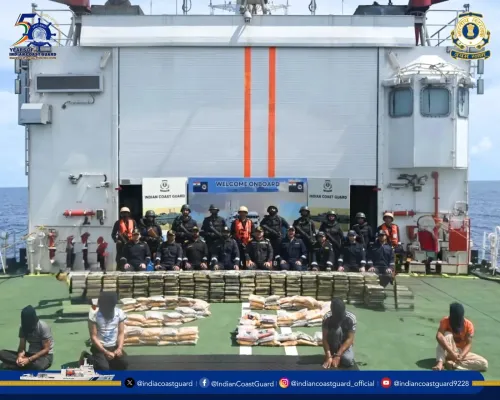
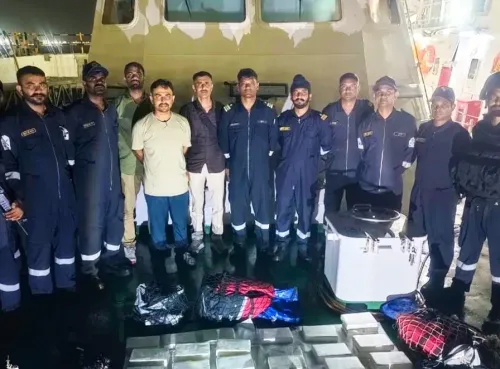
A 526-kg consignment of methamphetamine and heroin worth over ₹3,000 crore was seized from an Iranian boat in the Arabian Sea, approximately 160 nautical miles northwest of Lakshadweep, on 25 September 2026, the Indian Coast Guard confirmed. Five Pakistani nationals aboard the vessel were apprehended and the boat was brought to Mumbai for further investigation, in what officials are describing as one of the largest maritime drug seizures in recent years.
How the Operation Unfolded
The interception followed intelligence received by Gujarat Anti-Terrorism Squad (ATS) about a planned meeting in Ahmedabad between a Nigerian national and a Gujarat-based wanted accused, linked to the import of over 500 kg of narcotics. The intelligence was shared with the Indian Coast Guard headquarters in New Delhi, which triggered the formation of a joint operation. Gujarat ATS officers B.H. Korat and V.N. Vaghela were deployed to Kochi and joined Coast Guard personnel for maritime surveillance.
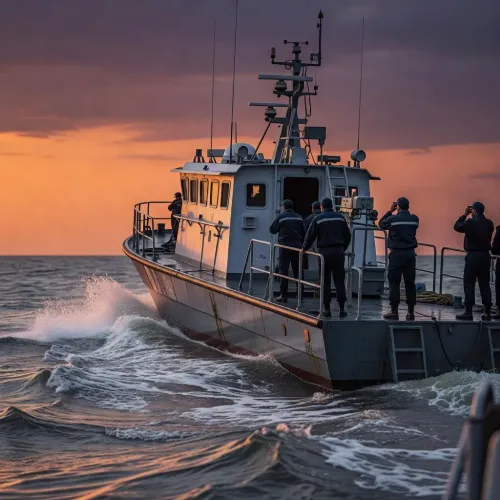
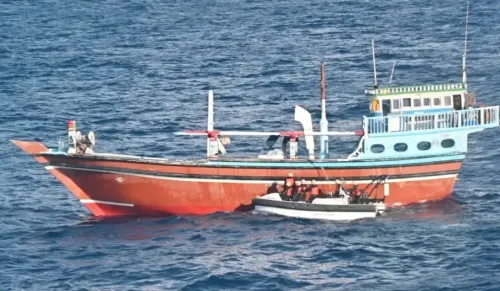
After sustained tracking across a large maritime area, the vessel — identified as the Iranian boat 'Azad' — was located around 160 nautical miles northwest of Lakshadweep and roughly 490 nautical miles southwest of Mumbai on 25 September. Coast Guard teams used smaller boats to surround the vessel during the interception, a tactic officials said was critical to preventing the suspects from jettisoning the narcotics overboard.
The Drug Consignment and Distribution Plan
The seized cargo comprised approximately 400 kg of methamphetamine and 126 kg of heroin. According to Gujarat ATS DIG Sunil Joshi, the original plan was to transfer the consignment to a Tamil Nadu fishing boat in Indian waters, offload it on the Tamil Nadu coast, and then transport it onward to Punjab. "The drugs were ultimately intended for Punjab, from where they could have been distributed to other parts of north India," officials stated.
Preliminary questioning revealed that the 'Azad' had sailed from the Konarak area of Iran and received the narcotics from a smaller boat originating from Gwadar, Pakistan.
Pakistan Link and Haji Salim Connection
The investigation has established a link with Pakistan-based drug smuggler Haji Salim, whom officials describe as a key supplier and a central figure in the network. "Haji Salim has his network in Punjab," DIG Joshi said, adding that the consignment belonged to his network and had been dispatched by him.
The five Pakistani nationals arrested from the vessel were identified as Mohammad Yakub Balochi, Shakirullah, Faridullah, Ahmad Khan, and Wahidullah Khan, all residents of Peshawar, Pakistan. Officials said their precise roles within the network are still under investigation.
Starlink Device and Nigerian Intermediary
A Starlink satellite internet device was found aboard the 'Azad'. According to ATS officials, the system provided connectivity in international waters and was reportedly used for communication — including WhatsApp calls — with handlers believed to be in Pakistan. The use of the device is now a key strand of the investigation into how the maritime network coordinated the consignment's movement.
Separately, a Nigerian national who allegedly attended the Ahmedabad meeting is also under investigation. DIG Joshi noted that Nigerian nationals have appeared in several drug-trafficking networks across India as intermediaries or peddlers. "The Nigerian linked to the present case had appeared in connection with narcotics activity elsewhere, though not previously in a Gujarat ATS case," he said.
What Happens Next
A case has been registered with the Gujarat ATS, and investigations are ongoing to identify the remaining members of the network, including the Gujarat-based wanted accused, the Nigerian intermediary, and the intended receivers in Punjab. ATS officials confirmed they have identified the intended recipient in Punjab but have withheld details to avoid compromising the ongoing operation. "We know where it was supposed to go, but we will not disclose it at present," DIG Joshi said. This case is the latest in a series of large maritime narcotics interdictions in Indian waters and underscores growing concern over the use of commercial satellite technology to evade detection at sea.
Point of View
Effectively blind-spotting legacy maritime surveillance. The Pakistan-Iran-India corridor, with Gwadar as a loading point, is no longer a hypothesis — it is now a confirmed route. The Punjab distribution link points to a supply chain designed to feed one of India's most drug-affected states, and the Nigerian intermediary angle suggests a transnational brokerage layer that Indian agencies are still mapping. The bigger question is whether a single joint operation, however successful, is enough against a network that has clearly invested in counter-surveillance technology.
NationPress
30 Sept 2026
Frequently Asked Questions
What drugs were seized from the Iranian boat 'Azad' near Lakshadweep?
Approximately 400 kg of methamphetamine and 126 kg of heroin — a total of 526 kg — were seized from the Iranian boat 'Azad' in the Arabian Sea on 25 September 2026 . The consignment is valued at over ₹3,000 crore according to the Indian Coast Guard.
Who are the five Pakistani nationals arrested in the drug bust?
The five arrested Pakistani nationals are Mohammad Yakub Balochi, Shakirullah, Faridullah, Ahmad Khan , and Wahidullah Khan , all residents of Peshawar, Pakistan . They were found aboard the vessel 'Azad' and are believed to be part of the same drug network, though their precise roles are still under investigation.
Who is Haji Salim and what is his connection to this drug seizure?
Haji Salim is a Pakistan-based drug smuggler identified by Gujarat ATS as a key supplier and central figure in the network responsible for this consignment. According to Gujarat ATS DIG Sunil Joshi , Haji Salim has an established network in Punjab, and the 526-kg consignment was sent by him.
How was the Starlink device used in the drug smuggling operation?
The Iranian boat 'Azad' was found to be equipped with a Starlink satellite internet device , which officials say provided internet connectivity in international waters. It was reportedly used for communication — including WhatsApp calls — with handlers believed to be based in Pakistan. Investigators are now examining the device as part of the probe into how the network coordinated the operation at sea.
Where were the drugs ultimately destined, and what was the planned route?
According to Gujarat ATS, the drugs were ultimately destined for Punjab , from where they were to be distributed across north India. The plan involved transferring the consignment to a Tamil Nadu fishing boat in Indian waters, landing it on the Tamil Nadu coast, and then transporting it overland to Punjab. The 'Azad' had sailed from the Konarak area of Iran and received the drugs from a smaller boat originating from Gwadar, Pakistan .