How Did the Production of India-Made LHB Railway Coaches Increase 18 Times from 2014 to 2025?
Synopsis
In an impressive surge, the production of LHB railway coaches in India has seen an 18-fold increase from 2014 to 2025. This shift not only signifies advancements in technology but also enhances safety and comfort for passengers traveling on Indian Railways. Discover the details behind this remarkable growth and its implications.
Key Takeaways
LHB coaches produced in India increased by over 18 times from 2014 to 2025.
Current production stands at 42,677 LHB coaches.
The Modern Coach Factory in Raebareli is a key facility for coach manufacturing.
LHB coaches are designed for speeds of 160-200 km/h .
Enhanced safety features include anti-telescopic technology and disc brakes .
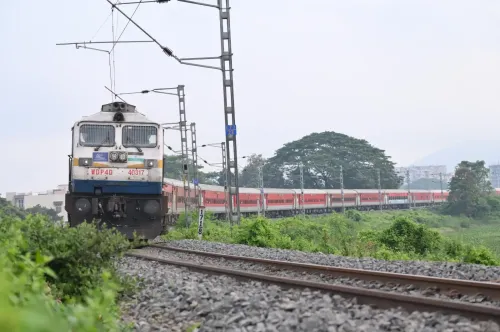
New Delhi, Feb 5 (NationPress) The production of modern Linke-Hofmann-Busch (LHB) coaches in India for Indian Railways witnessed a staggering growth, increasing more than 18 times to 42,677 from 2,337 during the period of 2014-2025, according to a statement made in Parliament on Wednesday.
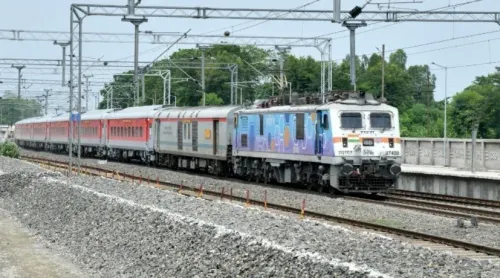
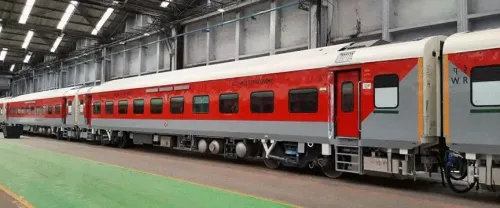
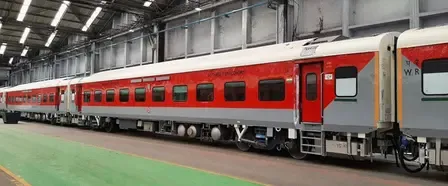
The LHB coaches, which are crafted from stainless steel and utilize German technology, are designed to operate at elevated speeds ranging from 160 to 200 km/h. They offer enhanced safety features and superior passenger comfort compared to the older ICF coaches. Notably, these coaches are equipped with anti-telescopic technology to reduce the risk of flipping during accidents and incorporate disc brakes for effective stopping.
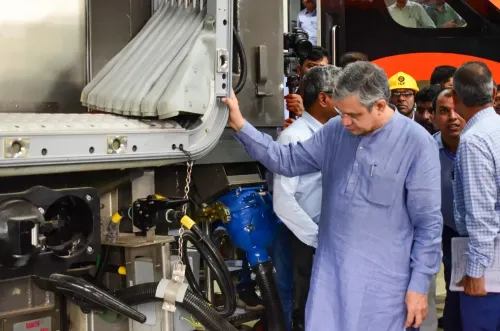
In a written response to a query in the Lok Sabha, Railways Minister Ashwini Vaishnaw mentioned that there are currently three operational coach manufacturing units across the nation under the Ministry of Railways. The financial investment for setting up these units varies based on several factors, including their location, the type of coaches being produced, and the planned production capacity.
The financial outlay for developing these manufacturing units is spread across multiple phases, which include the initial setup as well as ongoing upgrades. For instance, the latest operational unit, the Modern Coach Factory in Raebareli, has incurred an investment of Rs 3,042.83 crore.
Additionally, Rs 2,443 crore has been allocated for various projects aimed at enhancing the three existing coach manufacturing units, which include the Integral Coach Factory in Chennai, the Rail Coach Factory in Kapurthala, and the Modern Coach Factory in Raebareli.
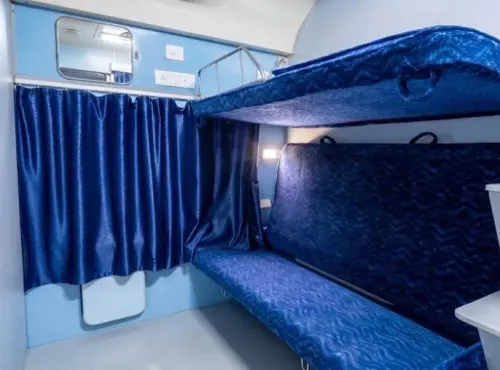
Minister Vaishnaw emphasized that the transition from ICF coaches to the safer and more modern LHB coaches is being implemented in a phased approach. The technologically advanced LHB coaches not only ensure better riding comfort but also feature improved aesthetics and advantageous characteristics such as a lightweight design, anti-climbing systems, air suspension with failure indicators, a stainless steel shell, and a disc brake system.
Point of View
It is crucial to highlight the significant advancements in India's railway infrastructure. The surge in LHB coach production illustrates not only the commitment to modernizing rail travel but also to ensuring passenger safety and comfort. This development aligns with the nation's goal of enhancing transportation systems for its citizens.
NationPress
14 Sept 2026
Frequently Asked Questions
What are Linke-Hofmann-Busch (LHB) coaches?
LHB coaches are modern, stainless steel passenger coaches designed for higher speeds and enhanced safety, utilizing German technology.
How many LHB coaches have been produced in India from 2014 to 2025?
India produced over 42,677 LHB coaches during the period from 2014 to 2025, reflecting an 18-fold increase.
What features make LHB coaches safer than ICF coaches?
LHB coaches feature anti-telescopic technology, disc brakes, and are designed for better stability and passenger comfort.
What is the investment in the Modern Coach Factory in Raebareli?
The investment for the Modern Coach Factory in Raebareli is approximately Rs 3,042.83 crore.
How does the transition from ICF to LHB coaches benefit passengers?
The transition enhances safety, comfort, and aesthetics for passengers, ensuring a better travel experience.