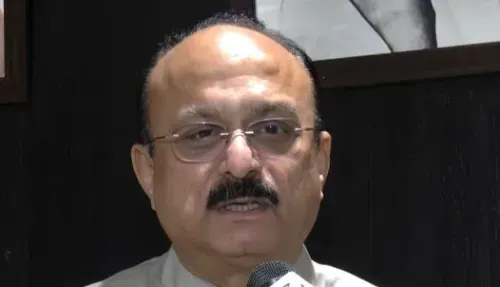
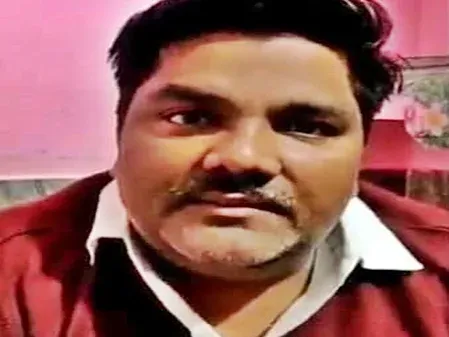
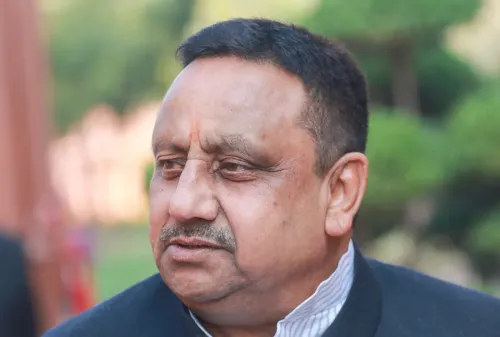
CM Rekha Gupta Welcomes Life Term for Tahir Hussain in Ankit Sharma Murder Case
Synopsis
A Delhi court sentenced ex-AAP councillor Tahir Hussain and five others to life imprisonment for the murder of IB officer Ankit Sharma during the 2020 Delhi riots. CM Rekha Gupta welcomed the verdict and demanded that Arvind Kejriwal publicly explain his support for Hussain after the arrest.
Key Takeaways
Tahir Hussain , former AAP municipal councillor, and five others have been sentenced to life imprisonment in the murder of IB officer Ankit Sharma .
The killing occurred during the February 2020 Delhi riots , which left more than 50 people dead .
Delhi CM Rekha Gupta welcomed the verdict on 31 July 2026 , calling it a 'victory for justice.' Gupta directly questioned why Arvind Kejriwal and Manish Sisodia supported Hussain even after his arrest on murder charges.
The BJP has long used the 2020 riots as a political pressure point against AAP's leadership record in Delhi.
The convicted individuals are expected to appeal the life sentence in higher courts.
Six men convicted for the murder of Intelligence Bureau officer Ankit Sharma during the February 2020 Delhi riots have been sentenced to life imprisonment — and Delhi Chief Minister Rekha Gupta is demanding answers from the Aam Aadmi Party. The court's verdict, welcomed by the Chief Minister on Friday, 31 July 2026, names former AAP municipal councillor Tahir Hussain as the lead convict among six sentenced.
What the Court Decided — and What Gupta Said
Welcoming the verdict, CM Gupta wrote: 'आज न्याय की जीत हुई है' — 'Today, justice has prevailed.' She said the ruling 'strengthens every citizen's faith in the law and the judiciary.' But she did not stop at celebration. Her post pivoted sharply to political accountability, asking why Arvind Kejriwal and Manish Sisodia continued to publicly support Tahir Hussain even after his arrest on murder charges — and whether their backing had emboldened those who, in her words, 'conspired to orchestrate the riots.'
Tahir Hussain, the 2020 Riots, and the AAP Connection
Ankit Sharma, an IB officer, was killed during the communal violence that tore through parts of northeast Delhi in February 2020, leaving more than 50 people dead and hundreds injured. Tahir Hussain, then an AAP councillor, was arrested by Delhi Police in connection with the riots and specifically in relation to Sharma's death. His prosecution became one of the most politically charged cases to emerge from the violence.
After Hussain's arrest, both Kejriwal and Sisodia faced criticism from the BJP for what opponents characterised as reluctance to distance the party from him. AAP leaders had argued at the time that Hussain deserved due legal process. That position has now become the centrepiece of Gupta's political offensive following the life-sentence verdict.
BJP's Larger Narrative on the 2020 Riots
The BJP has consistently framed the 2020 Delhi riots as a law-and-order failure under AAP's watch, and has repeatedly questioned the party's ties to individuals subsequently convicted in riot-related cases. Court outcomes in these cases have, without exception, reignited that political battle. Gupta's post follows that pattern — but sharpens the attack by naming Kejriwal and Sisodia directly and posing what she frames as unanswered public questions: 'क्या केजरीवाल जी दिल्ली की जनता को बताएंगे?' — 'Will Kejriwal explain this to the people of Delhi?'
With Manish Sisodia himself having faced separate legal proceedings in recent years, the BJP's argument — that AAP's leadership has a pattern of association with those facing serious criminal charges — is one the party has pressed on multiple fronts simultaneously.
What Comes Next for the Convicted
Life imprisonment verdicts in high-profile riot cases are routinely challenged before higher courts, and the six convicted individuals, including Tahir Hussain, are widely expected to appeal. Any higher-court proceedings will keep this case — and the political questions Gupta is raising — in the public eye. Whether AAP's current leadership responds formally to her charges remains to be seen, but silence in the face of a life-sentence verdict is itself a political choice with consequences.
For the family of Ankit Sharma, and for the broader community of 2020 riot victims, today's verdict closes one chapter of a six-year legal fight — even as the political argument over who bears moral responsibility for those four days of violence is far from over.
Point of View
Not just the administrative failure. This is a well-worn BJP playbook in Delhi — use judicial outcomes to sustain political pressure between elections. The real test is whether AAP responds substantively or allows the silence to harden into an admission in the court of public opinion.
NationPress
15 Sept 2026
Frequently Asked Questions
Who is Tahir Hussain and why was he arrested?
Tahir Hussain is a former Aam Aadmi Party municipal councillor who was arrested by Delhi Police in 2020 in connection with the February 2020 Delhi riots, specifically in relation to the murder of Intelligence Bureau officer Ankit Sharma.
What happened to Ankit Sharma in the 2020 Delhi riots?
Ankit Sharma, an Intelligence Bureau officer, was killed during the communal violence that swept through parts of northeast Delhi in February 2020. His death became one of the most high-profile cases to emerge from the riots.
What did the court decide in the Tahir Hussain case?
A Delhi court sentenced Tahir Hussain and five other convicts to life imprisonment for the murder of IB officer Ankit Sharma. Delhi CM Rekha Gupta welcomed the verdict on 31 July 2026.
Why is Rekha Gupta questioning Kejriwal over the Tahir Hussain verdict?
CM Gupta has questioned why Arvind Kejriwal and Manish Sisodia continued to support Tahir Hussain even after his arrest on murder charges, asking publicly whether their backing had encouraged those who planned the 2020 riots.
Can Tahir Hussain appeal the life sentence?
Yes. Life imprisonment verdicts in criminal cases can be challenged before higher courts, and Tahir Hussain and the other convicts are widely expected to file appeals against the sentence.