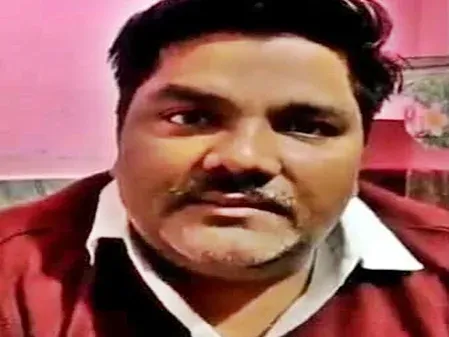
Ankit Sharma murder: Tahir Hussain, four others get life imprisonment
Synopsis
A Delhi court has handed life imprisonment to former AAP councillor Tahir Hussain and four others for the murder of IB officer Ankit Sharma — one of the most symbolically charged cases from the 2020 North-East Delhi riots. The court stopped short of the death penalty despite 51 documented injuries on the victim's body, rejecting the 'rarest of rare' threshold sought by the prosecution.
Key Takeaways
Former AAP councillor Tahir Hussain and four others — Javed , Anas , Nazim , and Kasim — sentenced to life imprisonment on 31 July .
All five were convicted of murder, kidnapping, rioting, and promoting enmity; acquitted of criminal conspiracy under Section 120B IPC .
Victim Ankit Sharma , an IB officer , was found dead in a drain in Khajuri Khas on 26 February 2020 with 51 injuries on his body.
Delhi Police had sought the death penalty ; the court held the case did not meet the 'rarest of rare' standard.
Six other accused were acquitted for lack of evidence beyond reasonable doubt.
The 2020 North-East Delhi riots claimed 53 lives and caused property damage worth crores.
A Delhi court on Friday, 31 July sentenced former Aam Aadmi Party (AAP) councillor Tahir Hussain and four co-accused to life imprisonment in the murder of Intelligence Bureau (IB) officer Ankit Sharma, killed during the February 2020 North-East Delhi riots. The verdict was delivered by Additional Sessions Judge (ASJ) Praveen Singh of the Karkardooma Court.
The Sentence and Charges
Along with Hussain, the four co-convicts — Javed, Anas, Nazim, and Kasim — were awarded life terms after being found guilty of offences including murder, kidnapping, rioting, and promoting enmity between different groups. While pronouncing the sentence, the court described the crime as a 'very serious' incident, observing that Sharma was 'brutally murdered' and his body left 'like an animal' — an act that had 'shaken the conscience of society.'
All five were, however, acquitted of the charge of criminal conspiracy under Section 120B of the Indian Penal Code (IPC). Six other accused in the case were also acquitted after the court held that the prosecution had failed to establish their guilt beyond reasonable doubt.
Death Penalty Sought, Life Term Awarded
The Delhi Police had pressed for the death penalty, characterising Sharma's killing as a 'cold-blooded' and 'brutal' murder. Prosecutors pointed to 51 injuries found on Sharma's body as evidence of extreme brutality. The defence countered that the case did not meet the threshold of the 'rarest of rare' doctrine required for capital punishment, and urged the court to consider the possibility of Hussain's reformation. The court accepted the defence's position on sentencing, stopping short of awarding the death penalty.
What the Conviction Covers
In its detailed conviction order earlier this month, the court held Hussain guilty under Sections 302 (murder), 365 (kidnapping), 188 (disobedience to a public servant's order), 153A (promoting enmity on grounds of religion), 147 (rioting), 148 (rioting with a deadly weapon), and 149 of the IPC. The four co-convicts were found guilty under the same provisions. The court had reserved its sentencing order on 28 July after hearing detailed arguments from both sides.
The Crime: What Happened in February 2020
IB officer Ankit Sharma's body was recovered from a drain in the Khajuri Khas area on 26 February 2020, during the communal violence that swept through North-East Delhi. According to the prosecution, Sharma was caught near his residence on 25 February 2020 when clashes broke out between two groups near the Chand Bagh Pulia. He was allegedly abducted by a mob, assaulted, and stabbed multiple times before his body was dumped into a nearby drain.
An FIR was registered at the Dayalpur police station on the complaint of Sharma's father, Ravinder Kumar, who stated that his son had stepped out to buy household items and never returned. The February 2020 North-East Delhi riots claimed 53 lives, left several injured, and caused property damage worth crores of rupees.
What Comes Next
With the sentencing now concluded at the trial court level, the convicts retain the right to appeal before the Delhi High Court. The case remains one of the most high-profile prosecutions to emerge from the 2020 Delhi riots, given Sharma's identity as an intelligence official and Hussain's political background as a former elected councillor.
Point of View
But the court's refusal to award the death penalty — despite 51 documented injuries and a prosecution case built around extreme brutality — underscores how rarely Indian courts cross the 'rarest of rare' threshold, even in communally charged killings of a state official. The acquittal on criminal conspiracy charges also narrows the legal accountability net, leaving questions about the broader planning behind the mob violence unanswered. This verdict arrives five years after the riots, a delay that itself reflects the systemic strain on Delhi's criminal justice machinery. Whether the convicts appeal and how the higher courts assess the evidence will determine the case's final legal legacy.
NationPress
15 Sept 2026
Frequently Asked Questions
Who is Tahir Hussain and why was he convicted?
Tahir Hussain is a former Aam Aadmi Party councillor convicted by a Delhi court for the murder of IB officer Ankit Sharma during the February 2020 North-East Delhi riots. He was found guilty of murder, kidnapping, rioting, and promoting enmity between groups, and sentenced to life imprisonment on 31 July.
Why was Ankit Sharma killed during the 2020 Delhi riots?
According to the prosecution, Ankit Sharma — an Intelligence Bureau officer — was caught near his residence on 25 February 2020 when clashes broke out between two groups near Chand Bagh Pulia. He was allegedly abducted by a mob, stabbed multiple times, and his body was dumped in a drain in Khajuri Khas, where it was recovered the following day.
Why did the court not award the death penalty?
Delhi Police had sought capital punishment, citing 51 injuries on Sharma's body as evidence of extreme brutality. The defence argued the case did not meet the 'rarest of rare' standard required for the death penalty, and the court accepted that position, awarding life imprisonment instead.
Were all accused convicted in the Ankit Sharma murder case?
No. Five accused — Tahir Hussain, Javed, Anas, Nazim, and Kasim — were convicted and sentenced to life imprisonment. Six other accused were acquitted after the court found the prosecution had not established their guilt beyond reasonable doubt. All five convicted persons were also acquitted of the criminal conspiracy charge under Section 120B IPC.
What was the scale of the 2020 North-East Delhi riots?
The communal violence that erupted in North-East Delhi in February 2020 claimed 53 lives, left several people injured, and caused property damage worth crores of rupees. The Ankit Sharma murder case is among the most high-profile prosecutions to emerge from that violence.