Delhi court defers Ankit Sharma murder verdict to July 13
Synopsis
Five years after IB officer Ankit Sharma's body was pulled from a drain during the 2020 North-East Delhi riots, the Karkardooma Court has again deferred its verdict — now to 13 July. With ex-AAP councillor Tahir Hussain among 11 accused facing murder and conspiracy charges, the judgment will be a landmark moment in the legal reckoning for one of India's most politically charged communal violence episodes.
Key Takeaways
The Karkardooma Court deferred its verdict in the Ankit Sharma murder case on 7 July , rescheduling to 13 July .
Former AAP councillor Tahir Hussain and 10 others are accused in the case.
Ankit Sharma , an IB officer , was killed during the 2020 North-East Delhi riots ; his body was recovered from a drain in Khajuri Khas on 26 February 2020 .
Charges framed in March 2023 include murder ( Section 302 ), rioting, promoting enmity, and criminal conspiracy under the IPC .
The prosecution alleges Hussain incited the mob and was part of a criminal conspiracy targeting Sharma.
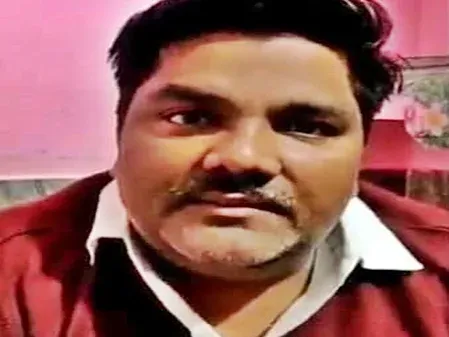
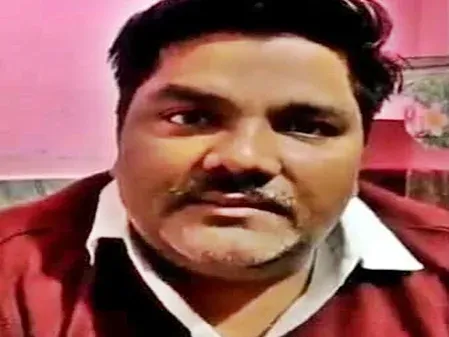
A Delhi court on Tuesday, 7 July deferred the pronouncement of its verdict in the murder case of Intelligence Bureau (IB) officer Ankit Sharma, who was killed during the 2020 North-East Delhi riots. The Karkardooma Court, which had been scheduled to deliver its judgment on Tuesday, has now listed the matter for 13 July, with former Aam Aadmi Party (AAP) councillor Tahir Hussain and 10 other accused named in the case.
Background of the Case
Ankit Sharma's body was recovered from a drain in the Khajuri Khas area on 26 February 2020, amid the widespread communal violence that engulfed North-East Delhi. His father, Ravinder Kumar, lodged the complaint that triggered the case, alleging that his son had stepped out on 25 February 2020 to purchase household items and never returned. Kumar subsequently learnt from local residents that a youth had been thrown into the Chand Bagh drain, and Sharma's body was recovered shortly after.
Charges Framed Against the Accused
In March 2023, the Karkardooma Court framed charges against all 11 accused, including Hussain, holding them liable to be tried for offences under Sections 147 (rioting), 148 (rioting armed with a deadly weapon), 153A (promoting enmity between groups), 302 (murder), read with Section 120B (criminal conspiracy) of the Indian Penal Code (IPC). Hussain additionally faced charges under Sections 505, 109, and 114 of the IPC.
The trial court had observed at the time of charge framing that Hussain allegedly incited the mob to target Hindus and exhorted them to 'not spare them', according to the prosecution's case.
Prosecution's Account
The prosecution has alleged that Hussain and the co-accused were part of an unlawful assembly and criminal conspiracy that directly led to Sharma's murder during the riots. An FIR was registered on 26 February 2020 on the basis of the complaint filed by Sharma's father. The complainant alleged that Hussain and his associates were responsible for his son's death.
What Happens Next
The Karkardooma Court will next take up the matter on 13 July. The verdict, whenever delivered, will be among the most consequential judicial outcomes linked to the 2020 Delhi riots — a period of violence that claimed over 50 lives and left hundreds injured. The case has remained a flashpoint in the political and legal discourse around the riots for over five years.
Point of View
Despite the political salience of the violence. The Ankit Sharma case is particularly charged: it involves a serving intelligence officer, a named political figure, and allegations of premeditated communal conspiracy. A conviction or acquittal will inevitably be read through a political lens, but the more important question is whether the trial record supports the prosecution's conspiracy theory or reveals gaps in evidence after five years of proceedings. Courts must be insulated from that pressure — and the judgment, when it comes, will be tested on facts, not optics.
NationPress
6 Oct 2026
Frequently Asked Questions
Who is Ankit Sharma and why was he killed?
Ankit Sharma was an officer with the Intelligence Bureau (IB) whose body was recovered from a drain in the Khajuri Khas area of North-East Delhi on 26 February 2020, during widespread communal violence. The prosecution alleges he was murdered by an unlawful assembly led by former AAP councillor Tahir Hussain and 10 others.
Who are the accused in the Ankit Sharma murder case?
Former AAP councillor Tahir Hussain and 10 co-accused face charges including murder, rioting, promoting enmity between groups, and criminal conspiracy under the IPC. Charges were formally framed by the Karkardooma Court in March 2023.
Why has the Delhi court deferred the verdict?
The Karkardooma Court, which was scheduled to pronounce its verdict on 7 July, deferred the matter without stating a detailed reason in available reports. The case has now been listed for 13 July.
What charges does Tahir Hussain face?
Hussain faces charges under Sections 147, 148, 153A, 302 read with 120B of the IPC — covering rioting, promoting enmity, murder, and criminal conspiracy — as well as additional charges under Sections 505, 109, and 114 of the IPC.
What is the significance of this verdict for the 2020 Delhi riots?
The Ankit Sharma murder case is one of the most high-profile judicial proceedings arising from the 2020 North-East Delhi riots, which claimed over 50 lives. The verdict will be a key marker in the legal accountability process for the violence and carries significant political and constitutional weight.