Delhi court convicts Tahir Hussain in IB officer Ankit Sharma murder case

Synopsis
A Delhi court has convicted former AAP councillor Tahir Hussain and four others for the murder of IB officer Ankit Sharma — one of the most closely watched criminal cases from the deadly February 2020 North-East Delhi riots. The verdict closes a five-year legal chapter, though sentencing arguments are yet to be heard and six co-accused have been acquitted.
Key Takeaways
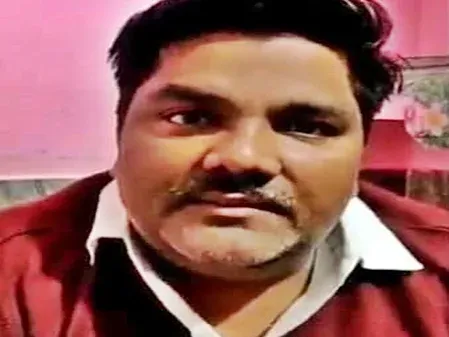
Karkardooma Court on 13 July convicted former AAP councillor Tahir Hussain and four others — Javed , Anas , Nazim , and Kasim — for the murder of IB officer Ankit Sharma .
Hussain was found guilty under IPC Sections 302, 365, 153A, 147, 148, 149 , and 188 ; all convicted persons were acquitted of criminal conspiracy under Section 120B .
Six co-accused were acquitted after the court held the prosecution had failed to establish their guilt beyond reasonable doubt.
Sharma's body was recovered from a drain in Khajuri Khas on 26 February 2020 during the North-East Delhi communal violence.
The quantum of sentence is yet to be decided; the court has fixed a later date for sentencing arguments.
A Delhi court on Monday, 13 July convicted former Aam Aadmi Party (AAP) councillor Tahir Hussain and four others for the murder of Intelligence Bureau (IB) officer Ankit Sharma during the 2020 North-East Delhi riots, while acquitting six co-accused after finding the prosecution had failed to establish their guilt beyond reasonable doubt.
What the Court Held
The Karkardooma Court found Hussain guilty under multiple provisions of the Indian Penal Code (IPC), including Section 302 (murder), Section 365 (kidnapping or abducting with intent to secretly and wrongfully confine a person), Section 153A (promoting enmity between different groups on grounds of religion), Section 147 (rioting), Section 148 (rioting, armed with a deadly weapon), Section 149, and Section 188 (disobedience to a public servant's order).
Alongside Hussain, four co-accused — Javed, Anas, Nazim, and Kasim — were also convicted for the murder of Sharma. However, all convicted persons were acquitted of the charge of criminal conspiracy under Section 120B of the IPC.
Sentencing Pending
The quantum of sentence has not yet been determined. The court has fixed a later date to hear arguments on sentencing. The six remaining co-accused were acquitted, with the court noting that the prosecution had not proved the charges against them to the required standard.
Background: The 2020 North-East Delhi Riots
The case stems from the killing of IB officer Ankit Sharma, whose body was recovered from a drain in the Khajuri Khas area of North-East Delhi on 26 February 2020, amid communal violence that had engulfed the locality. An FIR was registered the same day following a complaint by Sharma's father, Ravinder Kumar.
According to the complaint, Ankit Sharma had left home on 25 February 2020 to purchase household items and did not return. His father later learnt from local residents that a youth had been thrown into the Khajuri Khas drain from the Chand Bagh area, following which Sharma's body was recovered. Ravinder Kumar alleged that Hussain and his associates were responsible for his son's murder.
Key Developments in the Trial
In March 2023, the trial court framed charges against 11 accused, including Hussain, for offences covering rioting, promoting enmity between groups, murder, and criminal conspiracy. At the charge-framing stage, the court recorded the prosecution's submission that Hussain had allegedly incited the mob to target Hindus and exhorted them to 'not spare them.'
The Delhi High Court had earlier dismissed Hussain's plea seeking bail in the case after considering the allegations and material placed on record. Last week, the Karkardooma Court had deferred the pronouncement of its verdict from 7 July to 13 July.
What Happens Next
With conviction now recorded, the court will hear arguments from both sides on the appropriate sentence before pronouncing the quantum of punishment. The case remains one of the most high-profile criminal proceedings to emerge from the February 2020 communal violence in North-East Delhi, which left dozens dead and hundreds injured across multiple localities.
Point of View
The acquittal on criminal conspiracy charges despite conviction on murder and rioting counts will invite scrutiny: it narrows the legal accountability chain at a time when questions about the riots' organisation remain publicly contested. The sentencing phase will be the next flashpoint.
NationPress
12 Oct 2026
Frequently Asked Questions
Who is Tahir Hussain and why was he on trial?
Tahir Hussain is a former Aam Aadmi Party (AAP) councillor who was tried for the murder of Intelligence Bureau officer Ankit Sharma during the February 2020 North-East Delhi communal riots. He was accused of being part of an unlawful assembly that abducted and killed Sharma, whose body was recovered from a drain in the Khajuri Khas area on 26 February 2020.
What charges was Tahir Hussain convicted on?
The Karkardooma Court convicted Hussain under IPC Sections 302 (murder), 365 (kidnapping), 153A (promoting enmity between religious groups), 147 and 148 (rioting), 149, and 188. He and all other convicted persons were, however, acquitted of criminal conspiracy under Section 120B.
Who else was convicted alongside Tahir Hussain?
Four other accused — Javed, Anas, Nazim, and Kasim — were also convicted for the murder of Ankit Sharma. Six additional co-accused were acquitted, as the court found the prosecution had not established their guilt beyond reasonable doubt.
What is the sentence handed to Tahir Hussain?
No sentence has been pronounced yet. The court has fixed a separate date to hear arguments from both sides on the quantum of punishment before delivering the final sentence.
What were the 2020 North-East Delhi riots?
The February 2020 North-East Delhi riots were a bout of communal violence that left dozens dead and hundreds injured across localities including Khajuri Khas, Chand Bagh, and Mustafabad. The violence broke out amid protests over the Citizenship Amendment Act and resulted in hundreds of criminal cases, of which the Ankit Sharma murder trial is among the most prominent.