Has the Lok Sabha Passed the 'Health Security Se National Security Cess Bill' Amidst a Heated Debate?
Click to start listening
Synopsis
In a significant legislative move, the Lok Sabha passed the 'Health Security Se National Security Cess Bill' amidst a spirited debate. With contrasting opinions from various political members and a focus on national priorities, this bill aims to generate funds for public health and security. Explore the implications of this crucial decision.
Key Takeaways
- The Lok Sabha passed the Health Security Se National Security Cess Bill through a voice vote.
- Funds generated will focus on public health and national security initiatives.
- The bill received both support and criticism from MPs across party lines.
- Opposition raised concerns about clarity and potential misuse of funds.
- Union Minister emphasized accountability and oversight for the cess.
New Delhi, Dec 5 (NationPress) The Lok Sabha has successfully passed the 'Health Security Se National Security Cess Bill' through a voice vote following an intense debate that featured both backing and significant criticism from members across various political factions.
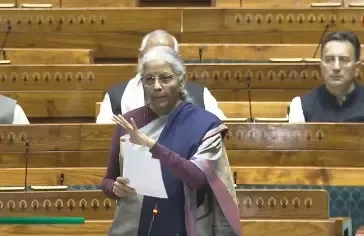
Union Finance Minister Nirmala Sitharaman, who spearheaded the bill, clarified that the revenues generated from the cess would be strictly allocated for two key areas: enhancing India's national security and bolstering public health.
She highlighted that this levy is constitutionally authorized under Article 270, fully accountable to the Parliament, and subjected to oversight by the Comptroller and Auditor General of India.
In advocating for the bill, Minister Sitharaman stated: "The Bill aims to boost resources needed for national security and public health expenditures, and it proposes a cess on the production of specified goods and related matters."
She expressed gratitude to all Members of Parliament for their engagement in the debate and noted her intention to limit her responses due to time constraints.
Detailing the framework, the Union Finance Minister explained that the cess would apply specifically to demerit goods such as pan masala, focusing on production capacity, which is a well-established practice in excise law intended to mitigate evasion.
She assured the Parliament that any modifications in rates or goods would necessitate parliamentary approval, thereby ensuring transparency and safeguarding public interests.
"A portion of the cess collected will be allocated for public health initiatives, while the other portion will be directed towards defense. Although public health falls under state jurisdiction, defense is a union responsibility. We must generate resources that align with contemporary demands," she explained.
However, opposition members raised several issues regarding the bill.
Congress MP Shashikanth Senthil criticized the bill, labeling it a "blank cheque" for the Union government, arguing that it lacks clarity regarding which health or national security initiatives would be financed.
He also condemned the severe penalties, comparing them to regulations in the Prevention of Money Laundering Act.
DMK MP T. Sumathy challenged the bill's "linguistic hybrid" title, suggesting that the word "se" should be replaced with "for" to enhance linguistic neutrality.
Trinamool Congress MP Saugata Roy objected to Union Minister Sitharaman's use of Hindi, stating that he was unable to understand her remarks, which prompted a strong reply from her indicating that translation services were available.
Concerns regarding federalism also emerged.
Congress MP Prabha Mallikarjun pointed out that since the cess is excluded from the divisible pool, states would not receive their share despite being responsible for a significant portion of public health funding.
NCP–SP MP Supriya Sule questioned why the levy was introduced as a cess instead of a tax, cautioning that provisions allowing for rate increases without returning to Parliament could undermine legislative scrutiny.
Other members, including Umeshbhai Patil and Hanuman Beniwal, underscored the ineffectiveness of bans on liquor, gutkha, and pan masala, advocating for regulation rather than prohibition.
Union Finance Minister Sitharaman countered, asserting that the Union government's goal was to make demerit goods less affordable while simultaneously generating resources for vital national priorities.
Despite the objections raised, the bill was ultimately passed, with the Union government asserting that its dual focus on health and national security is both urgent and warranted.
Point of View
It is essential to note that the passage of the 'Health Security Se National Security Cess Bill' marks a critical step in addressing both public health and national security. While the bill has faced scrutiny, its dual objectives reflect the pressing needs of our nation. It is imperative that we ensure transparency and accountability in its implementation to uphold public trust.
NationPress
05/12/2025
Frequently Asked Questions
What is the purpose of the Health Security Se National Security Cess Bill?
The bill aims to generate funds specifically for enhancing national security and bolstering public health.
Who is responsible for overseeing the collected cess?
The proceeds from the cess will be subject to oversight by the Comptroller and Auditor General of India.
What concerns did opposition members raise?
Opposition members expressed concerns about the bill lacking clarity in funding allocations and the penalties being too harsh.
How will the cess be implemented?
The cess will apply to demerit goods and will focus on production capacity, which is a method designed to prevent evasion.
Is there a provision for changing the cess rates?
Yes, any changes in rates or goods will require parliamentary approval to ensure transparency.