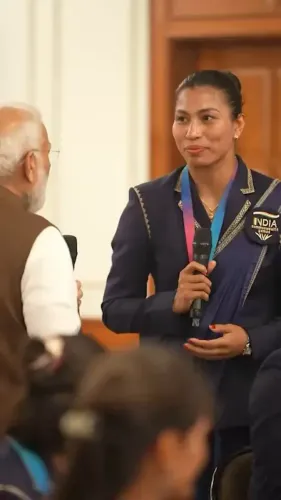
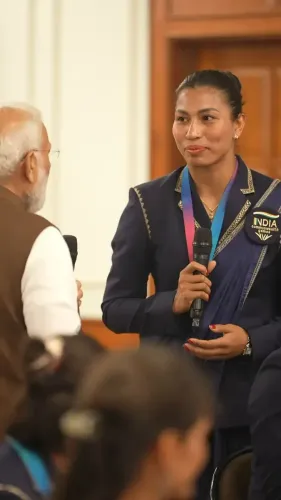
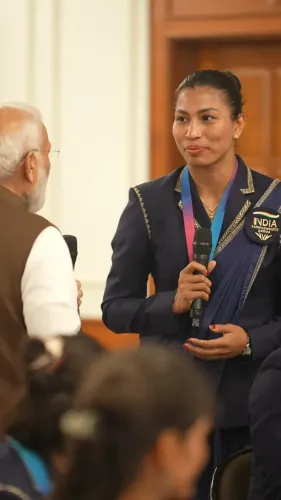
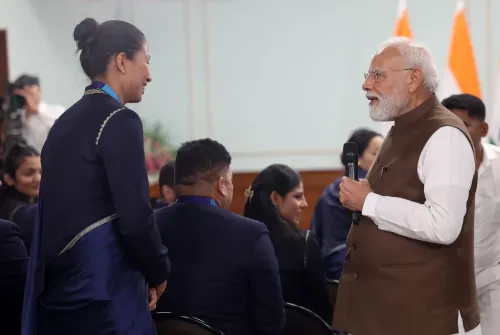
Shekhawat hails Lovlina's map stand in Glasgow
Synopsis
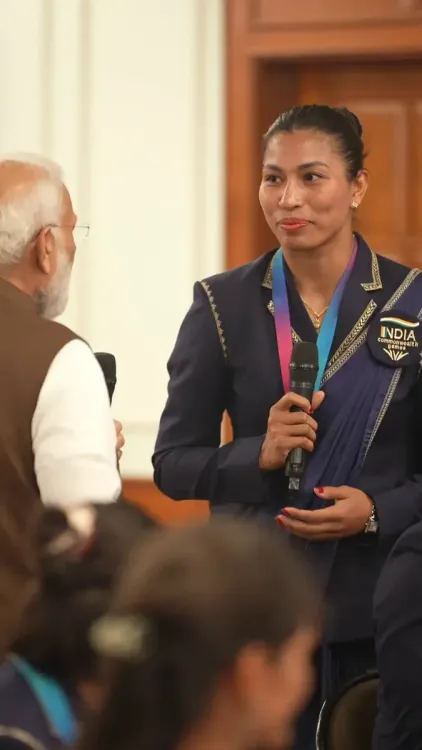
Union Minister Gajendra Singh Shekhawat lauded boxer Lovlina Borgohain for winning silver in the 75 kg class in Glasgow and compelling a local restaurant to replace a map of India that had omitted Northeast India — an act Prime Minister Modi also publicly appreciated.
Key Takeaways
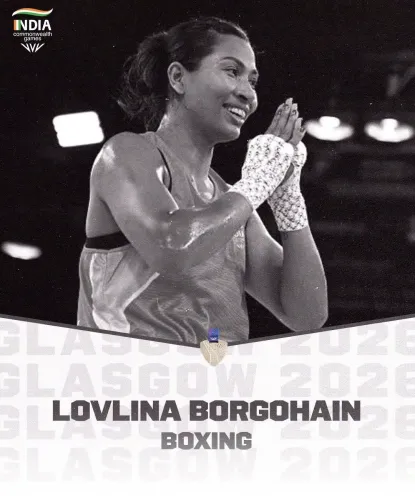
Lovlina Borgohain won a silver medal in the 75 kg boxing category at an event in Glasgow .
She confronted a Glasgow restaurant over a map of India that excluded Northeast India and got the map changed.
Union Minister Gajendra Singh Shekhawat posted about both acts on August 10, 2026 , framing them under the slogan Rashtra Pratham ('Nation First').
Prime Minister Narendra Modi separately appreciated Lovlina's stand on territorial integrity.
Lovlina, from Assam , previously won a bronze at the 2020 Tokyo Olympics in welterweight.
The incident echoes the government's Ek Bharat Shreshtha Bharat push to reinforce Northeast India's place in national identity.
She came to Glasgow to box, won a silver medal in the 75 kg category, and then — still in her competition city — forced a restaurant to correct a map that had erased Northeast India from the country's outline. Union Culture and Tourism Minister Gajendra Singh Shekhawat on Monday, August 10, 2026, took to X to celebrate both acts in one breath, calling it a moment that raised the nation's pride.
Shekhawat's post, captioned 'Rashtra Pratham!' ('Nation First!'), described how Lovlina Borgohain walked into a Glasgow restaurant, spotted a map of India that omitted the Northeast, and refused to let it pass. She raised an objection on the spot and did not leave until the map was replaced with a correct one — a quiet, firm act of civic assertion far from any ring or podium.
The silver medal and the sharper moment
Lovlina's silver in the 75 kg weight class is the headline number, but it is the restaurant confrontation that gave the post its charge. The Assam-born boxer, who announced herself to the world with a bronze at the 2020 Tokyo Olympics, has built a reputation that extends beyond punching statistics. Here, thousands of kilometres from home, she spotted an erasure of the region she comes from and acted on instinct — no press conference, no hashtag, just a demand and a correction.
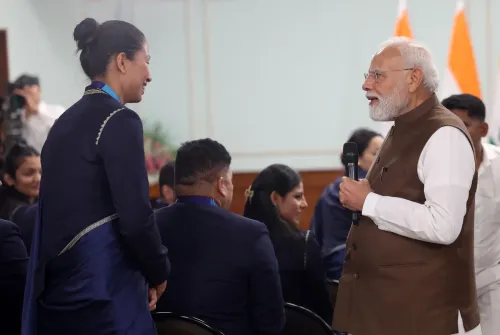
Prime Minister Narendra Modi publicly appreciated Lovlina's resolve on the territorial integrity question, a detail Shekhawat highlighted to underscore the weight the act carries at the highest level of government.
Why Northeast on a map is never a small thing
The eight states of Northeast India have long occupied a complicated place in the national imagination — geographically distant, culturally distinct, and periodically absent from maps, merchandise, and media frames produced outside the region. The central government's Ek Bharat Shreshtha Bharat programme, launched in 2015, was designed precisely to close that cultural distance and reinforce the Northeast's place within the national whole.
When a boxer from Assam corrects a map in a Scottish city, it lands differently than a government circular. It is personal, immediate, and witnessed. Indian political leaders have increasingly linked athletes' off-field conduct to national-unity messaging — but Lovlina's Glasgow moment was not manufactured for a camera. That is what made it shareable.
Shekhawat's amplification and its political register
As the minister overseeing culture, Shekhawat's decision to amplify this particular story — pairing athletic achievement with a defence of cartographic integrity — fits a well-established pattern in BJP political communication: the athlete as a carrier of national values, not just national medals. The framing of 'Rashtra Pratham' does the ideological work in two words, and the rest of the post lets Lovlina's own actions speak.
What travels from this moment is a simple image: an Indian boxer in Glasgow, silver medal pending, pointing at a wrong map and saying, fix it. That image, more than any ministerial statement, is the story.
Point of View
And a boxer from Assam correcting it in a foreign city gives the government's regional-integration messaging an organic, human face. Modi's public appreciation signals that the incident has been absorbed into official nationalist discourse, not merely celebrated as a personal gesture. Expect the episode to circulate as a reference point in conversations about Northeast identity and India's cartographic sovereignty.
NationPress
24 Sept 2026
Frequently Asked Questions
What did Lovlina Borgohain do in Glasgow apart from boxing?
Lovlina Borgohain spotted a map of India in a Glasgow restaurant that omitted Northeast India and demanded the restaurant replace it with a correct map — a stand that Prime Minister Modi publicly appreciated.
What medal did Lovlina Borgohain win in Glasgow?
Lovlina Borgohain won a silver medal in the 75 kg weight category at the Glasgow competition.
Why is Northeast India's absence from maps a sensitive issue?
Northeast India's eight states are geographically distinct and have historically been omitted from maps and media produced outside the region, making such erasures a point of cultural and political grievance for communities there.
Who is Lovlina Borgohain?
Lovlina Borgohain is an Indian boxer from Assam who won a bronze medal at the 2020 Tokyo Olympics in the welterweight category and has represented India at multiple international competitions.
What is Ek Bharat Shreshtha Bharat?
Ek Bharat Shreshtha Bharat is a central government programme launched in 2015 to promote cultural unity and integration across India's regions, with a particular focus on bridging the gap between the Northeast and the rest of the country.