LPG ship with 20,000 tonnes docks at Kandla after Hormuz transit
Synopsis
Even as West Asia burns, India's LPG lifeline held — barely. MV SYMI docked at Kandla with 20,000 tonnes of LPG after threading the Strait of Hormuz, while an India-flagged vessel was attacked off Oman just days earlier. With 13 Indian ships having crossed the Strait since March, the energy corridor is open, but under fire.
Key Takeaways
MV SYMI , a Marshall Islands-flagged vessel carrying 20,000 metric tonnes of LPG , docked at Deendayal Port Authority, Kandla on 17 May after departing from Qatar .
The ship crossed the Strait of Hormuz on 13 May amid severe regional conflict-related shipping disruptions.
Since early March , 13 India-flagged vessels — 12 LPG tankers and one crude oil tanker — have transited the Strait.
An India-flagged vessel was attacked off Oman on 13 May ; all 14 crew members were rescued by Omani authorities.
At least two other India-flagged vessels have been attacked since the West Asia conflict escalated in February .
India's UN Permanent Representative Parvathaneni Harish called attacks on commercial shipping 'unacceptable' at a special ECOSOC session.
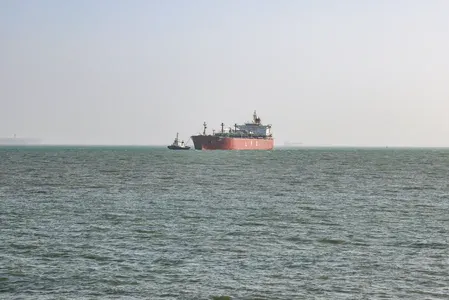
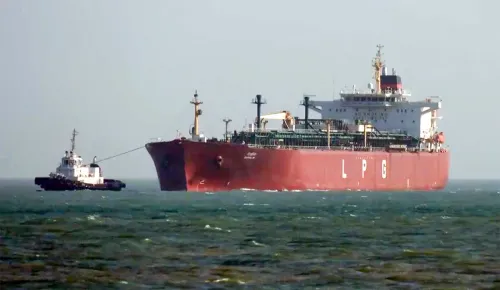
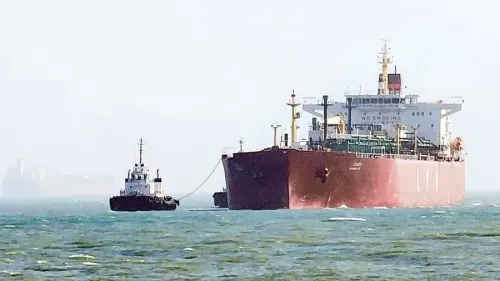
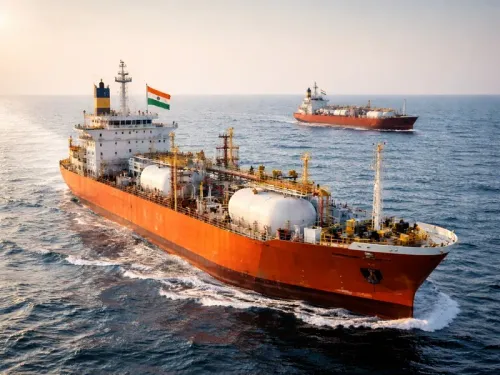
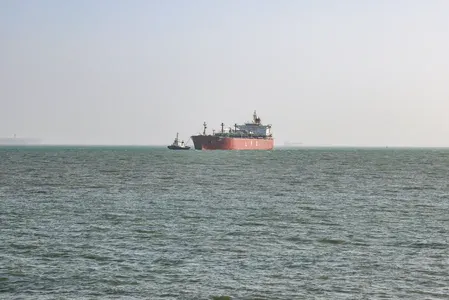
A Marshall Islands-flagged vessel carrying 20,000 metric tonnes of Liquefied Petroleum Gas (LPG) arrived safely at the Deendayal Port Authority in Kandla, Gujarat on 17 May, after navigating the increasingly volatile Strait of Hormuz amid the ongoing West Asia crisis, officials said. The ship, MV SYMI, departed from Qatar and docked at approximately 11:30 pm IST on Saturday, having cleared the Strait on 13 May.
The Voyage and Its Significance
The successful docking of MV SYMI underscores the continued — if precarious — flow of energy supplies to India through one of the world's most strategically critical chokepoints. Since early March, 13 India-flagged vessels — comprising 12 LPG tankers and one crude oil tanker — have crossed the Strait of Hormuz, a narrow waterway near the Omani coast through which roughly one-fifth of global oil and gas exports normally transit.
This comes amid a severe disruption to shipping in the region following the outbreak of conflict on 28 February, when the US and Israel launched joint attacks on Iran, triggering retaliatory strikes. Officials have described the resulting energy supply disruption as one of the worst the world has seen in recent decades.
India-Flagged Vessel Attacked Off Oman
The arrival of MV SYMI follows a serious incident on 13 May, when an India-flagged commercial vessel was attacked off the coast of Oman. All 14 crew members aboard the vessel — which was sailing from Somalia — were rescued by Omani authorities. The identity of those responsible for the strike had not been confirmed at the time of reporting. At least two other India-flagged vessels have also come under attack since the regional conflict escalated earlier this year.
India's Position at the United Nations
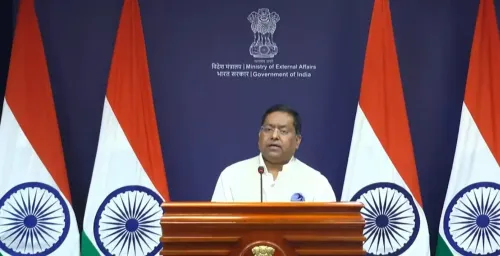
India has strongly condemned attacks on commercial shipping in the Strait of Hormuz, characterising them as 'unacceptable' at a special session of the United Nations Economic and Social Council (ECOSOC) convened to address threats to global energy and supply flows. Parvathaneni Harish, India's Permanent Representative to the United Nations, stated that targeting civilian crew members and disrupting freedom of navigation 'cannot be justified.' His remarks came in the days immediately following the attack on the India-flagged vessel off Oman.
Broader Energy Security Stakes
The Strait of Hormuz remains the world's single most critical energy corridor, with nearly one-fifth of global energy supplies passing through it under normal conditions. The ongoing conflict has severely disrupted ship movement through the narrow waterway, raising alarms across energy-importing nations. For India, which depends heavily on Gulf energy imports to meet domestic LPG and crude oil demand, safe passage through the Strait is a matter of direct economic and strategic consequence.
With tensions in the region showing no sign of abating, India's ability to sustain energy imports through the Strait will remain a key variable in its energy security calculus in the weeks ahead.
Point of View
Not a resolution. India has managed to keep its LPG supply chain alive through the Strait of Hormuz, but the margin is thin — three India-flagged vessels attacked, crew rescued by foreign authorities, and the identity of attackers still unconfirmed. India's condemnation at the UN is diplomatically necessary but operationally insufficient. The deeper question is whether India has a contingency for the scenario where the Strait closes entirely, even temporarily — a scenario that is no longer theoretical.
NationPress
2 Oct 2026
Frequently Asked Questions
What happened with the LPG ship that arrived at Kandla on 17 May?
MV SYMI, a Marshall Islands-flagged vessel carrying 20,000 metric tonnes of LPG, docked at Deendayal Port Authority in Kandla, Gujarat at around 11:30 pm on 17 May after departing from Qatar and crossing the Strait of Hormuz on 13 May.
Why is the Strait of Hormuz significant for India's energy supply?
The Strait of Hormuz is a narrow waterway near the Omani coast through which roughly one-fifth of the world's oil and gas exports transit under normal conditions. India depends heavily on Gulf energy imports, making safe passage through the Strait critical to its domestic LPG and crude oil supply.
Has any India-flagged vessel been attacked in the region?
Yes. An India-flagged commercial vessel was attacked off the coast of Oman on 13 May 2025. All 14 crew members were rescued by Omani authorities, but the attackers had not been identified at the time of reporting. At least two other India-flagged vessels have also come under attack since the conflict escalated in February.
What has India said about attacks on shipping in the Strait of Hormuz?
India has strongly condemned the attacks, calling them 'unacceptable' at a special session of the UN Economic and Social Council. Parvathaneni Harish, India's Permanent Representative to the UN, stated that targeting civilian crew and disrupting freedom of navigation cannot be justified.
How many Indian ships have crossed the Strait of Hormuz since the conflict began?
Since early March, 13 India-flagged vessels — comprising 12 LPG tankers and one crude oil tanker — have crossed the Strait of Hormuz despite the ongoing conflict and shipping disruptions in the region.