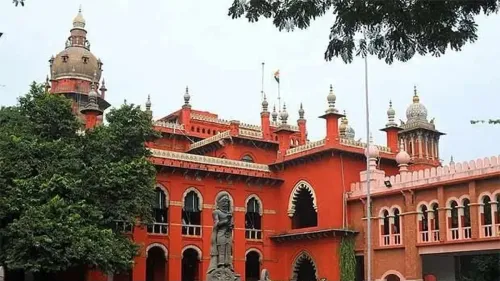
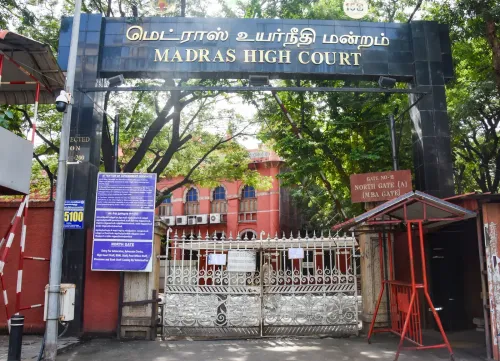
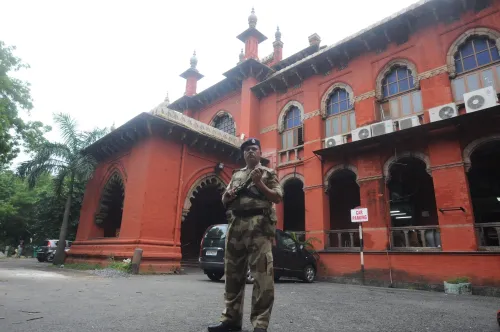
Madras HC: Cremation rights limited to local body residents, not outsiders

Synopsis
The Madurai Bench of the Madras High Court has drawn a firm legal line: residents of one local body cannot walk into another panchayat's cremation ground citing convenience. The ruling, grounded in the Tamil Nadu Panchayats Act, leaves open a narrow door only for Article 25 or established custom — a distinction that will matter for dozens of similar inter-village disputes across Tamil Nadu.
Key Takeaways
The Madurai Bench of the Madras High Court ruled on 18 July that residents of one local body have no automatic right to use cremation grounds maintained by another local body.
The petition was filed by residents of Bommaiahgoundanpatti (Theni-Allinagaram Municipality) seeking access to a cremation ground in Sukkuvadanpatti (Oonchampatti Village Panchayat).
The Bench — Justice G.R.
Swaminathan and Justice K.K.
Ramakrishnan — grounded the ruling in Section 110(f) of the Tamil Nadu Panchayats Act, 1994 .
Access may still be enforceable if protected under Article 25 of the Constitution or backed by a recognised customary practice .
The petitioners established neither ground, claiming only convenience; the petition was dismissed.
The Madurai Bench of the Madras High Court has ruled that residents of one local body have no automatic legal right to use the burial or cremation grounds maintained by a different local body, even if doing so would be more convenient for them. The judgment, delivered on 18 July, clarifies the statutory limits of access to cremation infrastructure across local body boundaries in Tamil Nadu.
Background to the Dispute
The case arose from a petition filed by residents of Bommaiahgoundanpatti, a village falling under the Theni-Allinagaram Municipality in Theni district. The petitioners had traditionally used a cremation ground located in Sukkuvadanpatti, a hamlet within the Oonchampatti Village Panchayat, and argued that the facility was more accessible to their village than their own local body's cremation ground.
The dispute escalated after residents of Sukkuvadanpatti objected to continued use of their cremation ground by outsiders and physically prevented the petitioners from performing cremations there. Authorities convened a peace committee meeting in an attempt to resolve the matter, but the residents of Sukkuvadanpatti declined to alter their position, leaving the petitioners to seek judicial relief.
What the Court Ruled
A Division Bench comprising Justice G.R. Swaminathan and Justice K.K. Ramakrishnan dismissed the petition, holding that mere convenience cannot be the basis for asserting a right over another local body's cremation facility. The Bench examined Section 110(f) of the Tamil Nadu Panchayats Act, 1994, which places a statutory duty on every village panchayat to establish and maintain burial and burning grounds for the needs of its own residents. The court found that the legislation does not extend this obligation to non-residents of the panchayat.
The Bench also referred to the Tamil Nadu Village Panchayats (Provision of Burial and Burning Grounds) Rules, 1999, which require those in charge of such grounds to maintain records of every burial or cremation and report them to officers appointed by the village panchayat. These records are directly linked to death registration under the Registration of Births and Deaths Act, 1969, making administrative coordination between cremation grounds and local bodies essential. The court held that restricting access to residents of the concerned local body enables authorities to fulfil these statutory responsibilities effectively.
The Two Exceptions the Court Recognised
The ruling is not absolute. The Bench clarified that the position would differ in two scenarios: first, if access to a particular cremation or burial ground is protected as a fundamental right under Article 25 of the Constitution; and second, if the ground has acquired the character of a consecrated place open to all Hindus by virtue of a long-standing and recognised customary practice. In either case, the right could be enforceable regardless of local body boundaries.
In the present matter, however, the petitioners based their claim solely on convenience. They neither invoked Article 25 nor established any customary right over the Sukkuvadanpatti cremation ground. The court therefore found that no enforceable legal right existed and dismissed the petition.
Significance of the Judgment
The ruling sets a clear precedent for how cremation and burial ground access disputes are to be adjudicated in Tamil Nadu. It reinforces the principle that local body infrastructure is intended primarily for the residents that body is statutorily obligated to serve, while leaving open a constitutional and customary law pathway for communities that can establish a deeper historical or religious claim. Similar disputes over shared cremation grounds have surfaced across rural Tamil Nadu, making this judgment a reference point for panchayat administrations and district officials managing inter-village tensions.
Point of View
But it also implicitly calls on the state government to audit whether every panchayat actually has a functional cremation ground. Where it does not, the burden falls on the very communities least equipped to litigate Article 25 claims. The customary-right exception the court preserved is valuable in principle, but establishing it requires documentary and testimonial evidence that rural petitioners may struggle to produce. The real fix is administrative, not judicial.
NationPress
17 Oct 2026
Frequently Asked Questions
What did the Madras High Court rule on cremation ground access?
The Madurai Bench ruled that residents of one local body cannot claim a right to use the burial or cremation ground of another local body simply on grounds of convenience. The court held that such facilities are statutorily meant for the residents of the local body that maintains them.
What law did the court rely on in this judgment?
The Bench primarily relied on Section 110(f) of the Tamil Nadu Panchayats Act, 1994, which obliges every village panchayat to establish and maintain burial and burning grounds for its own residents. It also cited the Tamil Nadu Village Panchayats (Provision of Burial and Burning Grounds) Rules, 1999.
Are there any exceptions to this ruling?
Yes. The court clarified that the right to use another local body's cremation ground could still be enforceable if it is protected as a fundamental right under Article 25 of the Constitution, or if the ground has acquired the status of a consecrated place open to all Hindus through a long-standing and recognised customary practice.
Who were the parties in this case?
The petitioners were residents of Bommaiahgoundanpatti, which falls under the Theni-Allinagaram Municipality in Theni district. They sought access to a cremation ground in Sukkuvadanpatti, a hamlet within the Oonchampatti Village Panchayat, whose residents had objected to the continued use.
Why did the court dismiss the petition?
The court dismissed the petition because the petitioners grounded their claim solely on convenience. They neither invoked their fundamental rights under Article 25 of the Constitution nor established any customary right over the Sukkuvadanpatti cremation ground, leaving them with no enforceable legal basis.