Tamil Nadu moves Supreme Court against Madras HC's statewide cow slaughter ban
Synopsis
Tamil Nadu is challenging a Madras High Court ruling that effectively imposed a blanket statewide cow slaughter ban by reviving a 1976 Government Order — going further than even the original petitioner had asked. The Supreme Court showdown will test how far Directive Principles can override a state's own regulatory legislation.
Key Takeaways
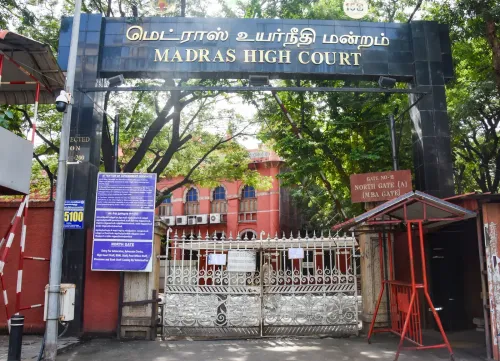
Tamil Nadu filed an SLP in the Supreme Court challenging the Madras High Court 's order directing a statewide ban on cow slaughter.
The High Court's 27 May order invoked a 1976 Government Order and Article 48 of the Constitution to impose the ban.
The order was passed by Justice G.R.
Swaminathan and Justice V.
Lakshminarayanan on a PIL by K.
Surya Prasanth of Indu Makkal Katchi .
Tamil Nadu argues the High Court exceeded the statutory framework set by the Tamil Nadu Animal Preservation Act, 1958 , which regulates but does not blanket-ban cattle slaughter.
The SLP is currently on the apex court's defect list and is yet to be listed for hearing.
The Tamil Nadu government has approached the Supreme Court of India challenging a Madras High Court order that directed the immediate enforcement of a statewide ban on cow slaughter by invoking a 1976 Government Order. The special leave petition (SLP), filed by the Secretary to the Government, Animal Husbandry Department, is currently on the apex court's defect list and is yet to be scheduled for hearing.
What the Madras High Court Ordered
The impugned order was passed on 27 May by a vacation Bench comprising Justice G.R. Swaminathan and Justice V. Lakshminarayanan, while allowing a public interest litigation (PIL) filed by K. Surya Prasanth, youth wing secretary of the Indu Makkal Katchi. The petitioner had alleged that temporary sheds were being erected in Coimbatore for cow slaughter ahead of Bakrid celebrations and sought directions to prevent slaughter in public places.
The High Court went beyond the original prayer. While the writ petition sought to confine slaughter to designated slaughterhouses, the Bench directed the Chief Secretary and the Additional Director General of Police (Law and Order) to ensure that no cow or calf is slaughtered anywhere in Tamil Nadu — either during Bakrid or on any other day.
The Constitutional and Legal Basis Cited by the Court
Invoking Article 48 of the Constitution — a Directive Principle that directs the state to prohibit the slaughter of cows, calves, and other milch and draught cattle — the court held that the 1976 Government Order banning cow and heifer slaughter in Tamil Nadu slaughterhouses carries the force of law. It observed that 'since the executive power is co-terminus with the legislative power, a Government Order issued by the Government banning cow slaughter is very much sustainable and has to be enforced.'
Tamil Nadu's Challenge Before the Supreme Court
The state government has contended that the High Court's directions travel beyond the statutory framework governing animal slaughter in Tamil Nadu. According to the SLP, the Tamil Nadu Animal Preservation Act, 1958, regulates cattle slaughter by prescribing conditions under which it may be permitted — it does not impose a blanket prohibition. The state has also cited the Prevention of Cruelty to Animals Act, 1960, the Prevention of Cruelty to Animals (Slaughter House) Rules, 2001, the Tamil Nadu Urban Local Bodies Act, 1998, and the Tamil Nadu Urban Local Bodies Rules, 2023 in support of its position.
Notably, the state's own original prayer before the High Court had sought to restrict slaughter to designated slaughterhouses — not to lift the ban altogether. The Tamil Nadu government is now arguing that the court overstepped by converting a regulatory direction into an absolute prohibition.
What Happens Next
The SLP remains on the Supreme Court's defect list, meaning procedural requirements must be addressed before it can be listed for substantive hearing. Once admitted, the apex court will determine whether the Madras High Court's sweeping order is consistent with the legislative scheme governing animal slaughter in the state. The outcome could have implications for how Directive Principles under Article 48 interact with existing state legislation on cattle slaughter across India.
Point of View
Which is explicitly non-justiciable, into an enforceable executive mandate by resurrecting a five-decade-old Government Order. Tamil Nadu's own statute, the Animal Preservation Act of 1958, is a conditional regulatory framework, not a prohibition — and the state's original petition before the High Court did not seek a blanket ban. The Supreme Court will have to weigh whether a vacation Bench can, via PIL, effectively legislate what Parliament and the state legislature have deliberately left as a regulated space. This case also arrives at a politically charged moment: the DMK-led state government's challenge will be framed by some as a religious-rights dispute, but the cleaner legal argument — and the one more likely to succeed — is the narrower statutory one about judicial overreach.
NationPress
30 Sept 2026
Frequently Asked Questions
Why has Tamil Nadu moved the Supreme Court over the cow slaughter ban?
Tamil Nadu has challenged a Madras High Court order that directed a blanket ban on cow slaughter across the state by enforcing a 1976 Government Order. The state argues the High Court's direction exceeds the statutory framework of the Tamil Nadu Animal Preservation Act, 1958, which regulates but does not completely prohibit cattle slaughter.
What did the Madras High Court order on cow slaughter?
On 27 May, a Madras High Court vacation Bench directed the Chief Secretary and the Additional Director General of Police (Law and Order) to ensure no cow or calf is slaughtered anywhere in Tamil Nadu — during Bakrid or on any other day. The court relied on Article 48 of the Constitution and a 1976 Government Order banning cow and heifer slaughter in Tamil Nadu slaughterhouses.
What is the current status of Tamil Nadu's Supreme Court petition?
The special leave petition filed by the Secretary to the Government, Animal Husbandry Department, is currently on the Supreme Court's defect list. It has not yet been listed for hearing, meaning procedural defects must be resolved before the case can proceed.
Who filed the original PIL that led to the Madras High Court order?
The PIL was filed by K. Surya Prasanth, youth wing secretary of the Indu Makkal Katchi. He alleged that temporary sheds were being set up in Coimbatore for cow slaughter ahead of Bakrid and sought directions to restrict slaughter to designated slaughterhouses.
Which laws has Tamil Nadu cited in its Supreme Court challenge?
Tamil Nadu has cited the Tamil Nadu Animal Preservation Act, 1958; the Prevention of Cruelty to Animals Act, 1960; the Prevention of Cruelty to Animals (Slaughter House) Rules, 2001; the Tamil Nadu Urban Local Bodies Act, 1998; and the Tamil Nadu Urban Local Bodies Rules, 2023, to argue that existing law regulates rather than prohibits cattle slaughter.