Karur stampede: Tamil Nadu moves SC against HC order quashing compassionate jobs
Synopsis
Tamil Nadu's attempt to offer government jobs to the families of Karur stampede victims has hit a constitutional wall. The Madras High Court ruled it violated Articles 14 and 16, and now the Supreme Court must decide whether humanitarian intent can override recruitment law — a verdict that could redefine how states respond to public tragedies.
Key Takeaways
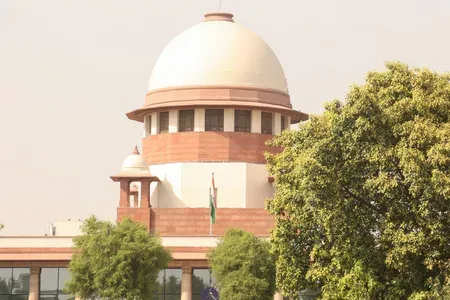
Tamil Nadu filed an SLP in the Supreme Court challenging the Madras High Court 's order quashing compassionate appointments for Karur stampede victims' families.
The Madurai Bench's 27 July judgment, by Justice C.V.
Karthikeyan and Justice R.
Sakthivel , held the appointments unconstitutional under Articles 14 and 16 .
The court ruled compassionate appointments apply only to families of government employees who die in harness , not to victims of public tragedies.
The HC found the state had exceeded its executive authority under Article 162 and that the appointments would disadvantage thousands of existing eligible applicants .
The Supreme Court will now examine whether to admit the SLP and potentially stay the High Court order.
The Tamil Nadu government has approached the Supreme Court challenging a Madras High Court ruling that struck down its decision to grant compassionate appointments to the families of victims who died in the September 2025 Karur stampede. The state filed a Special Leave Petition (SLP) against the 27 July judgment of the Madurai Bench, which held the appointments unconstitutional.
What the Madras High Court Ruled
A Division Bench comprising Justice C.V. Karthikeyan and Justice R. Sakthivel delivered the judgment on 27 July, holding that compassionate appointments cannot be extended through executive discretion in a way that bypasses constitutional guarantees of equality and equal opportunity in public employment. The Bench invoked Articles 14 and 16 of the Constitution, ruling that executive power under Article 162 must remain subject to those guarantees.
The court observed that compassionate appointments are designed specifically to provide immediate financial relief to the family of a government employee who dies in harness — and cannot be repurposed as a general rehabilitation measure following a public tragedy. 'Exercise of executive power must be within the constitutional limits. If executive action were to be left unfettered and given free hand, chaos will reign,' the Bench stated.
Why the State's Move Was Held Unconstitutional
The High Court found that extending compassionate appointments to stampede victims' families would unfairly place them ahead of thousands of eligible applicants already waiting under the existing compassionate appointment policy. While the Bench acknowledged the gravity of the tragedy and the state's intent to support bereaved families, it clarified that the government retains the option to provide financial assistance or other relief measures — just not public employment in violation of recruitment principles.
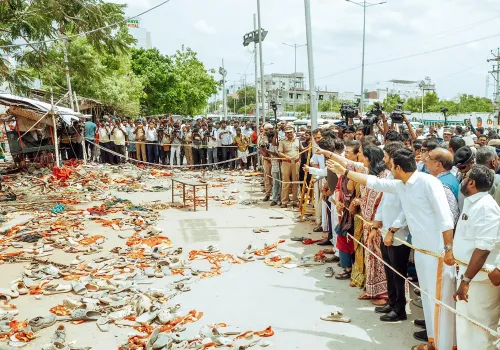
Notably, the Tamil Nadu government's original decision came in the wake of the Karur stampede of September 2025, which claimed multiple lives and drew widespread public attention. The state's attempt to offer government jobs to the victims' kin was presented as a humanitarian gesture, but the court ruled it inconsistent with settled legal principles governing such appointments.
Tamil Nadu's Challenge Before the Supreme Court
By filing the SLP, Tamil Nadu is now asking the Supreme Court to examine whether the High Court erred in striking down the compassionate appointments. The matter is expected to come up for hearing before the apex court, which will assess whether the state's exercise of executive discretion in the aftermath of a public tragedy can be reconciled with constitutional equality norms.
This case raises a broader question about the limits of state benevolence in the face of public disasters — and whether compassionate appointment frameworks, designed for a narrow purpose, can be expanded by executive fiat without legislative backing.
What Happens Next
The Supreme Court will now decide whether to admit the SLP and, if so, whether to stay the High Court's order in the interim. The families of the Karur stampede victims remain in legal limbo pending the apex court's decision. A ruling in Tamil Nadu's favour could set a precedent for state governments seeking to extend employment benefits to disaster victims; an adverse ruling would reaffirm the constitutional boundaries of compassionate appointment schemes.
Point of View
But it exposes a gap in India's disaster-response legal architecture. States have no structured statutory pathway to extend employment benefits to civilian tragedy victims — leaving them to improvise through executive orders that courts will inevitably strike down. Tamil Nadu's SLP is less about winning this case and more about buying time for families still without relief. The Supreme Court's response will signal whether it is willing to carve out a humanitarian exception, or hold the constitutional line and push the burden back to the legislature where it arguably belongs.
NationPress
14 Sept 2026
Frequently Asked Questions
Why did the Madras High Court strike down Tamil Nadu's compassionate appointments for Karur stampede victims?
The Madurai Bench held that compassionate appointments are legally meant only for families of government employees who die while in service, not for victims of public tragedies. The court ruled the Tamil Nadu government's decision violated Articles 14 and 16 of the Constitution, which guarantee equality and equal opportunity in public employment.
What is the Karur stampede that triggered this legal dispute?
The Karur stampede occurred in September 2025 and resulted in multiple deaths, prompting the Tamil Nadu government to announce compassionate appointments for the victims' families as a relief measure. The move was subsequently challenged in the Madras High Court, which struck it down as unconstitutional.
What is a Special Leave Petition (SLP) and why has Tamil Nadu filed one?
An SLP is a constitutional remedy under Article 136 that allows a party to approach the Supreme Court against any judgment of a lower court. Tamil Nadu filed the SLP to challenge the Madras High Court's 27 July ruling, seeking the apex court's intervention to restore the compassionate appointments for the stampede victims' families.
Can the Tamil Nadu government provide any relief to the Karur stampede victims' families?
Yes. The Madras High Court explicitly stated that the government is free to provide financial assistance or other relief measures to the bereaved families. What it cannot do, the court held, is grant public employment in violation of constitutional recruitment principles.
What could the Supreme Court's ruling mean for other states?
A ruling in Tamil Nadu's favour could open the door for state governments to extend employment benefits to civilian disaster victims through executive orders. An adverse ruling would reaffirm that compassionate appointments are constitutionally restricted to a narrow category and that any expansion requires legislative action.