Seoul stocks fall 2.19% as Mideast tensions, AI warnings hit KOSPI
Synopsis
Seoul's KOSPI plunged more than 3% at the open on Monday — its sharpest intraday drop in weeks — after Iran-Gulf navigation talks on the Strait of Hormuz were abruptly postponed and AI executives issued fresh warnings on technology risks. Samsung and SK Hynix led losses, while defence major Hanwha Aerospace was a rare gainer, reflecting how geopolitical anxiety is reshaping capital flows across Asia.
Key Takeaways
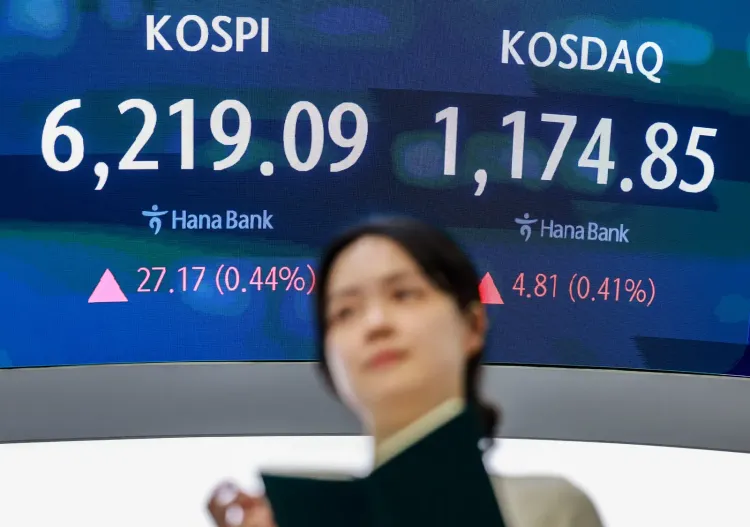
KOSPI fell 151.27 points ( 2.19% ) to 6,758.64 as of 11:27 am local time on 14 September 2026 , after opening over 3% lower.
Postponement of Iran-Gulf talks on Strait of Hormuz navigation and AI executive warnings were the twin triggers for the sell-off.
SK Hynix dropped 4.3% , Samsung Electronics fell 2.31% , and Hyundai Motor tumbled 3.01% ; Hanwha Aerospace bucked the trend, gaining 4.07% .
The Korean won stood at 1,344.3 won per US dollar, up 0.2 won from the previous session.
On the preceding Friday, KOSPI had already closed down 1.76% at 6,909.91 on surging oil and US inflation concerns.
Overnight, the Dow Jones fell 0.6% and Nasdaq declined 0.65% on Middle East-driven oil fears.
The Seoul stock market traded sharply lower on Monday, 14 September 2026, with the benchmark Korea Composite Stock Price Index (KOSPI) declining 151.27 points, or 2.19%, to 6,758.64 as of 11:27 am local time. A combination of geopolitical uncertainty in the Middle East and cautionary remarks from executives at major artificial intelligence (AI) firms rattled investor confidence, pushing the index more than 3% lower at the open before it partially recovered.
What Triggered the Sell-Off
Investor anxiety escalated after anticipated Iran-Gulf talks on navigation rights in the Strait of Hormuz were postponed, leaving a critical global shipping corridor shrouded in uncertainty. The Strait of Hormuz handles a significant share of the world's seaborne oil trade, and any disruption carries direct implications for energy costs and inflation globally.
Adding to the pressure, warnings from AI company executives about the pace and risks of technology development unsettled sentiment in the tech-heavy segments of the market. Notably, this comes on the heels of Friday's sharp sell-off, when surging oil prices stoked inflation fears ahead of key US inflation data that investors were watching for signals on Federal Reserve interest rate policy.
Stock-by-Stock Impact
Market heavyweight Samsung Electronics fell 2.31%, while memory-chip rival SK Hynix dropped a steeper 4.3%. Hyundai Motor tumbled 3.01%, and battery manufacturer LG Energy Solution retreated 1.11%. The session was not uniformly negative: defence conglomerate Hanwha Aerospace bucked the trend, advancing 4.07% — a pattern consistent with geopolitical risk-on behaviour in defence names when regional tensions flare.
Currency and Friday's Context
The Korean won was quoted at 1,344.3 won per US dollar, up 0.2 won from the previous session's close. On the preceding Friday, the KOSPI had closed down 124.01 points, or 1.76%, at 6,909.91, after opening 3.29% lower. Trade volume on that session was moderate at 265.92 million shares worth 19.39 trillion won (approximately US$14.4 billion), with losers outnumbering gainers 473 to 368. Individual investors were net buyers of 1.87 trillion won worth of stocks on Friday, while institutions and foreign investors sold a net 1.22 trillion won and 2.29 trillion won, respectively.
Global Market Spillover
Overnight, rising oil prices triggered a sell-off on Wall Street amid escalating Middle East tensions. The Dow Jones Industrial Average fell 0.6%, while the tech-focused Nasdaq Composite declined 0.65%. The back-to-back weakness across global indices underscores how deeply interconnected energy-market volatility and geopolitical flashpoints have become with equity sentiment worldwide. For Seoul, which hosts some of the world's largest chip and automotive manufacturers, the double pressure of a risk-off global environment and AI-sector caution is particularly acute.
What to Watch Next
Markets will closely track developments around the Strait of Hormuz talks, forthcoming US inflation data, and any further statements from AI executives. A resolution — or further breakdown — in Iran-Gulf negotiations could rapidly reprice energy and risk assets across Asia. South Korean equities remain vulnerable to both external macro shocks and any further deterioration in semiconductor demand signals.
Point of View
SK Hynix, Hyundai — to exactly the two fault lines now cracking simultaneously: energy price volatility and US tech sentiment. Hanwha Aerospace's 4% gain is also telling; it signals that some capital is not fleeing South Korean equities but rotating within them, betting that instability itself is a revenue opportunity for defence firms. If the Strait of Hormuz situation worsens and the Fed holds rates higher for longer on sticky inflation, Seoul could face a prolonged re-rating rather than a one-session wobble.
NationPress
14 Sept 2026
Frequently Asked Questions
Why did Seoul stocks fall sharply on 14 September 2026?
The KOSPI dropped 2.19% to 6,758.64 on 14 September 2026 due to two converging pressures: the postponement of anticipated Iran-Gulf talks on navigation in the Strait of Hormuz, which heightened Middle East uncertainty, and cautionary warnings from AI company executives that dampened sentiment in the technology sector. The index had opened more than 3% lower before partially recovering.
Which South Korean stocks were most affected?
Memory-chip maker SK Hynix was among the hardest hit, falling 4.3%, while Samsung Electronics declined 2.31% and Hyundai Motor tumbled 3.01%. LG Energy Solution retreated 1.11%. Defence group Hanwha Aerospace was a notable exception, rising 4.07% as investors rotated into defence names amid geopolitical tension.
What is the Strait of Hormuz, and why do the talks matter for markets?
The Strait of Hormuz is a critical maritime chokepoint through which a large portion of the world's seaborne oil passes. The postponement of Iran-Gulf talks on safe navigation through the strait raised fears of supply disruption, which can push oil prices higher and stoke global inflation — directly affecting export-heavy economies like South Korea.
How did global markets perform ahead of Seoul's session?
Overnight, US equities sold off as rising oil prices amid Middle East tensions hit sentiment. The Dow Jones Industrial Average fell 0.6% and the Nasdaq Composite declined 0.65%, setting a negative tone for Asian markets when they opened on Monday.
What were trading flows like on the previous Friday session?
On the preceding Friday, the KOSPI closed down 124.01 points, or 1.76%, at 6,909.91 on oil-driven inflation fears. Individual investors were net buyers of 1.87 trillion won, while institutions and foreign investors were net sellers of 1.22 trillion won and 2.29 trillion won respectively, indicating institutional and foreign-led selling pressure.