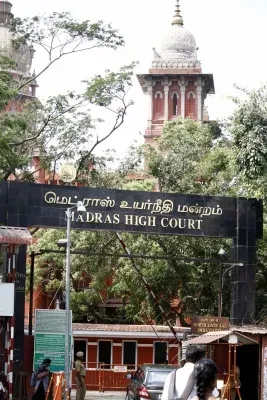
Tamil Nadu SOP to fast-track sexual assault trials; Madras HC seeks report

Synopsis
Tamil Nadu has told the Madras High Court it is drafting an SOP to fast-track sexual assault trials — and expanding DNA testing labs to cut forensic delays. The disclosure came in a case where a survivor alleges rape by two policemen in Tiruvannamalai in September 2025, with trial finally set to begin on 24 June, nearly nine months later.
Key Takeaways
Tamil Nadu is drafting a Standard Operating Procedure (SOP) to speed up investigation, prosecution, and trial of sexual offences against women and children.
Advocate General Vijay Narayan told the Madras High Court on 22 June that forensic delays — especially in DNA analysis — are a key bottleneck.
The state plans to expand DNA testing facilities after acknowledging that several regional forensic labs currently lack such capabilities.
The case stems from a 26-year-old survivor allegedly raped by two policemen in Tiruvannamalai district in September 2025 ; trial is set for 24 June .
The Madras HC division bench has directed the state and its Registrar General to submit a comprehensive status report within two weeks .
The government urged courts to follow the two-month trial deadline under Section 346(1) of the BNSS .
The Tamil Nadu government is drafting a Standard Operating Procedure (SOP) to expedite the investigation, prosecution, and trial of sexual offences against women and children, the Madras High Court was informed on Monday, 22 June. The disclosure came during the hearing of a writ petition filed by a 26-year-old rape survivor who sought the court's intervention over prolonged delays in the commencement of her trial.
What the Government Told the Court
Advocate General Vijay Narayan, appearing for the state before a division bench of Chief Justice Sushrut Arvind Dharmadhikari and Justice G. Arul Murugan, said the government has resolved to accord top priority to strengthening infrastructure for the speedy disposal of such cases. He noted that delays in sexual offence matters frequently originate at the investigation stage, chiefly because of the time required to obtain forensic science reports — particularly DNA analysis.
The Advocate General disclosed that several regional forensic science laboratories across Tamil Nadu currently lack DNA testing capabilities, causing significant hold-ups in completing investigations and filing charge sheets. To address this, the government intends to establish additional facilities and upgrade existing forensic infrastructure to ensure faster evidence processing.
The Underlying Case
The petition before the court concerns a survivor who was allegedly raped by two policemen in Tiruvannamalai district in September 2025. A single judge of the High Court had, on 4 June, dismissed discharge petitions filed by the accused. Following that order, the trial court framed charges against the accused on 17 June, and the trial is scheduled to commence on 24 June.
Push for Day-to-Day Trials
The Advocate General also urged the High Court to sensitise trial judges on the importance of conducting hearings in sexual offence cases on a day-to-day basis. He specifically called for strict adherence to the two-month timeframe prescribed under Section 346(1) of the Bharatiya Nagarik Suraksha Sanhita (BNSS) — a provision that mandates time-bound completion of such proceedings.
This comes amid longstanding concerns from legal advocates and survivor groups that India's criminal justice system routinely fails to meet statutory timelines in cases of sexual violence, allowing trials to drag on for years and compounding trauma for survivors.
Court's Directive
Taking note of the state's submissions, the division bench directed both the Tamil Nadu government and the Registrar General of the Madras High Court to submit a comprehensive status report within two weeks. The report is expected to include data on pending sexual offence cases involving women and children, details of existing forensic and judicial infrastructure, and a roadmap of additional requirements needed to ensure speedy investigation and trial.
The court's intervention signals growing judicial impatience with systemic delays in sexual offence cases — and places the onus squarely on the state to back its policy commitments with measurable action.
Point of View
But the underlying case exposes the gap between policy intent and ground reality: a survivor waited nearly nine months from the alleged offence before a trial date was even set. The forensic bottleneck the Advocate General cited — regional labs without DNA testing — is not new information; it has been flagged in multiple judicial audits. The real test is whether the two-week status report the Madras HC has demanded translates into a funded, time-bound infrastructure plan, or becomes another compliance filing that gathers dust. With the BNSS now codifying a two-month trial mandate, courts have sharper statutory teeth — but only if judges are willing to use them and the state provides the forensic backbone to make speed possible.
NationPress
21 Sept 2026
Frequently Asked Questions
What is the Tamil Nadu SOP for sexual assault cases?
Tamil Nadu is drafting a Standard Operating Procedure (SOP) to streamline the investigation, prosecution, and trial of sexual offences against women and children. The SOP aims to address systemic delays, particularly those caused by slow forensic evidence processing, and is expected to include provisions for day-to-day trial conduct.
Why does the Madras High Court want a status report?
The Madras High Court directed the Tamil Nadu government and its Registrar General to submit a comprehensive report within two weeks after being informed of widespread delays in sexual offence cases. The report must cover pending case data, existing forensic and judicial infrastructure, and additional requirements needed for speedy trials.
What is the Tiruvannamalai rape case about?
A 26-year-old survivor has alleged she was raped by two policemen in Tiruvannamalai district in September 2025. The accused filed discharge petitions, which a single judge of the Madras High Court dismissed on 4 June; the trial court framed charges on 17 June, and the trial is scheduled to begin on 24 June.
What does Section 346(1) of the BNSS say about sexual offence trials?
Section 346(1) of the Bharatiya Nagarik Suraksha Sanhita (BNSS) prescribes a two-month timeframe for completing trials in sexual offence cases. The Tamil Nadu Advocate General urged the High Court to sensitise trial judges to adhere to this statutory deadline.
Why are DNA testing delays a problem in Tamil Nadu's sexual offence cases?
Several regional forensic science laboratories in Tamil Nadu currently lack DNA testing capabilities, forcing investigators to send samples to fewer equipped facilities. This creates backlogs that delay charge-sheet filing and, ultimately, the start of trials — a gap the state says it plans to address by establishing additional DNA testing facilities.