Supreme Court stays Madras HC cow slaughter ban order in Tamil Nadu
Synopsis
The Supreme Court has halted a sweeping Madras High Court order that effectively imposed a statewide cow slaughter ban in Tamil Nadu by reviving a 1976 Government Order — going well beyond the original PIL's narrow ask. With the apex court already signalling the judgment needs 'correction', the case puts judicial overreach and Tamil Nadu's regulatory approach to cattle slaughter on a collision course.
Key Takeaways
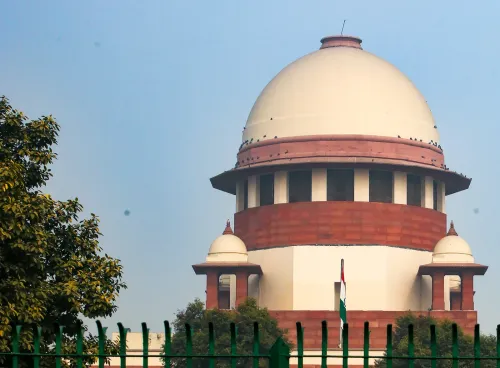
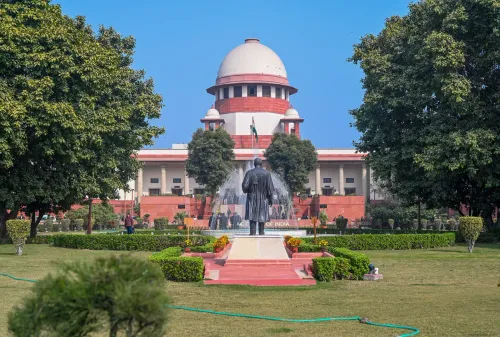
The Supreme Court on 13 July stayed the Madras High Court order directing a statewide ban on cow slaughter in Tamil Nadu .
A Bench of Justices Vikram Nath and Sandeep Mehta observed the High Court judgment required 'correction' and issued notice on the state's SLP .
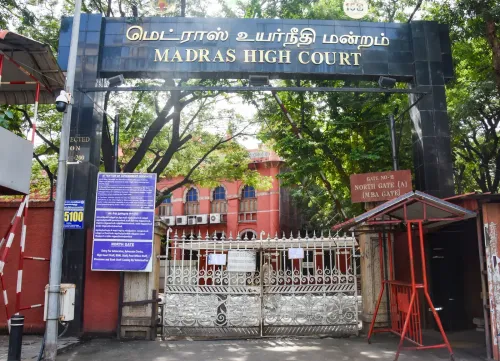
The Madras HC's 27 May order — passed on a PIL by Indu Makkal Katchi 's K.
Surya Prasanth — directed that no cow or calf be slaughtered anywhere in Tamil Nadu, including during Bakrid .
Tamil Nadu argued the High Court's directions exceed the Tamil Nadu Animal Preservation Act, 1958 , which regulates but does not prohibit cattle slaughter.
The original PIL sought only that slaughter be confined to designated slaughterhouses; the High Court went further by ordering a blanket ban.
The Supreme Court's final ruling could have implications for cattle-slaughter regulation across other southern states.
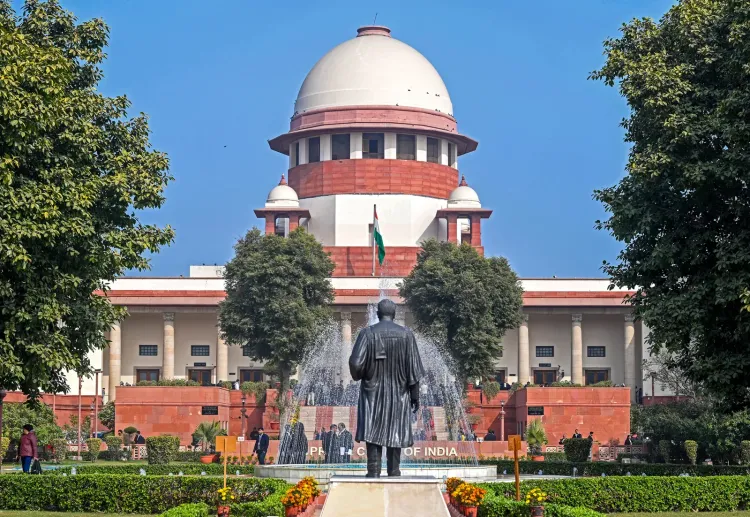
The Supreme Court on Monday, 13 July stayed the Madras High Court's order that had directed the immediate, statewide enforcement of a ban on cow slaughter in Tamil Nadu by invoking a 1976 Government Order. The stay was granted while the apex court issued notice on a Special Leave Petition (SLP) filed by the Tamil Nadu government challenging the High Court's directive.
What the Supreme Court Said
A Bench of Justices Vikram Nath and Sandeep Mehta issued the interim stay after observing that the Madras High Court's impugned judgment required 'correction' before it could be allowed to operate. The Bench's remark signals early scepticism about the breadth of the High Court's directions, though the matter remains sub judice.
The Madras High Court Order Under Challenge
The order under challenge was passed on 27 May by a vacation Bench of Justices G.R. Swaminathan and V. Lakshminarayanan, while allowing a Public Interest Litigation (PIL) filed by K. Surya Prasanth, youth wing secretary of the Indu Makkal Katchi. The petitioner had sought action after alleging that temporary sheds had been erected in Coimbatore for cow slaughter during Bakrid celebrations.
The High Court went significantly beyond the relief sought. While the original PIL asked only that slaughter be confined to designated slaughterhouses, the court directed that no cow or calf be slaughtered anywhere in Tamil Nadu — either during Bakrid or on any other day. It instructed the Chief Secretary and the Additional Director General of Police (Law and Order) to issue compliance directions to all concerned officials.
Invoking Article 48 of the Constitution — which directs the state to take steps to prohibit the slaughter of cows, calves, and other milch and draught cattle — the High Court held that a 1976 Government Order banning cow slaughter in Tamil Nadu's slaughterhouses carried the force of law and had to be enforced.
Tamil Nadu Government's Argument
The state government contended that the High Court's sweeping directions travel beyond the statutory framework that actually governs animal slaughter in Tamil Nadu. According to the SLP, the Tamil Nadu Animal Preservation Act, 1958, regulates cattle slaughter by prescribing specific conditions under which it may be permitted — it does not impose a blanket prohibition.
The state also relied on a cluster of other applicable laws: the Prevention of Cruelty to Animals Act, 1960; the Prevention of Cruelty to Animals (Slaughter House) Rules, 2001; the Tamil Nadu Urban Local Bodies Act, 1998; and the Tamil Nadu Urban Local Bodies Rules, 2023. Together, these statutes, the state argued, constitute a comprehensive regulatory regime that the High Court effectively overrode.
Why This Case Matters
The dispute cuts to a long-running constitutional tension between Article 48's directive on cattle preservation and the rights of communities — particularly Muslims observing Eid al-Adha (Bakrid) — to carry out customary practices within the bounds of existing law. Tamil Nadu has historically maintained a regulatory rather than prohibitory approach to cattle slaughter, distinguishing it from states with outright bans.
Notably, the PIL's original scope was narrow — slaughter in public places — but the Madras High Court's ruling effectively created a statewide prohibition through executive direction, bypassing the legislature. Critics argue this represents judicial overreach into an area where the state legislature has deliberately chosen a regulatory, not prohibitory, path. The Supreme Court's stay and its observation about the need for 'correction' suggest the higher court shares at least some of that concern.
The matter will now proceed to a full hearing, with the Supreme Court's final ruling likely to have implications for similar cattle-slaughter regulatory frameworks in other southern states.
Point of View
Bypassing the legislature entirely. Tamil Nadu's Animal Preservation Act of 1958 is a regulatory statute, not a prohibitory one, and that legislative choice deserves judicial deference. The real question this case will eventually force is whether Article 48's directive principle can be weaponised by courts to impose what elected legislatures have deliberately declined to enact — a question with consequences far beyond Tamil Nadu.
NationPress
12 Oct 2026
Frequently Asked Questions
What did the Supreme Court decide in the Tamil Nadu cow slaughter case?
The Supreme Court on 13 July stayed the Madras High Court's order that had directed a statewide ban on cow slaughter in Tamil Nadu. A Bench of Justices Vikram Nath and Sandeep Mehta issued notice on the Tamil Nadu government's Special Leave Petition and observed that the High Court's judgment required 'correction'.
What did the Madras High Court order in its 27 May judgment?
The Madras High Court directed that no cow or calf be slaughtered anywhere in Tamil Nadu — during Bakrid or on any other day — invoking a 1976 Government Order and Article 48 of the Constitution. It instructed the Chief Secretary and the Additional DGP (Law and Order) to ensure strict compliance across the state.
Why is the Tamil Nadu government challenging the Madras HC order?
The state government argues that the High Court's directions exceed the statutory framework in Tamil Nadu, particularly the Tamil Nadu Animal Preservation Act, 1958, which regulates cattle slaughter under specific conditions but does not impose a blanket ban. The state contends the court effectively created a prohibition that the legislature never enacted.
Who filed the original PIL that led to the Madras HC order?
The PIL was filed by K. Surya Prasanth, youth wing secretary of the Indu Makkal Katchi. He sought directions to prevent cow slaughter in public places, specifically alleging that temporary sheds had been erected in Coimbatore for slaughter during Bakrid celebrations.
What happens next in this legal dispute?
With the Supreme Court's stay in place, the Madras High Court's statewide cow slaughter ban cannot be enforced while the case proceeds. The Supreme Court will hear the Tamil Nadu government's SLP on merits, and its eventual ruling is expected to clarify the limits of judicial direction in areas where state legislatures have chosen a regulatory rather than prohibitory approach.