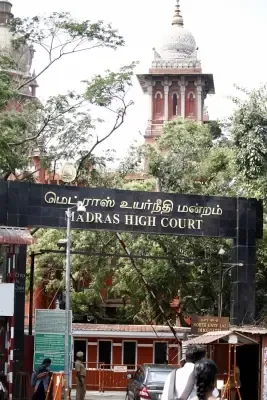
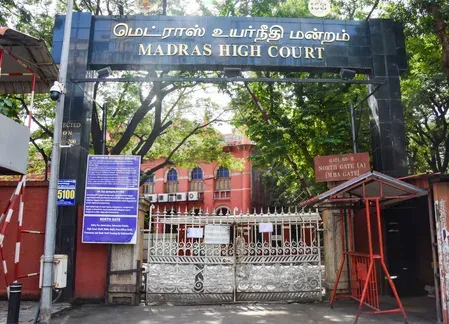
Madras HC questions Tamil Nadu's denial of RSS route march permission
Synopsis
The Madras High Court has openly criticised Tamil Nadu's pattern of refusing RSS route march permissions — noting the ban applies regardless of which party is in power and contrasting it unfavourably with Jammu and Kashmir, where such marches are allowed. With Vijayadashami approaching and a Thursday deadline set, the state must now either find a solution or face further judicial scrutiny.
Key Takeaways
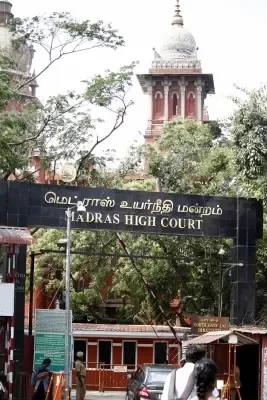
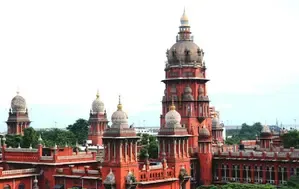
Madras High Court on 14 October 2026 questioned Tamil Nadu 's refusal to permit an RSS route march ahead of Vijayadashami .
Lakshminarayanan criticised repeated rejections, saying they forced organisations to approach courts and created avoidable litigation.
The court noted that RSS marches are reportedly permitted even in Jammu and Kashmir , questioning the restriction in Tamil Nadu.
Jagadeesan sought permission for marches on 18 October , 25 October , or 1 November .
Advocate General Vijaya Narayan cited the proposed venue not being a notified public meeting location as the reason for denial.
The court directed five petitioner representatives to meet State Public Prosecutor John Sathyan ; hearing adjourned to Thursday .
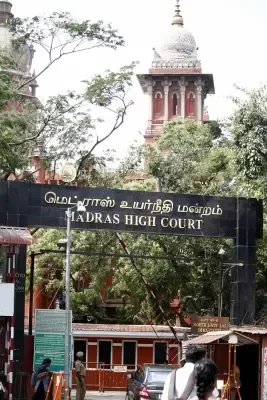
The Madras High Court on Wednesday, 14 October 2026, questioned the Tamil Nadu government's repeated refusal to grant permission for an RSS route march and directed the state to work with organisers to facilitate a peaceful procession and public meeting. The court's intervention came on a petition filed by RSS member V.G. Jagadeesan, who sought police clearance for marches on 18 October, 25 October, 1 November, or another suitable date to mark the organisation's founding day coinciding with Vijayadashami.
Key Observations by the Court
Justice V. Lakshminarayanan orally criticised the state's pattern of rejecting applications for processions, noting that such denials compelled organisations to approach the judiciary and generated avoidable litigation. The judge pointedly observed that permission had been denied to groups across the ideological spectrum — including the Dravidar Kazhagam and the Rashtriya Swayamsevak Sangh (RSS).
Justice Lakshminarayanan also questioned why RSS marches faced restrictions in Tamil Nadu when they were reportedly permitted even in Jammu and Kashmir. In a further oral remark, the court said the state appeared to treat citizens as adversaries when handling requests for protests and processions.
The Petitioner's Case
Senior advocate N.L. Rajah, appearing for the petitioner, argued that the RSS had faced the same difficulty year after year despite seeking only to celebrate its founding day. Police, he submitted, routinely cited potential law and order concerns to reject applications. Rajah also raised a broader access-to-justice concern, questioning how smaller organisations without the resources for prolonged litigation could secure permission if faced with similar blanket refusals.
The proposed programme envisaged participants marching in uniform with a musical band, followed by a public meeting.
State Government's Position
Advocate General Vijaya Narayan told the court that permission had been denied because the proposed venue was not a notified location for holding public meetings — offering a procedural rather than a law and order rationale, distinct from the one cited by police in previous years.
Court's Directions and Next Steps
The court directed five representatives from the petitioners' side to meet State Public Prosecutor John Sathyan and work out arrangements for conducting the programme peacefully. It adjourned the hearing to Thursday and asked the state to submit a report on measures for permitting a peaceful procession.
This dispute has a documented history. Earlier court guidelines had already set out conditions governing RSS route marches in Tamil Nadu. Despite those directives, permission was refused again in 2024, triggering fresh litigation. While ultimately allowing those marches, the court had made clear that police must protect both organisers and the public, comply with judicial directions, and refrain from inventing law and order grounds to reject applications.
With Thursday's hearing now set, the state faces pressure to demonstrate a good-faith effort to resolve the standoff rather than revert to routine refusal — a pattern the court has now criticised across multiple proceedings.
Point of View
Yet repeated judicial interventions have not produced a durable administrative solution. The Advocate General's shift to a venue-notification rationale — distinct from the law and order ground police typically deploy — hints at a government hedging for a workable off-ramp. The deeper issue Rajah raised deserves attention: if organisations without litigation capacity face the same blanket refusals, the right to peaceful assembly is effectively rationed by legal resources, not by law.
NationPress
14 Oct 2026
Frequently Asked Questions
Why did the Madras High Court intervene in the RSS route march case?
The Madras High Court intervened after RSS member V.G. Jagadeesan filed a petition challenging Tamil Nadu's refusal to grant permission for a Vijayadashami route march. Justice V. Lakshminarayanan criticised the state's pattern of repeated rejections, which he said forced organisations to approach the courts and generated avoidable litigation.
What dates has the RSS requested for the route march in Tamil Nadu?
The petitioner sought police permission for route marches on 18 October, 25 October, or 1 November 2026, or another suitable date to coincide with the RSS's founding day on Vijayadashami.
Why did Tamil Nadu deny permission for the RSS march?
Advocate General Vijaya Narayan told the court that permission was denied because the proposed venue was not a notified location for public meetings. In past years, police had also cited potential law and order concerns as grounds for refusal.
What has the Madras HC directed the parties to do?
The court directed five representatives from the petitioners' side to meet State Public Prosecutor John Sathyan and work out a peaceful arrangement for the programme. It adjourned the hearing to Thursday and asked the state to submit a report on permitting a peaceful procession.
Has the RSS faced similar issues in Tamil Nadu before?
Yes. Earlier court guidelines had already laid down conditions for RSS route marches in Tamil Nadu, but permission was still refused in 2024, leading to fresh litigation. While allowing those marches, the court had directed police to protect organisers, comply with judicial orders, and not fabricate law and order reasons to reject applications.