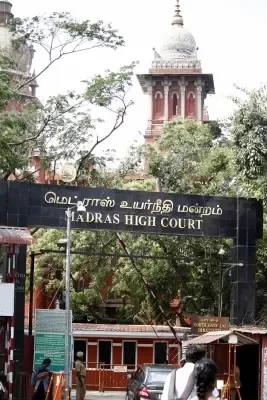
Has the Madras HC Approved an Urgent Motion Against a Book Targeting Justice GR Swaminathan?
Synopsis
The Madras High Court has granted an urgent plea to prevent the release of a Tamil book depicting Justice G.R. Swaminathan as an RSS sympathizer. This case highlights critical issues of judicial independence and personal attacks against judges, raising concerns about the implications for the judiciary's integrity.
Key Takeaways
The Madras High Court is addressing serious allegations against a sitting judge.
Personal attacks on judges can have significant consequences for the judiciary.
The case emphasizes the necessity of protecting judicial independence.
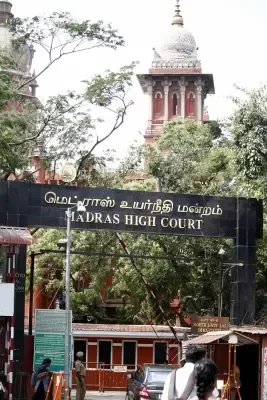
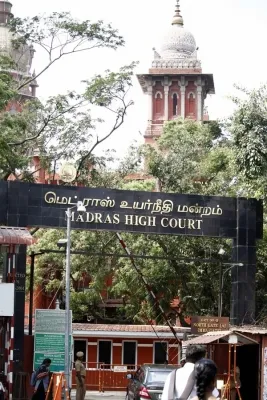
Chennai, Jan 7 (NationPress) The Madras High Court has granted permission to an advocate to file a lunch motion aimed at halting the anticipated release of a Tamil book that allegedly depicts Justice G. R. Swaminathan as an ally of the Rashtriya Swayamsevak Sangh (RSS) concerning his ruling in the Thirupparankundram Karthigai Deepam case.
The First Division Bench, which includes Chief Justice Manindra Mohan Shrivastava and Justice G. Arul Murugan, acknowledged the urgent nature of the request made by advocate B. Jagannath.
The lawyer expressed concern that the book was set to be launched in Chennai on Thursday, necessitating swift judicial action.
Recognizing the seriousness of the matter, the Bench instructed Advocate General P.S. Raman and Additional Solicitor General AR.L. Sundaresan to be present in court for further discussions during the afternoon session.
The judges remarked that the issue involved personal attacks against an active judge related to his judicial decisions.
During the hearing, the Advocate General pointed out that it could be inappropriate for him to represent the case directly, as it seemed to tread into the realm of criminal contempt of court.
He indicated that under the Contempt of Courts Act, 1971, he holds the authority to sanction the initiation of contempt actions.
The Advocate General communicated that he would request an Additional Advocate General to stand in for the State during the afternoon hearing.
Upon accepting this proposal, the Bench advised advocate Jagannath to formally notify the ASG to ensure his attendance.
In the course of the proceedings, the advocate presented a pamphlet allegedly circulating widely on social media. This pamphlet featured the cover image of the book, illustrating a caricature of Justice Swaminathan donning khaki shorts, clutching a saffron flag in one hand and a lamp (deepam) in the other.
The Tamil title of the book provocatively inquired whether G.R. Swaminathan was "a judge or an RSS rowdy," asserting that the book, priced at Rs 30, would be available at the Chennai Book Fair 2026.
The pamphlet supposedly included the publisher's information and a contact number. Advocate Jagannath argued that the judge was being subjected to personal attacks for his verdict delivered on December 1, 2025, regarding the Thirupparankundram Karthigai Deepam case, urging the court to intervene and prevent further assaults on the judiciary.
After instructing him to file a formal petition promptly, the Chief Justice scheduled the matter for further hearing later that same day.
Point of View
This case underscores the vital importance of safeguarding judicial integrity. The Madras High Court's willingness to address personal attacks on judges reflects a commitment to uphold the rule of law. In a democracy, the judiciary must remain independent and protected from undue influence, ensuring that justice prevails without fear or favor.
NationPress
20 Oct 2026
Frequently Asked Questions
What is the Madras High Court's recent ruling about?
The Madras High Court has allowed an advocate to file a motion to restrain the release of a Tamil book that allegedly targets Justice G.R. Swaminathan.
Why is the book controversial?
The book controversially depicts Justice Swaminathan as a sympathizer of the RSS, raising concerns about personal attacks on judges.
What implications does this case have for the judiciary?
This case highlights the need to protect judicial independence and prevent personal attacks that could undermine the integrity of the judicial system.