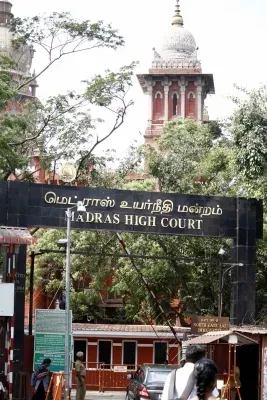
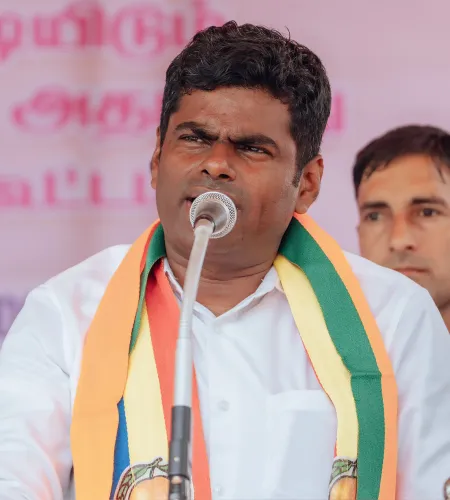
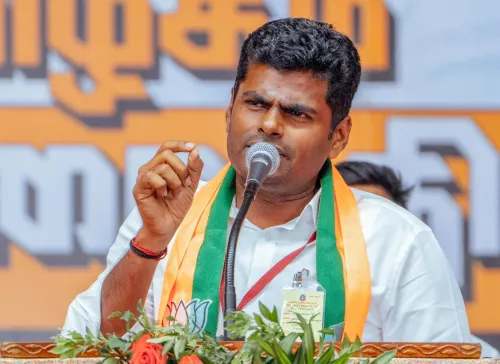
Madras HC reserves order on Annamalai hate speech plea over 2023 remarks

Synopsis
The Madras High Court has reserved its order on K. Annamalai's bid to quash hate speech proceedings rooted in a 2023 press conference remark about Pasumpon Muthuramalinga Thevar and Meenakshi Amman. With government sanction already granted and a Salem magistrate having issued summons, the verdict will test where courts draw the line between political opinion and communally provocative speech in Tamil Nadu.
Key Takeaways
Madras High Court reserved its order on K.
Annamalai's petition to quash criminal proceedings on Monday, 31 August .
The case stems from remarks Annamalai allegedly made at a 2023 press conference about Pasumpon Muthuramalinga Thevar and Madurai Meenakshi Amman .
The Tamil Nadu government granted prosecution sanction on 28 April 2024 under Section 196 CrPC .
A Salem judicial magistrate issued summons to Annamalai in February 2026 .
Charges are under Sections 153A and 505(1)(c) IPC — promoting enmity and inciting communal offences.
The High Court will pronounce its verdict at a later date.
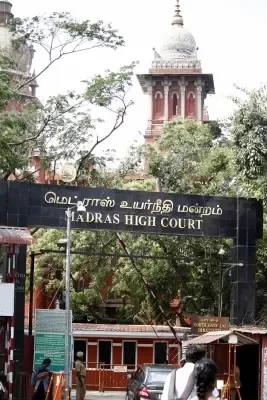
The Madras High Court on Monday reserved its order on a petition filed by We The Leaders founder K. Annamalai seeking to quash criminal proceedings stemming from remarks he allegedly made at a 2023 press conference about Pasumpon Muthuramalinga Thevar and the Madurai Meenakshi Amman temple. The case has drawn attention as a test of the boundaries between political speech and hate speech law in Tamil Nadu.
Background to the Case
Justice G.K. Ilanthiraiyan reserved the verdict after hearing arguments from both sides — advocate Arun C. Mohan, appearing for Annamalai, and counsel V. Suresh, representing Salem-based activist Piyush Manush, who had filed a private complaint in November 2023.
The prosecution centres on Annamalai's alleged claim that Thevar had warned in 1956 that a 'blood abhishekam' would be performed for Meenakshi Amman if atheists continued insulting believers. The statement was reportedly made while Annamalai was responding to Dravida Munnetra Kazhagam (DMK) leader Udhayanidhi Stalin's comments on Sanatana Dharma.
Government Sanction and Court Proceedings
The Tamil Nadu government granted prosecution sanction on 28 April 2024 under Section 196 of the Code of Criminal Procedure, permitting charges under the Indian Penal Code (IPC). A Salem judicial magistrate subsequently took cognisance of the alleged offences and issued summons in February 2026, prompting Annamalai to approach the High Court with the present petition.
Arguments by the Defence
Advocate Mohan contended that Annamalai had merely expressed a political opinion, referencing a historically documented disagreement between Thevar and former chief minister C. Annadurai. He argued that while different accounts of the episode exist, the central theme was that Annadurai had spoken at a temple event and Thevar objected to his remarks.
The defence further submitted that the magistrate had acted without conducting a preliminary inquiry or affording Annamalai an opportunity to be heard. It also argued that the complainant had failed to identify two distinct communities between which the statement had allegedly sought to promote hostility — a prerequisite under the relevant IPC provisions.
Prosecution's Counter-Arguments
Counsel Suresh opposed the petition, asserting that the magistrate had correctly taken cognisance of a statement he described as provocative and intended to create communal divisions. He cited judicial precedents and submitted that Annamalai had allegedly made similar speeches on multiple occasions during his tenure as the Bharatiya Janata Party (BJP)'s Tamil Nadu president.
The complainant's counsel maintained that the remarks attracted Sections 153A and 505(1)(c) of the IPC, relating respectively to promoting enmity between groups and inciting one community to commit offences against another. He urged the court to dismiss the petition and allow the prosecution to proceed.
What Happens Next
The Madras High Court is expected to formally pronounce its decision on the petition at a later date. The ruling will carry significance for how courts interpret the scope of political speech in the context of communal sensitivity, particularly in a state where religion and caste remain charged political terrain.
Point of View
At its core, a stress test for India's hate speech statutes in a hyper-politicised state. The defence's argument — that referencing a historical dispute is protected political opinion — is not frivolous, but the prosecution's counter, that pattern behaviour matters, raises a harder question courts have long deferred. Tamil Nadu's decision to grant sanction under Section 196 signals that the state government saw political value in letting the case proceed, which itself colours the legal landscape. If the High Court quashes the proceedings, it will set a precedent that contextualised historical references are insulated from IPC 153A — a ruling with implications well beyond this case.
NationPress
16 Oct 2026
Frequently Asked Questions
What is the Annamalai hate speech case in the Madras High Court?
K. Annamalai, founder of We The Leaders and former BJP Tamil Nadu president, filed a petition in the Madras High Court seeking to quash criminal proceedings over remarks he allegedly made at a 2023 press conference about Pasumpon Muthuramalinga Thevar and Madurai Meenakshi Amman. The case was initiated through a private complaint filed by Salem-based activist Piyush Manush in November 2023.
What did Annamalai allegedly say that triggered the case?
Annamalai allegedly claimed that Thevar had warned in 1956 that a 'blood abhishekam' would be performed for Meenakshi Amman if atheists continued insulting believers. The remark was reportedly made in response to DMK leader Udhayanidhi Stalin's comments on Sanatana Dharma.
Which IPC sections has Annamalai been charged under?
The charges are under Sections 153A and 505(1)(c) of the Indian Penal Code, which relate to promoting enmity between groups and inciting one community to commit offences against another, respectively.
Why did Annamalai approach the Madras High Court?
After the Tamil Nadu government granted prosecution sanction in April 2024 and a Salem judicial magistrate issued summons in February 2026, Annamalai moved the High Court to quash the proceedings, arguing the remarks were political opinion and that the magistrate acted without a preliminary inquiry or hearing him first.
When will the Madras High Court deliver its verdict?
The court has reserved its order and will pronounce the decision at a later date that has not yet been specified publicly.