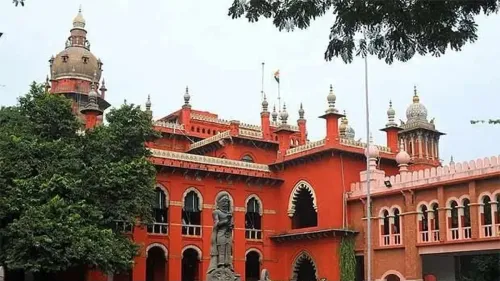
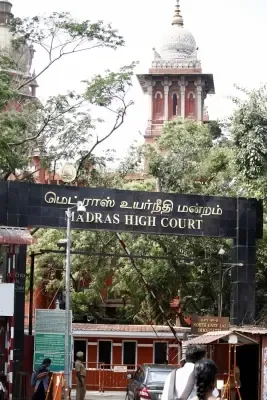
Madras HC imposes ₹1 lakh costs on lawyer over Tamil Nadu bypoll PIL
Synopsis
The Madras High Court slapped ₹1 lakh in costs on a Chennai lawyer who filed a PIL seeking to make six Tamil Nadu MLAs pay for bypolls triggered by their own resignations — just days after the same bench had dismissed an identical petition. The ruling reaffirms that only Parliament, not courts or the Election Commission, can impose new conditions on a legislator's constitutional right to resign.
Key Takeaways
The Madras High Court imposed ₹1 lakh costs on advocate S.
Kasi Ramalingam on 29 September 2026 for filing a repetitive PIL.
The PIL sought to make six Tamil Nadu former legislators bear bypoll costs and bar them from contesting in the current Assembly term.
A division bench of Chief Justice Sushrut Arvind Dharmadhikari and Justice G.
Arul Murugan had already rejected an identical plea on 24 September 2026 .
The court ruled the Election Commission has no legal power under Article 324 to recover bypoll costs or add new disqualification grounds.
Any change to restrict legislators from resigning and re-contesting would require an act of Parliament , the bench held.
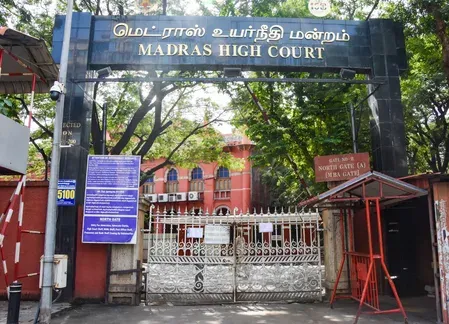
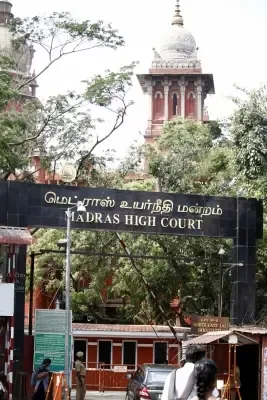
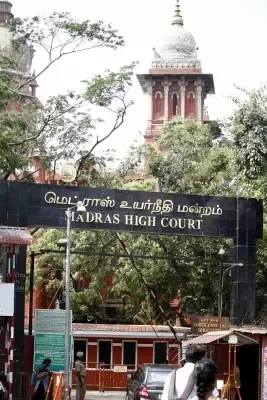
The Madras High Court on Tuesday, 29 September 2026, imposed costs of ₹1 lakh on a Chennai lawyer who filed a public interest litigation (PIL) seeking to make six former Tamil Nadu legislators bear the financial burden of by-elections triggered by their resignations — and to bar them from contesting elections for the remainder of the current Assembly term. The bench dismissed the petition, ruling it was brought primarily for publicity and that its core arguments had already been settled in a near-identical case just days earlier.
Background: What the PIL Sought
Advocate S. Kasi Ramalingam had petitioned the court to direct the Election Commission of India (ECI) to recover bypoll expenses from the legislators named in the plea and to prevent them from contesting elections during the ongoing Assembly term. The six named legislators were C. Vijayabaskar of Viralimalai, M.R. Vijayabhaskar of Karur, Esakki Subaya of Ambasamudram, P. Sathyabama of Dharapuram, K. Maragatham Kumaravel of Madurantakam, and S. Jayakumar of Perundurai — all of whom had resigned their Assembly seats.
The Court's Reasoning
A division bench of Chief Justice Sushrut Arvind Dharmadhikari and Justice G. Arul Murugan dismissed the PIL, finding that Ramalingam's petition raised grounds already decided in a ruling the same bench had delivered on 24 September 2026 in a petition filed by advocate K. Suthan. In that earlier judgment, the bench had held that existing law places no financial liability or electoral restriction on legislators who resign and subsequently seek re-election through a bypoll.
The court had further ruled in the September 24 order that the Election Commission had no legal authority to impose either the cost-recovery measure or an electoral ban, and that a court could not confer upon the commission powers that Parliament had never granted it. Article 324 of the Constitution, it noted, did not empower the ECI to create new grounds for disqualification.
Key Constitutional Observations
'The right to resign a legislative seat is by itself a facet of the constitutional scheme governing membership of a House, and cannot be burdened with extra-statutory conditions by judicial order,' the 24 September judgment had stated. The bench acknowledged the legitimate public concern about the cost of holding fresh elections when legislators resign to switch political allegiance, but held that such concerns could not justify restrictions imposed through a court order rather than through legislation. Any structural remedy, it said, would require Parliament to act.
Why Costs Were Imposed
Finding that Ramalingam's PIL reproduced arguments already heard and rejected in the Suthan case, the bench treated the filing as an attempt to relitigate settled questions — a practice courts have consistently discouraged in the context of PIL jurisdiction. The ₹1 lakh cost order was consequent to that finding. This is not an isolated instance: courts across India have increasingly imposed costs on PILs deemed to be motivated by publicity or personal gain rather than genuine public interest.
What Happens Next
The court's rulings make clear that any legislative remedy — such as barring defecting or resigning legislators from contesting in the same term — must come from Parliament, not the judiciary. Whether the broader debate around the cost and frequency of Tamil Nadu bypolls translates into a legislative proposal remains to be seen.
Point of View
The bench is constitutionally sound: the right to resign is a core legislative prerogative, and grafting financial penalties onto it by judicial fiat would set a dangerous precedent. The real accountability gap — legislators resigning to switch sides and immediately contesting at public expense — is a legislative design failure that only Parliament can fix. Whether the ruling prompts any such legislative momentum in the context of Tamil Nadu's bypoll cycle is the question worth watching.
NationPress
29 Sept 2026
Frequently Asked Questions
Why did the Madras High Court impose ₹1 lakh costs on the lawyer?
The court found that advocate S. Kasi Ramalingam's PIL reproduced arguments already rejected by the same bench in a ruling dated 24 September 2026, suggesting the petition was filed for publicity rather than genuine public interest. The ₹1 lakh cost order was imposed at the time of dismissal.
What did the PIL ask the court to do?
The PIL sought a direction to the Election Commission of India to recover bypoll expenses from six Tamil Nadu legislators who had resigned their Assembly seats, and to bar them from contesting elections for the remainder of the current Assembly term.
Can the Election Commission bar legislators from contesting after they resign?
No, according to the Madras High Court's 24 September 2026 ruling. The bench held that Article 324 of the Constitution does not empower the Election Commission to create new grounds for disqualification, and a court cannot direct it to exercise a power the law has not granted.
Who are the six legislators named in the PIL?
The six former Tamil Nadu Assembly members named were C. Vijayabaskar of Viralimalai, M.R. Vijayabhaskar of Karur, Esakki Subaya of Ambasamudram, P. Sathyabama of Dharapuram, K. Maragatham Kumaravel of Madurantakam, and S. Jayakumar of Perundurai — all of whom had resigned their Assembly seats.
What would it take to prevent resigning legislators from contesting bypolls?
The Madras High Court held that any such restriction would require legislation by Parliament. The court cannot impose extra-statutory conditions on a legislator's constitutional right to resign, and the Election Commission has no independent authority to do so either.