Shivraj Singh Chouhan: Rabi Conference a Serious Push for Farmers
Synopsis
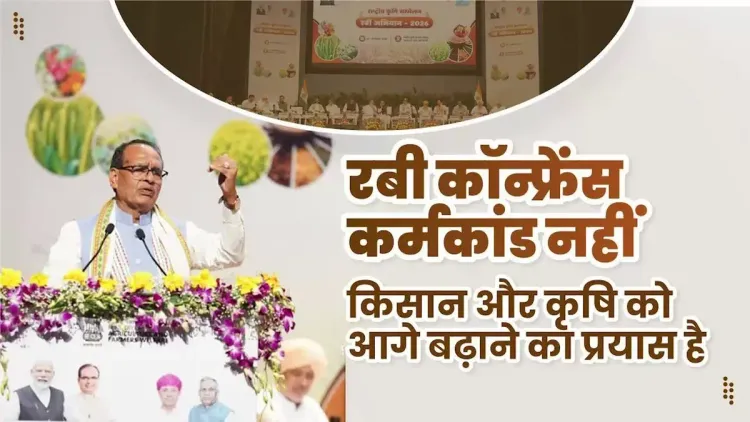
Union Agriculture Minister Shivraj Singh Chouhan on September 29, 2026 stressed that the annual Rabi Conference is a serious agricultural planning exercise, not a ceremonial formality, and assured states of the Centre's full cooperation ahead of the rabi cropping season.
Key Takeaways
Union Agriculture Minister Shivraj Singh Chouhan posted on X on September 29, 2026 about the Rabi Conference.
He described the conference as a serious effort to advance farmers and agriculture , explicitly rejecting the idea that it is a mere ritual ( karmakand ).
Chouhan pledged that the central government is fully ready to cooperate with states whenever they need support.
The Rabi Conference is an annual Ministry of Agriculture meeting with state governments to coordinate strategy for the winter-sown cropping season — covering crops like wheat, mustard, and gram.
The conference is part of a decades-old federal coordination mechanism between the Centre and states on agricultural planning and scheme implementation.
Every rabi season, India's farm future gets negotiated in a room — and Union Agriculture Minister Shivraj Singh Chouhan wants that room taken seriously. On Tuesday, September 29, 2026, the minister posted a pointed message on X, insisting the annual Rabi Conference is not a ritual exercise but a genuine, purposeful effort to advance the welfare of farmers and agriculture across India.
Posting in Hindi, Chouhan declared: 'Rabi Conference kewal karmakand nahin hai, gambheerta se kisaan aur krishi ko aage badhaane ka prayas hai' — ('The Rabi Conference is not mere ritual; it is a serious effort to take farmers and agriculture forward'). He paired that with an unambiguous assurance to state governments: the Centre stands fully ready to cooperate whenever they need it.What the Rabi Conference actually is — and why it matters
The Rabi Conference is an annual meeting convened by the Ministry of Agriculture and Farmers Welfare where the Union government sits across the table with state agriculture departments to align production targets, review scheme implementation, and plan strategy for the upcoming rabi — or winter-sown — cropping season. Crops like wheat, mustard, gram, and lentils depend on decisions made in these rooms.
The conference is not a new invention. It is part of a decades-old federal mechanism through which the Centre acts as a coordinator and facilitator for state-level agricultural action. But the word Chouhan chose — karmakand, meaning empty ritual or going-through-the-motions formality — is a deliberate signal. He is framing this edition as substantive, not ceremonial.
Centre's pledge of full cooperation to states
The minister's statement that the central government is fully prepared to cooperate with states whenever needed speaks directly to the federal compact at the heart of Indian agricultural governance. Agriculture is a state subject under the Constitution, which means the Centre's role — however large — is ultimately facilitative. Chouhan's framing positions the Union government as a ready, responsive partner rather than a distant mandate-setter.
This tone matters in a country where state agriculture departments are the last-mile implementers of everything from crop insurance to fertiliser subsidies. When Centre-state coordination breaks down, farmers pay the price. When it holds, it can move the needle on sowing coverage, credit access, and yield targets at scale.
Whether this rabi season translates the conference's intent into measurable outcomes — sowing targets hit, scheme funds disbursed, procurement machinery readied — will be the real test of the minister's word.
Point of View
And he is pre-emptively staking credibility on this one delivering results. The pledge of Centre-state cooperation is standard federal language, but its restatement ahead of a rabi conference underlines that the BJP government is keen to be seen as a responsive partner by state administrations, including non-BJP ones, on the politically sensitive farm file. With agriculture remaining a key electoral barometer — particularly in states like Madhya Pradesh, Rajasthan, and Uttar Pradesh — Chouhan's public framing of the conference as outcome-driven keeps ministerial accountability visible. The real measure of this commitment will be in state-level sowing data and scheme utilisation numbers when the rabi season matures.
NationPress
29 Sept 2026
Frequently Asked Questions
What is the Rabi Conference in India?
The Rabi Conference is an annual meeting organised by the Union Ministry of Agriculture and Farmers Welfare, where central and state government officials coordinate production targets, scheme implementation, and strategies for the rabi — winter-sown — cropping season, covering crops like wheat, mustard, gram, and lentils.
What did Shivraj Singh Chouhan say about the Rabi Conference in September 2026?
On September 29, 2026, Agriculture Minister Shivraj Singh Chouhan said the Rabi Conference is not a mere ritual ('karmakand') but a serious effort to advance farmers and agriculture, and assured states that the Centre is fully ready to cooperate with them whenever needed.
What does the Centre-state cooperation in agriculture mean for farmers?
Since agriculture is a state subject under India's Constitution, the Union government's role is largely facilitative. Effective coordination between the Centre and state agriculture departments determines how well schemes like crop insurance, fertiliser subsidies, and procurement reach farmers on the ground.
Who is Shivraj Singh Chouhan?
Shivraj Singh Chouhan is India's Union Minister of Agriculture and Farmers Welfare and Rural Development, a senior BJP leader, and a former four-term Chief Minister of Madhya Pradesh.
What crops are covered under the rabi season in India?
The rabi season in India covers winter-sown crops harvested in spring, with wheat, mustard, chickpea (gram), lentils, and barley among the most significant.