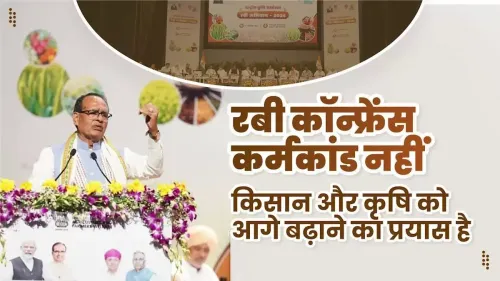
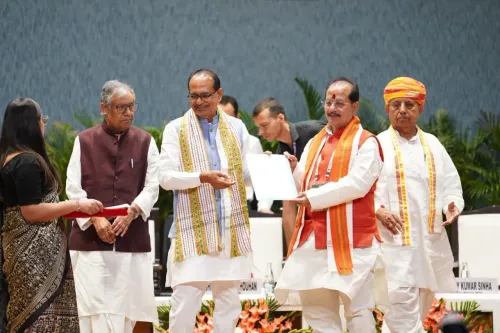
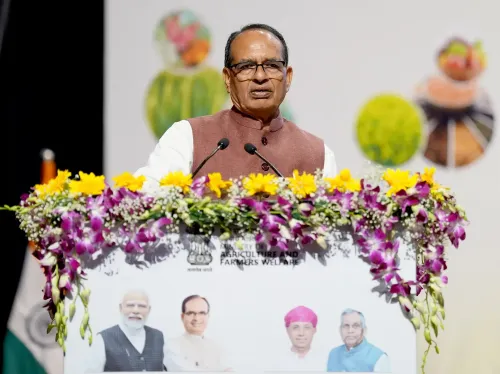
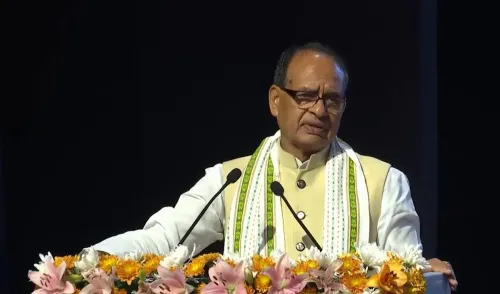
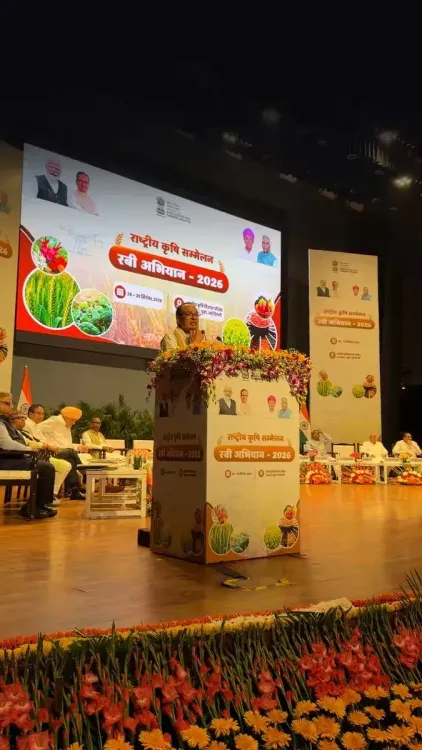
Shivraj Singh Chouhan Wraps Two-Day Rabi Conference 2026
Synopsis
Union Agriculture Minister Shivraj Singh Chouhan concluded the two-day Rabi Conference 2026 on September 29, calling it a forum of meaningful suggestions and comprehensive strategy, and reaffirming farmer welfare as the government's top priority ahead of the winter cropping season.
Key Takeaways
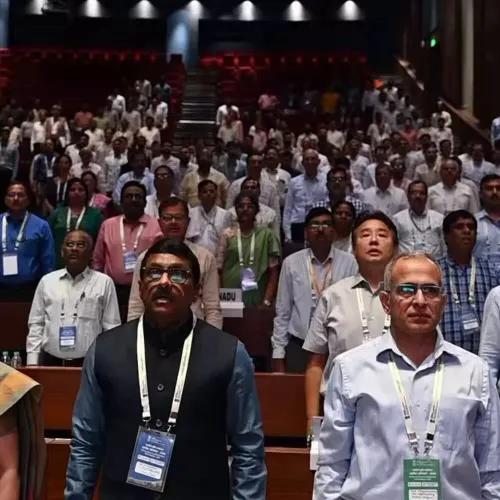
Union Agriculture Minister Shivraj Singh Chouhan declared the two-day Rabi Conference 2026 concluded on September 29, 2026 .
The conference aimed to finalise production targets, input arrangements, and contingency plans for India's Rabi (winter) cropping season .
Chouhan thanked all participating state ministers and colleagues, citing their field experience as central to the deliberations.
Farmer welfare was reaffirmed as the government's 'highest priority,' with a commitment to continuous centre-state dialogue.
The Ministry of Agriculture convenes such pre-season conferences annually, as agriculture is a state subject requiring coordinated federal action.
Concrete outcomes and official recommendations are yet to be publicly released; implementation in state action plans will be the key metric to watch.
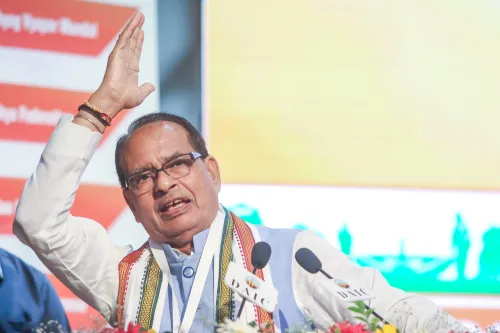
With the winter cropping season on the horizon, Union Agriculture Minister Shivraj Singh Chouhan on Tuesday, September 29, 2026, declared the two-day Rabi Conference concluded — calling it a forum that produced 'meaningful suggestions, a comprehensive strategy, and a resolve for implementation.'
Posting on X in Hindi, Chouhan wrote: 'दो दिवसीय रबी कॉन्फ्रेंस सार्थक सुझावों, व्यापक रणनीति और क्रियान्वयन के संकल्प के साथ संपन्न हुई' — ('The two-day Rabi Conference concluded with meaningful suggestions, a comprehensive strategy, and a resolve for implementation.') He thanked all participating ministers and colleagues, crediting their inputs and field experience for enriching the deliberations, and reaffirmed that farmer welfare remains the government's 'highest priority.'
What the Rabi Conference is — and why it matters
Every year, the Ministry of Agriculture and Farmers Welfare convenes pre-Rabi and pre-Kharif conferences, bringing together state agriculture ministers and officials to finalise production targets, input logistics, and contingency plans for the season ahead. The Rabi season covers India's critical winter crops — wheat, mustard, pulses — which are sown roughly from October onwards and harvested in spring.
Agriculture is a state subject under India's Constitution, which means the Centre cannot act unilaterally — it must coordinate. These seasonal conferences are the structural mechanism for that alignment: agreeing on seed availability, fertiliser allocation, irrigation coverage, and Minimum Support Price procurement. Miss the window here, and the entire season's supply chain can slip.
Centre-state alignment at the heart of it
Chouhan, a former four-term Chief Minister of Madhya Pradesh — one of India's largest wheat and pulse-producing states — brings an unusually ground-level perspective to a role that is inherently about negotiating between Delhi's policy ambitions and the realities of state-level implementation. His emphasis on 'continuous dialogue and cooperation in the interest of farmers' is a direct acknowledgment of that structural dependency.
The conference's hashtag #RabiConference2026 signals an intent to build public visibility around what has historically been a largely administrative exercise. Whether the recommendations translate into concrete state action plans ahead of the 2026-27 Rabi season will be the real measure of the meeting's worth.
The deliberations are done. The sowing window is approaching. Now comes the harder part — execution.
Point of View
But Chouhan's framing — 'we are a team' and 'farmer welfare is our highest priority' — reflects a deliberate political messaging strategy ahead of a season that directly affects the incomes of millions of rural households. As a former state chief minister, Chouhan understands that the Centre's credibility on agriculture is ultimately judged at the farm gate, not in conference rooms. The public visibility given to this year's conference, signalled by the dedicated hashtag, suggests the BJP is keen to foreground its agrarian governance record. The real test will be whether the stated resolve translates into measurable improvements in seed distribution, fertiliser supply, and MSP procurement before the Rabi sowing window closes.
NationPress
29 Sept 2026
Frequently Asked Questions
What is the Rabi Conference in India?
The Rabi Conference is an annual meeting convened by India's Ministry of Agriculture and Farmers Welfare, bringing together central and state ministers to plan production targets, input supply, and procurement strategies for the winter (Rabi) cropping season covering crops like wheat, mustard, and pulses.
What did Shivraj Singh Chouhan say at the Rabi Conference 2026?
Chouhan announced the conclusion of the two-day Rabi Conference 2026 with 'meaningful suggestions and a comprehensive strategy,' thanked participating ministers for their inputs, and reaffirmed that farmer welfare is the government's highest priority.
When does the Rabi cropping season begin in India?
The Rabi cropping season typically begins with sowing in October-November and runs through to the spring harvest, covering winter crops such as wheat, mustard, gram, and lentils.
Why does India hold pre-season agriculture conferences?
Because agriculture is a state subject under India's Constitution, the Centre cannot implement farm policies directly. Pre-season conferences are the key mechanism for aligning central schemes with state-level planning on seeds, fertilisers, irrigation, and minimum support prices.
What happens after the Rabi Conference concludes?
After the conference, official recommendations are expected to be released and states are required to incorporate agreed strategies into their own action plans, followed by field-level implementation monitored through follow-up coordination meetings.