Shivraj launches two-day Kharif 2026 national farm conference
Synopsis
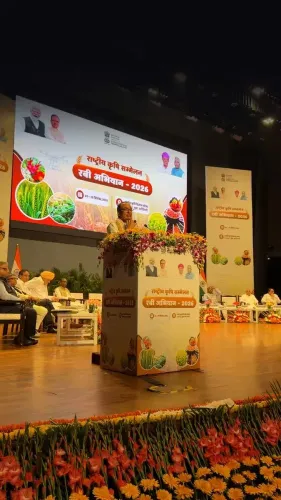
Union Agriculture Minister Shivraj Singh Chouhan on 28 May 2026 inaugurated the two-day Rashtriya Krishi Sammelan — Kharif Abhiyan 2026 at Pusa, New Delhi, uniting experts and state ministers under a 'One Nation, One Agriculture, One Team' framework to finalise India's monsoon-season crop strategy.
Key Takeaways
Union Agriculture Minister Shivraj Singh Chouhan inaugurated the Rashtriya Krishi Sammelan — Kharif Abhiyan 2026 at Pusa, New Delhi on 28 May 2026 .
Day one featured deliberations with agricultural experts and senior officials from across the country on key farming issues.
Day two will convene state agriculture ministers to finalise a comprehensive kharif 2026 preparedness and strategy roadmap.
Chouhan invoked the 'One Nation, One Agriculture, One Team' framework as the conference's guiding principle.
Ministers of State Ram Nath Thakur and Bhagirath Choudhary were present at the inauguration.
The conference continues a decade-long practice of pre-season coordination between the Centre and states on crop planning.
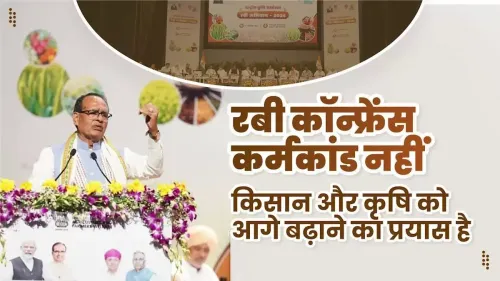
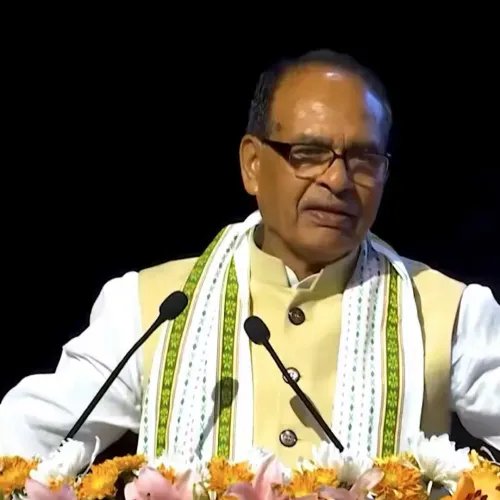
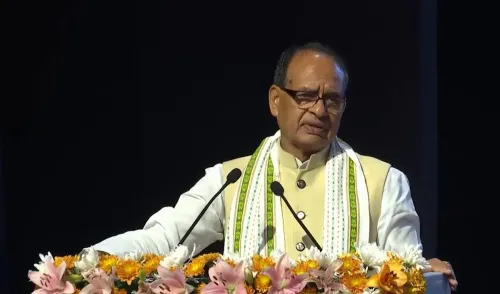
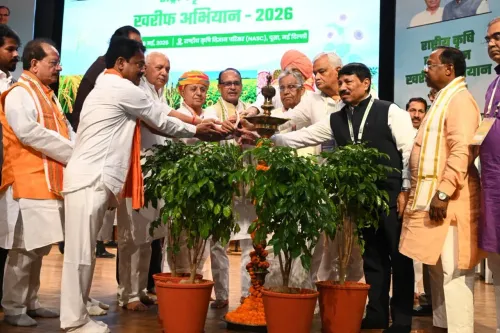
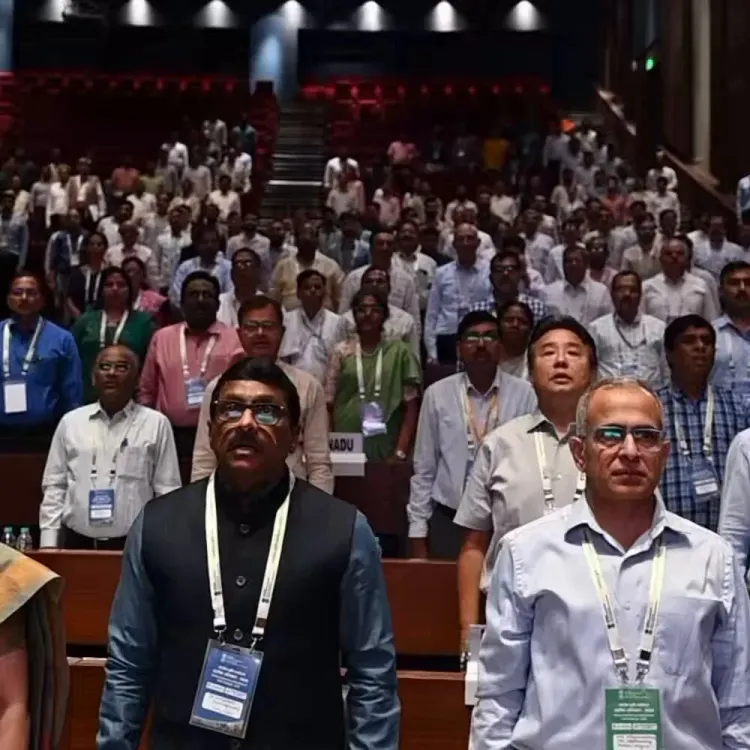
Union Agriculture Minister Shivraj Singh Chouhan on Thursday, 28 May 2026 inaugurated the two-day 'Rashtriya Krishi Sammelan — Kharif Abhiyan 2026' at Pusa, New Delhi, bringing together agricultural experts, senior officials and state ministers to finalise the country's monsoon-season crop strategy.
What the conference covers
On the first day, experts and officials from across the country engaged in detailed deliberations on a range of issues affecting Indian agriculture. Chouhan described the mood as one of serious collective reflection — 'गंभीरता से चिंतन' ('serious contemplation') — on the challenges and opportunities facing the farming sector ahead of the 2026 kharif season.
The second and concluding day is scheduled to bring together state agriculture ministers, who will work with the central team to finalise a comprehensive roadmap covering kharif crop preparedness and strategy. The outcomes of that session are expected to guide state-level implementation through the monsoon months.
Context
The conference is held at the campus of the Indian Agricultural Research Institute (IARI), Pusa — India's premier public agricultural research body, established in 1905 — lending institutional weight to the annual exercise. The Union Agriculture Ministry has convened pre-kharif and pre-rabi national conferences for more than a decade as a mechanism to synchronise central schemes with state-level delivery.
Chouhan invoked the slogan 'One Nation, One Agriculture, One Team' as the guiding spirit of the gathering, a framing that mirrors earlier 'One Nation' policy initiatives across markets, taxation and infrastructure aimed at reducing inter-state divergences in the sector.
Policy backdrop
The minister paid tribute to Indian farmers — addressing them as 'annadata' ('providers of food') — for achieving record foodgrain production despite adverse conditions and the mounting pressures of climate change. 'Even amid adversity and the challenges of climate change, our farmers have brought glory to the nation by achieving record foodgrain production,' Chouhan said. 'For this, I bow to the farmers of the country from the bottom of my heart.'
The emphasis on climate-resilient output builds on the National Food Security Mission, launched in 2007, and subsequent programmes designed to improve productivity while managing monsoon variability. The conference serves as a live coordination mechanism for rolling these schemes into seasonal field-level action.
Stakeholders and impact
State agriculture departments are the primary operational stakeholders: the roadmap agreed on day two will shape decisions on seed distribution, fertiliser allocation and crop-insurance coverage for the kharif 2026 season. Farmers across rain-fed and irrigated belts stand to be directly affected by the advisories and targets that emerge.
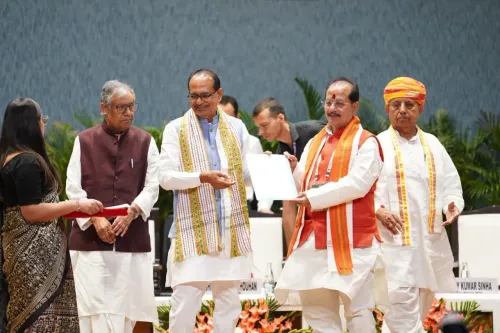
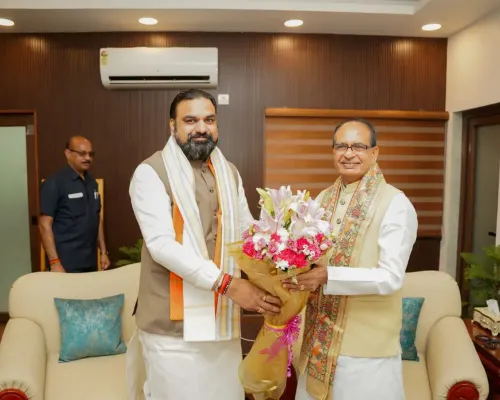
Ministers of State Ram Nath Thakur and Bhagirath Choudhary were also present at the inauguration, along with other dignitaries, signalling full ministerial representation from the Union Agriculture Ministry.
What's next
All eyes will be on the day-two session with state agriculture ministers, after which the ministry is expected to release the agreed kharif 2026 roadmap along with any fresh advisories on seeds, fertilisers or crop insurance. The strategy document will need to reach state departments well before the monsoon arrives, making the coming days critical for translating conference outcomes into ground-level action. Chouhan's framing — 'together we will change farmers' lives and make India developed and self-reliant' — signals that the ministry intends to hold states collectively accountable to the shared plan.
Point of View
One Agriculture, One Team', Chouhan is deliberately aligning seasonal crop planning with the BJP government's broader centralising impulse, seeking uniform standards across diverse agro-climatic zones. The tribute to farmers for record production amid climate stress also serves a political purpose: it pre-empts criticism of agrarian distress by foregrounding resilience and achievement. The real test will come when the day-two roadmap is published — whether it contains binding targets and fresh resource commitments, or remains aspirational, will determine how much policy weight this edition of the conference actually carries.
NationPress
11 Oct 2026
Frequently Asked Questions
What is the Rashtriya Krishi Sammelan Kharif Abhiyan 2026?
It is a two-day national agriculture conference organised by the Union Agriculture Ministry at Pusa, New Delhi, bringing together experts, officials and state agriculture ministers to finalise India's strategy and roadmap for the 2026 kharif (monsoon) cropping season.
Where is the Pusa agriculture conference held?
The conference is held at the campus of the Indian Agricultural Research Institute (IARI) in Pusa, New Delhi, India's premier public agricultural research institution established in 1905.
What is 'One Nation, One Agriculture, One Team'?
It is the guiding slogan invoked by Agriculture Minister Shivraj Singh Chouhan for the 2026 conference, calling for unified, committed action by the Centre and states to advance farming and farmer welfare across India.
What will happen on day two of the Kharif 2026 conference?
State agriculture ministers will join central officials to prepare a comprehensive roadmap covering kharif crop preparedness, strategy, and implementation — expected to guide state-level action through the 2026 monsoon season.
Who attended the Kharif Abhiyan 2026 inauguration with Shivraj Singh Chouhan?
Ministers of State Ram Nath Thakur and Bhagirath Choudhary, along with other dignitaries, were present at the inauguration on 28 May 2026.