Maharashtra tops GST collection in India, CM Fadnavis claims ₹1.87 lakh crore return
Synopsis
Maharashtra is not just India's economic engine — it is now its GST powerhouse. CM Fadnavis revealed the state pulled in ₹1,87,000 crore in GST returns last fiscal year and became the first in India to use AI to catch tax evaders. On the 9th GST Day, his message was clear: Maharashtra sets the pace for the rest of the country.
Key Takeaways
Maharashtra ranks first in India in GST collection, according to CM Devendra Fadnavis at the 9th GST Day celebrations on 1 July .
The state received a GST return of ₹1,87,000 crore in the previous financial year.
Maharashtra is the first Indian state to implement an AI-based system to curb tax evasion.
The Centre had guaranteed GST compensation at a 14% annual growth rate for the first five years to ensure state revenue stability during the transition.
The GST Council has lowered tax slabs on daily-use items and goods critical to MSMEs .
The Centre has launched GST 2.0 to further strengthen and modernise the indirect tax framework.
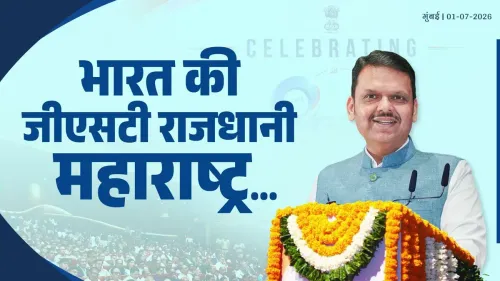
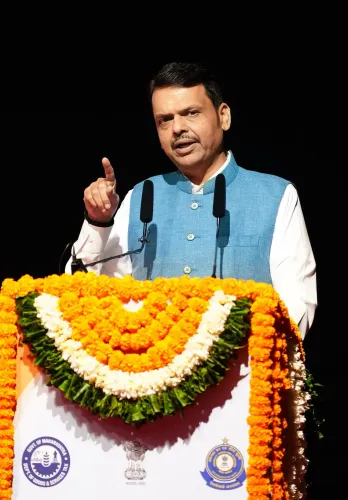
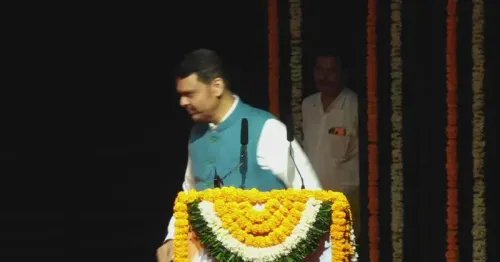
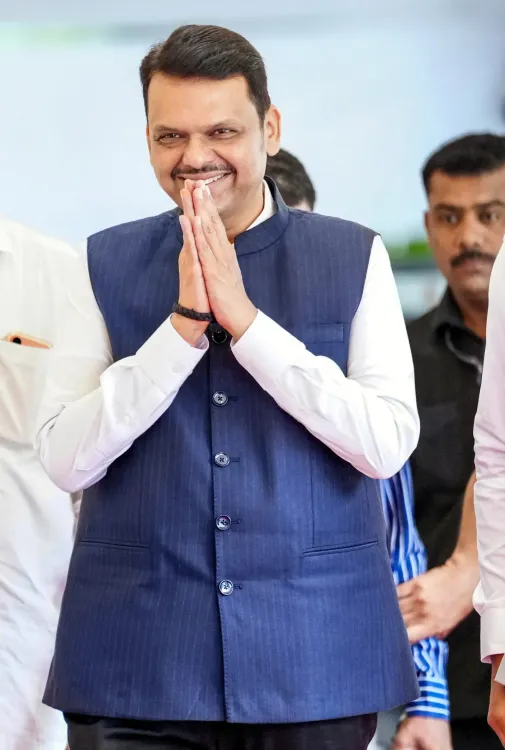
Maharashtra Chief Minister Devendra Fadnavis on Wednesday, 1 July declared that Maharashtra leads all Indian states in Goods and Services Tax (GST) collection and also receives the highest quantum of Central Government benefits in return — making it, in his words, the 'GST capital of India'. He was speaking at the 9th GST Day celebrations in Mumbai.
Maharashtra's GST Standing
Fadnavis stated that Maharashtra received a GST return of ₹1,87,000 crore in the previous financial year, underscoring the state's outsized contribution to national indirect tax revenues. He attributed this performance partly to Maharashtra's status as the country's leading services economy, noting that the inclusion of services under the GST regime has particularly benefited the state.
He also announced that Maharashtra is the first state in India to deploy an Artificial Intelligence-based system to detect and curb tax evasion — a step he described as a significant leap in tax administration modernisation.
GST as a Historic Reform
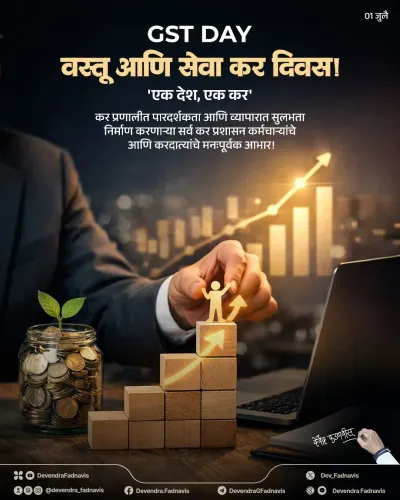
Terming GST a landmark financial overhaul, Fadnavis said the framework of 'One Nation, One Tax, One Market' had transformed India into a society of honest indirect taxpayers. He called it 'one of the largest financial reforms in the world', achieved by consolidating a web of multiple indirect taxes into a single structure.
He credited Prime Minister Narendra Modi with breaking a long-standing political deadlock on GST implementation. 'For a long time, efforts were underway to build a consensus among states regarding GST, but these ideas remained limited to discussions. Previously, both the administration and traders faced heavy pressure due to multiple indirect tax filings and the challenges of stopping tax evasion, which hindered the growth of trade and industry. However, under the firm leadership of Prime Minister Narendra Modi, the historic decision to implement GST was successfully taken,' Fadnavis said.
Centre's Role and the GST Council
The Chief Minister recalled that states initially faced revenue uncertainty under the GST transition. The Centre responded by guaranteeing compensation for any shortfalls, committing to a 14 per cent annual growth rate in GST compensation for the first five years — a provision he described as a critical milestone in ensuring state buy-in.
Fadnavis also highlighted the role of the GST Council, noting that no decision can be finalised without mutual agreement between the Centre and state governments, making it a transparent and consultative mechanism. The Council has progressively lowered tax slabs on daily-use items and goods essential to Micro, Small, and Medium Enterprises (MSMEs).
GST 2.0 and Digital Infrastructure
Looking ahead, Fadnavis pointed to the Centre's launch of the 'GST 2.0' phase, aimed at making the system more robust and efficient. He also praised the Goods and Services Tax Network (GSTN) as one of the most significant examples of digital innovation in the 21st century, describing it as the structural backbone that enables seamless tax deposit into the exchequer within the GST framework.
Event Highlights
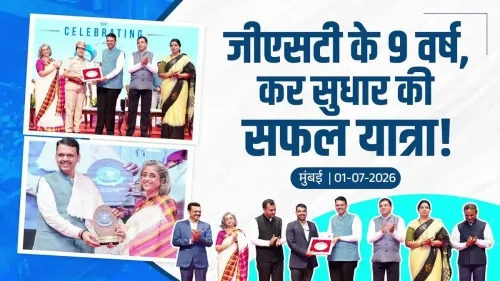
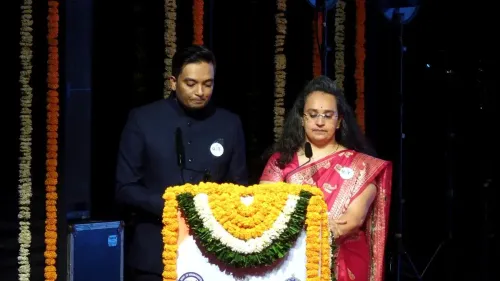
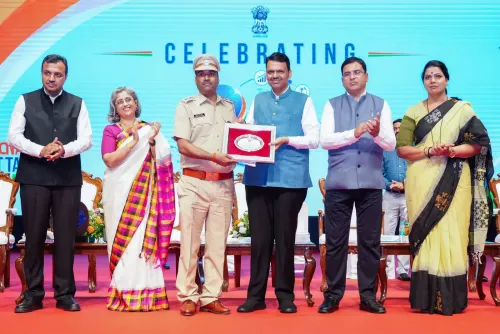
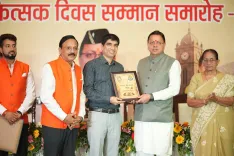
The event was addressed by State GST Commissioner Ashish Sharma, who delivered the introductory remarks, and Chief Commissioner of Central GST Prachi Swaroop, who also shared her perspectives. Chief Minister Fadnavis felicitated outstanding taxpayers and tax officials during the ceremony. With GST 2.0 underway and AI-driven compliance tools already operational in Maharashtra, the state appears positioned to deepen its lead as India's top GST contributor in the years ahead.
Point of View
Not necessarily a policy achievement unique to the current government. The more substantive claim — the AI-based anti-evasion system — deserves independent scrutiny on outcomes, not just deployment. Meanwhile, the ₹1,87,000 crore GST return figure raises a legitimate question about fiscal federalism: if Maharashtra contributes the most and receives the most back, what does that mean for revenue-sharing equity with smaller, poorer states? That tension is conspicuously absent from the celebratory framing.
NationPress
1 Jul 2026
Frequently Asked Questions
Why does Maharashtra rank first in GST collection in India?
Maharashtra leads Indian states in GST collection primarily because it is the country's largest services economy and a major hub for manufacturing and financial activity. CM Devendra Fadnavis highlighted this at the 9th GST Day celebrations on 1 July, noting the state's GST return stood at ₹1,87,000 crore in the previous financial year.
What is Maharashtra's AI-based tax evasion system?
Maharashtra is the first Indian state to deploy an Artificial Intelligence-based system specifically designed to detect and curb GST evasion. CM Fadnavis announced this at the 9th GST Day event, though specific details on the system's scale or outcomes were not disclosed at the event.
What is GST 2.0 and what does it aim to do?
GST 2.0 is the Central Government's next phase of reform for the Goods and Services Tax framework, aimed at making the system more robust and efficient. It builds on the original GST structure introduced in 2017 under Prime Minister Narendra Modi.
What was the Centre's guarantee to states during the GST transition?
The Centre guaranteed compensation for any shortfall in state revenues under the GST model, committing to a 14 per cent annual growth rate in GST compensation for the first five years. CM Fadnavis described this as a critical milestone that helped states agree to the transition.
What is the GST Council's role in India's tax system?
The GST Council is a joint body of Central and state governments that must reach mutual agreement before any GST-related decisions are finalised. CM Fadnavis called it a highly transparent mechanism; the Council has progressively reduced tax slabs on daily-use goods and MSME-critical items since GST's introduction.