Maharashtra Cabinet Clears Revenue & Stamp Duty Decisions
Synopsis
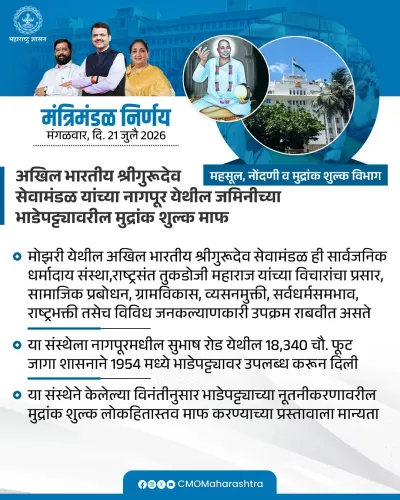
The Chief Minister's Office of Maharashtra announced on 21 July 2026 that the Fadnavis cabinet has taken formal decisions concerning the Revenue, Registration and Stamp Duty Department, with implications for property transactions and state revenue collection across the state.
Key Takeaways
The Maharashtra cabinet under CM Devendra Fadnavis cleared decisions on the Revenue, Registration and Stamp Duty Department on 21 July 2026 .
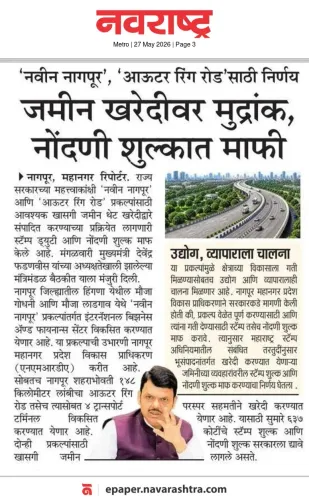
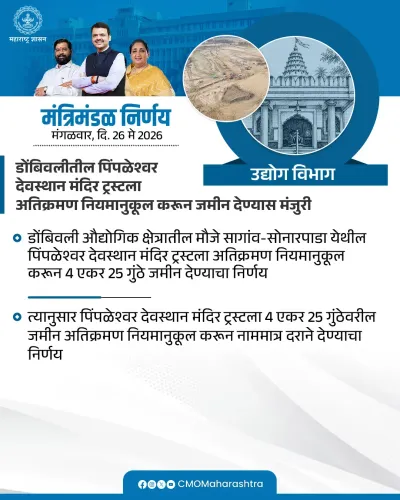
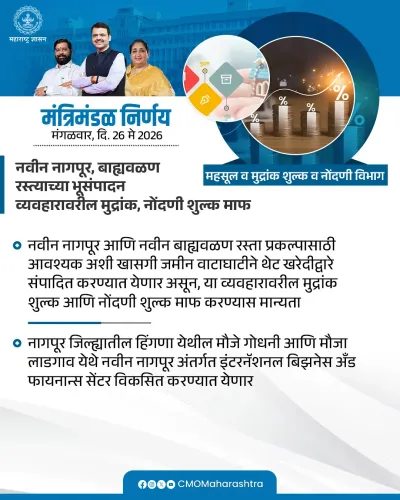
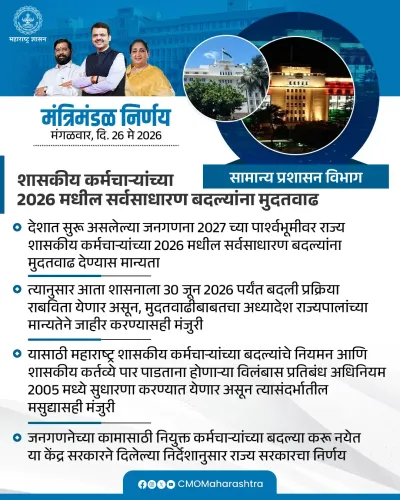
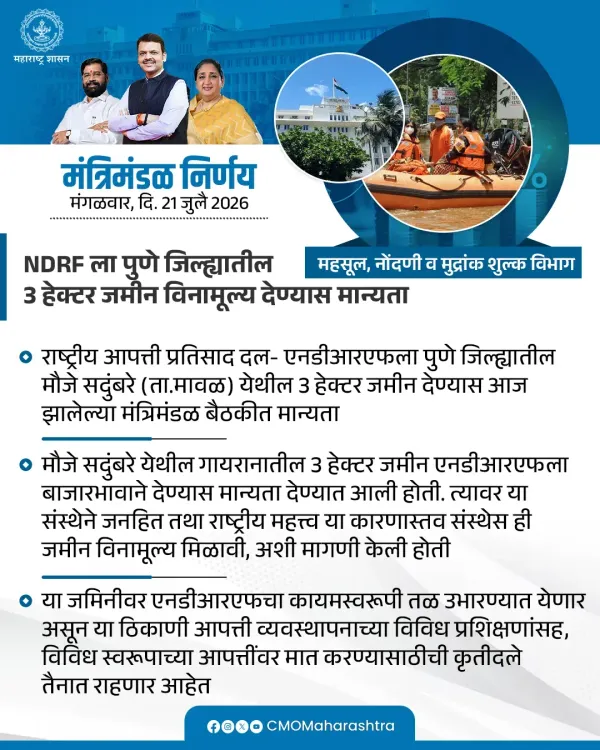
The announcement was made by the Chief Minister's Office of Maharashtra via an official post on X, with details carried in attached images.
The Revenue, Registration and Stamp Duty Department oversees land records, property registration, and stamp duty collection statewide.
Stamp duty and registration fees are among Maharashtra's largest sources of own-tax revenue, affecting millions of transactions annually.
Specific rate changes or procedural amendments will be confirmed upon gazette notification by the state government.
Key stakeholders include property buyers, real estate developers , and legal professionals operating in Mumbai, Pune, Nagpur , and other urban centres.
The Chief Minister's Office of Maharashtra announced on Tuesday, 21 July 2026 that the state cabinet, led by Chief Minister Devendra Fadnavis, has taken decisions concerning the Revenue, Registration and Stamp Duty Department — a key state body that governs land records, property registration, and stamp duty collection across Maharashtra.
Context
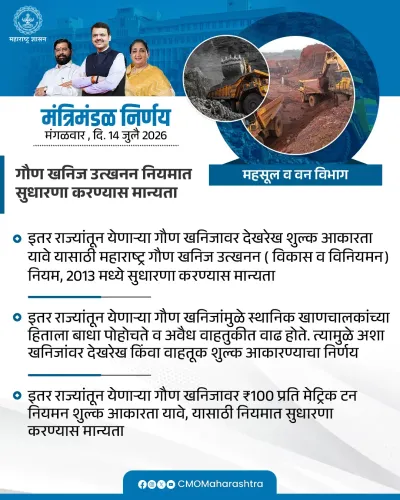
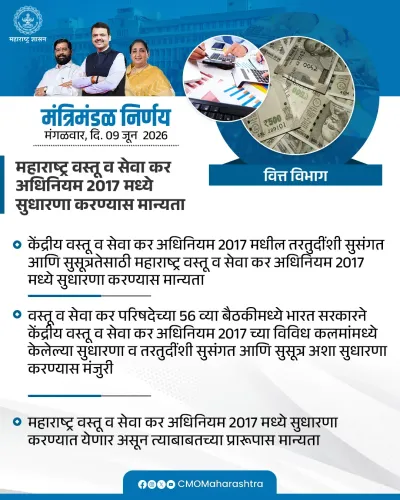
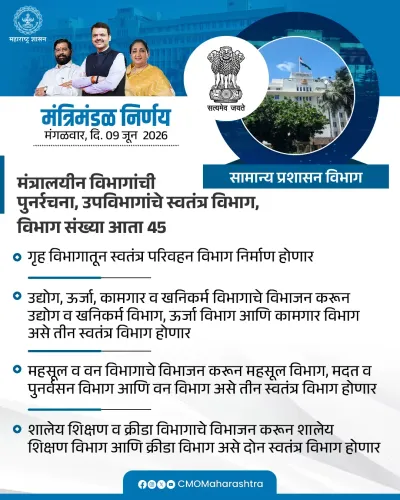
The cabinet communiqué, shared by the Chief Minister's Office and tagged to @Dev_Fadnavis, signals a formal policy action under the Revenue, Registration and Stamp Duty Department. While the precise details of the decisions were carried in images attached to the post, the announcement confirms that the Fadnavis cabinet has formally cleared measures in an area that directly affects millions of property transactions across the state each year.
The Revenue, Registration and Stamp Duty Department is among Maharashtra's most consequential administrative units, responsible for collecting billions of rupees annually through property registrations and stamp duty levies. Any cabinet-level intervention in this department typically carries significant fiscal and administrative implications.
Policy Backdrop
Maharashtra governments have historically used cabinet decisions to recalibrate stamp duty rates and streamline registration procedures, balancing state revenue targets with the ease of property transactions. During Devendra Fadnavis's earlier tenure as Chief Minister (2014–2019), the state pushed computerisation of land records and introduced e-registration systems to modernise the revenue administration framework.
These recurring interventions reflect a broader pattern of using stamp duty policy as a lever — both to stimulate real estate activity during slowdowns and to shore up state finances during fiscal stress. Maharashtra's property registration revenue is among the highest of any Indian state, making decisions in this department closely watched by real estate developers, property buyers, and legal professionals.
Stakeholders and Impact
Property buyers and real estate developers across Mumbai, Pune, Nagpur, and other urban centres stand to be most immediately affected by any revision in stamp duty rates or registration procedures. Even marginal changes in stamp duty can translate into significant cost differences on high-value urban properties.
For the state exchequer, stamp duty and registration fees represent a reliable and substantial revenue stream. Cabinet decisions in this space are therefore monitored closely by fiscal analysts tracking Maharashtra's budgetary position. Procedural simplifications, if any, could also ease the burden on sub-registrar offices that handle large transaction volumes daily.
What's Next
The specific directives approved by the cabinet are expected to be notified through the Maharashtra Official Gazette, which will carry the operative details of any rate changes or procedural amendments. Implementation timelines and department-level circulars will follow thereafter.
Monthly revenue data from the Registration and Stamps Department will be the clearest early indicator of whether the cabinet decisions have had a measurable effect on transaction volumes or state receipts. Stakeholders are advised to track the official gazette notification for authoritative details.
Point of View
Registration and Stamp Duty Department fits a well-established Maharashtra governance pattern: using cabinet-level interventions in stamp duty and registration policy to manage both fiscal pressures and real estate market sentiment. With Maharashtra's urban property markets remaining high-value and transaction-intensive, even procedural tweaks in this department carry outsized economic weight. The move also signals the Fadnavis administration's intent to keep revenue administration reform on the active policy agenda, continuing a digitisation and simplification push that began in his earlier tenure. Until gazette notification details emerge, however, the precise direction — revenue maximisation or market stimulation — remains to be seen.
NationPress
21 Jul 2026
Frequently Asked Questions
What did the Maharashtra cabinet decide on 21 July 2026?
The Maharashtra cabinet, led by Chief Minister Devendra Fadnavis, cleared decisions concerning the Revenue, Registration and Stamp Duty Department on 21 July 2026. The specific details are expected to be notified through the Maharashtra Official Gazette.
What does the Revenue, Registration and Stamp Duty Department in Maharashtra do?
The Revenue, Registration and Stamp Duty Department is responsible for maintaining land records, overseeing property registration processes, and collecting stamp duty across Maharashtra. It is one of the state's primary sources of own-tax revenue.
How does a Maharashtra cabinet decision on stamp duty affect property buyers?
Any change in stamp duty rates directly alters the cost of purchasing property. Even a one-percentage-point shift can mean lakhs of rupees in additional or reduced cost on a high-value urban property in cities like Mumbai or Pune.
When will the Maharashtra cabinet's stamp duty decision be officially notified?
Cabinet decisions of this nature are formally published in the Maharashtra Official Gazette. Buyers and developers should monitor the gazette and department circulars for operative details and effective dates.
What is Devendra Fadnavis's track record on revenue administration reform?
During his earlier tenure as Chief Minister from 2014 to 2019, Devendra Fadnavis initiated computerisation of land records and introduced e-registration systems. His current cabinet's decision in this department continues that broader modernisation agenda.