Maharashtra CM Justifies New Bill Against 'Unlawful Conversions', Claims No Community is Targeted

Synopsis
In Maharashtra, Chief Minister Devendra Fadnavis staunchly defends the Maharashtra Freedom of Religion Bill, asserting it aims to combat unlawful conversions without targeting any specific community. The bill aims to protect individuals from coercive practices and ensure that religious conversions are voluntary.
Key Takeaways
Maharashtra Freedom of Religion Bill introduced to curb unlawful conversions.
Requires a 60-day notice before any conversion.
Penalties include imprisonment and fines for those violating the law.
Bill allows relatives to report suspicions of coercion.
Focuses on safeguarding individual rights in religious conversions.
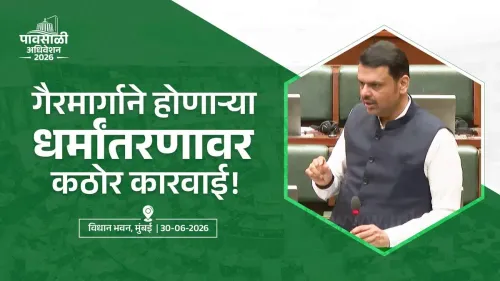
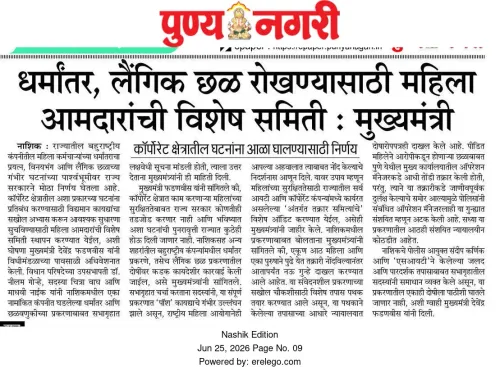
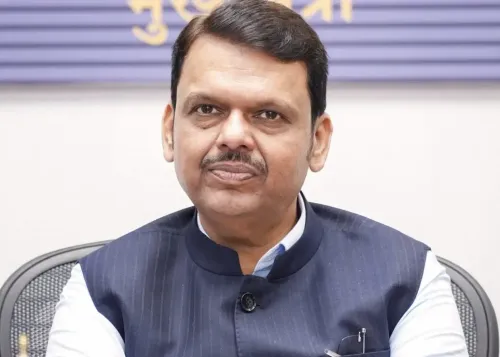
Mumbai, March 16 (NationPress) The Chief Minister of Maharashtra, Devendra Fadnavis, on Monday, supported the state government's initiative to introduce the Maharashtra Freedom of Religion Bill, designed to address unlawful religious conversions within the state.
He emphasized that the Bill is particularly relevant given the numerous reports of women being misled into relationships, subsequently married, and then deserted.
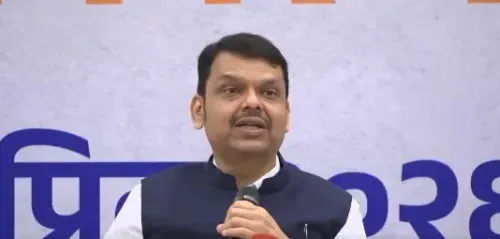
"Numerous incidents have occurred where women have been deceived, eloped, and left after marriage. This situation raises concerns about the children resulting from these unions, complicating their lives. The Bill aims to seek resolutions to these challenges," Chief Minister Fadnavis informed the press.
However, he did not present any statistical evidence to substantiate his claims.
Fadnavis stated that had the opposition parties thoroughly examined the Bill, they would recognize that it does not single out any community, but rather focuses on preventing coercive religious conversions through inducement, pressure, or manipulation.
"The Opposition is simply attempting to politicize the matter for their electoral advantages. I assure you that upon a careful review of the Bill, there will be no objections from them," he remarked.
The Chief Minister noted that Maharashtra is not the first state to propose such legislation, as several other states have already enacted similar laws to combat unlawful religious conversions.
The Maharashtra government introduced the Maharashtra Freedom of Religion Bill, 2026, in the State Assembly on March 13, aiming to outlaw religious conversions that occur through coercion, inducement, misrepresentation, or other fraudulent tactics.
Maharashtra's Minister of State for Home, Pankaj Bhoyar, presented the Bill, which is intended to safeguard the right to religious freedom while also regulating conversions and enforcing penalties for unlawful conversions.
According to the proposed legislation, individuals wishing to convert must notify district authorities a minimum of 60 days in advance. After the conversion, the change must be registered officially within 25 days to be recognized legally.
The Bill also allows blood relatives of the person converting to report any suspicions of coercion or inducement during the process.
Section 14 grants the state authority to prohibit and penalize organizations found to be involved in or funding illegal conversions.
Section 9 details the judicial ramifications for offenders, including imprisonment of up to seven years and fines as high as Rs 5 lakh.
The legislation proposes rigorous administrative protocols and criminal repercussions to guarantee that religious conversions are a matter of personal choice rather than coercion.
Under the proposed law, any individual intending to convert must inform the relevant authority, defined as the District Magistrate or a state-authorized officer, at least 60 days ahead of time.
The competent authority will then publicly announce the details regarding the forthcoming conversion at its office and at the local authority or village panchayat, inviting public objections within a 30-day window.
Furthermore, the converted individual and the organizer of the conversion ceremony must submit a declaration to the authority within 21 days post-conversion.
The legislation permits parents, siblings, or blood relatives of the converted person to file a first information report (FIR) if they suspect an unlawful conversion, requiring the police to document such complaints.
The Bill specifies that the responsibility to prove that a religious conversion complied with legal standards lies with the person who facilitated or supported the conversion.
Point of View
The Bill's implications for personal freedoms and its potential to incite divisions among communities warrant careful scrutiny.
NationPress
16 Oct 2026
Frequently Asked Questions
What is the Maharashtra Freedom of Religion Bill?
The Maharashtra Freedom of Religion Bill is legislation aimed at prohibiting unlawful religious conversions through force, coercion, or inducement, requiring individuals to notify authorities prior to conversion.
What are the penalties for unlawful conversions under this Bill?
The Bill stipulates penalties including imprisonment for up to seven years and fines up to Rs 5 lakh for those involved in unlawful conversions.
How does the Bill protect individuals from coercion?
The Bill mandates a 60-day notice period for conversions and allows relatives to file complaints if they suspect coercive practices.
Is there any community targeted by this Bill?
According to Chief Minister Fadnavis, the Bill is not aimed at targeting any particular community but rather focuses on preventing unlawful conversions.
What is the process for officially registering a conversion?
After a conversion occurs, it must be registered with the authorities within 25 days to be considered legally valid.