Maharashtra declares snakebite a notified disease for ASV tracking

Synopsis
Maharashtra has made snakebite a notified disease — a first-of-its-kind administrative move that compels every hospital, public or private, to log and report cases in real time. With a three-tier monitoring structure and mandatory ASV stock tracking, the state is betting that better data will close the gap between rural snakebite incidence and timely treatment.
Key Takeaways
Maharashtra declared snakebite a 'Notified Disease' on 18 August , making case reporting legally mandatory for all hospitals and practitioners.
All cases must be reported to the District Health Officer or District Civil Surgeon and digitised via HMIS/DHIS-2 or IDSP .
A three-tier monitoring framework — state, district, and municipal — has been established with designated nodal officers.
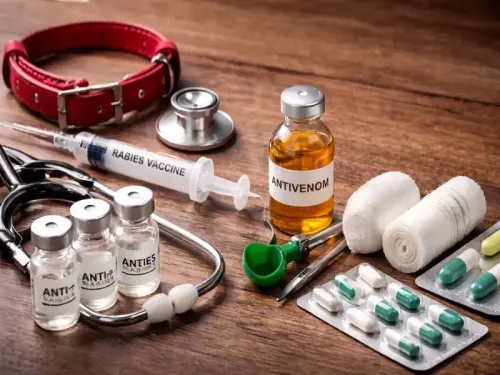
Hospitals must maintain real-time records of ASV inventory and usage to enable rapid supply to high-incidence areas.
BJP MLA Viram Pachpute , who raised the demand in the Assembly, called for revival of the Haffkine Institute for local anti-venom production and introduction of species-specific monovalent vaccines.
The Maharashtra government on Tuesday, 18 August declared snakebite a 'Notified Disease' across the state, making it mandatory for all public and private hospitals, medical colleges, and practitioners to report every suspected, probable, or confirmed case — including fatalities — to health authorities. The move is aimed at reducing preventable deaths and disabilities, particularly in rural and remote regions where the risk is highest.
What the Notification Mandates
Under the new directive, healthcare institutions and doctors must report every snakebite case to the respective District Health Officer or District Civil Surgeon. Case data will be digitised through the Health Management Information System (HMIS/DHIS-2) or the Integrated Disease Surveillance Programme (IDSP). Reports must include details on the number of Anti-Snake Venom (ASV) vials administered, treatment outcomes, and referral information.
Monitoring Framework Established
A dedicated, three-tier monitoring structure has been set up to oversee implementation. At the state level, the Director (Hospitals) will lead oversight; at the district level, the District Civil Surgeon and District Health Officer will be the nodal officers; and at the municipal level, the Medical Officer of Health will be responsible. Hospitals providing treatment are required to maintain real-time records of ASV inventory, usage, and remaining stock to enable rapid dispatch of vaccines to high-incidence areas and prevent shortages.
Authorities will also analyse snakebite data based on location, season, and environmental factors to design targeted public awareness campaigns. State Public Health and Family Welfare Minister Prakash Abitkar urged healthcare providers to report every incident, stressing that timely treatment is the key to saving lives.
Legislative Push Behind the Decision
The demand to notify snakebite as a disease was raised by Bharatiya Janata Party (BJP) MLA Viram Pachpute in the Maharashtra State Assembly during the Monsoon session. Pachpute argued that mandatory tracking of snakebite cases, mortality rates, and treatment outcomes across public and private hospitals was essential. He welcomed the government's decision but pressed further, demanding the revival of the government-run Haffkine Institute — reportedly the only institute in the country with permission to extract snake venom — for local anti-venom production.
Calls for Species-Specific Treatment and Regional Banks
Pachpute raised concerns that Maharashtra currently relies almost exclusively on polyvalent antivenom, which may not be effective against venom from all native snake species. He advocated for species-specific monovalent vaccines and called for the establishment of regional anti-venom banks to account for regional venom variations, ensuring rural hospitals are equipped with treatments tailored to local snake populations. He also urged the adoption of rapid diagnostic tools — such as RT-PCR test kits to identify venom types — and the modernisation of the Haffkine Institute to support local vaccine manufacturing. The emphasis on the critical 'golden hour' after a bite underscored the urgency of faster, more precise diagnosis at the point of care.
With the notification now in force, the effectiveness of the framework will depend on compliance from private hospitals and the speed at which the state can scale ASV supply to underserved districts.
Point of View
And the absence of mandatory reporting has long made it impossible to match ASV supply with actual demand. Maharashtra's three-tier monitoring structure is credible on paper, but the critical test will be private-hospital compliance, which has historically been weak in disease surveillance programmes. The push for monovalent, species-specific vaccines and regional anti-venom banks reflects a more sophisticated understanding of the problem than the polyvalent-only approach has allowed; whether it translates into procurement policy is another matter. The Haffkine Institute revival demand is worth watching — if it moves from Assembly speech to funded mandate, it could reduce Maharashtra's dependence on out-of-state ASV supply chains that break down precisely when rural demand spikes during the monsoon.
NationPress
18 Aug 2026
Frequently Asked Questions
What does it mean for Maharashtra to declare snakebite a notified disease?
It means all public and private hospitals, medical colleges, and doctors in Maharashtra are now legally required to report every suspected, probable, or confirmed snakebite case — including deaths — to health authorities. The data will be used to monitor Anti-Snake Venom (ASV) supply, track treatment outcomes, and design targeted awareness campaigns.
Which hospitals and doctors are covered under this mandate?
The mandate applies to all healthcare providers in Maharashtra — public hospitals, private hospitals, medical colleges, and individual medical practitioners. Non-reporting is no longer optional; it is a legal obligation under the new notification.
How will Anti-Snake Venom supply be managed under the new system?
Hospitals treating snakebite patients must maintain real-time records of ASV inventory, usage, and remaining stock. This centralised data will allow authorities to rapidly dispatch vaccines to high-incidence areas and prevent shortages, particularly in rural and remote regions.
What is the Haffkine Institute and why is its revival being demanded?
The Haffkine Institute is a government-run facility in Maharashtra that is reportedly the only institute in the country with permission to extract snake venom. BJP MLA Viram Pachpute has demanded its revival for local anti-venom production, arguing that Maharashtra's near-total reliance on polyvalent antivenom leaves it unprepared for bites from specific native snake species.
Why are rural areas highlighted as most at risk?
State Public Health Minister Prakash Abitkar specifically noted that rural and remote regions face the highest snakebite risk, where access to timely medical intervention is limited. The notification's monitoring framework and ASV stock-tracking system are designed to address these gaps by ensuring faster supply to underserved areas.