Sugar export ban rollback demanded by parties, farmer groups in Maharashtra
Synopsis
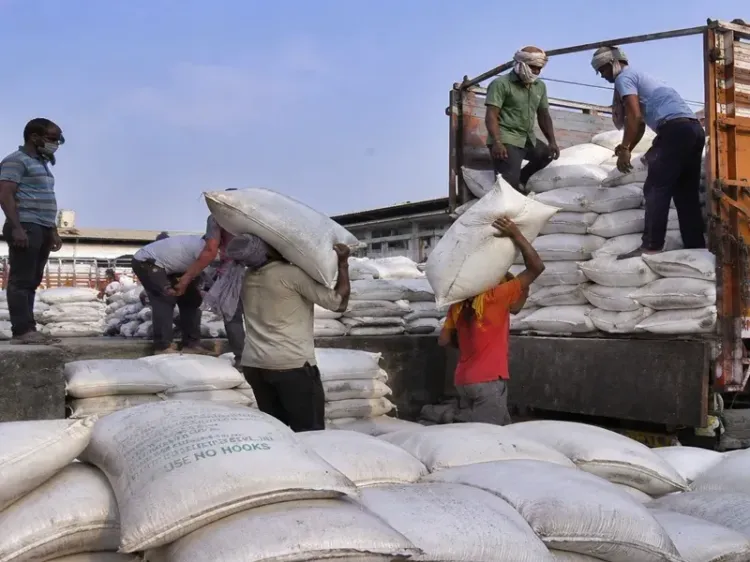
A rare cross-party alliance — ruling NCP, opposition NCP (SP), Congress-aligned AIKS, and independent farmer groups — has converged on a single demand: lift the Centre's sugar export ban now. With ₹12,000 crore in cane dues unpaid nationwide and Maharashtra's 208 mills sitting on nearly 992 lakh tonnes of sugar they cannot sell abroad, the pressure on New Delhi is mounting fast.
Key Takeaways
Ruling and opposition parties in Maharashtra jointly demanded the Centre roll back its sugar export ban on 14 May .
Sharad Pawar called the ban 'economically disastrous' for Maharashtra's cooperative sugar sector at a press conference in Pune .
Nearly ₹12,000 crore in sugarcane dues are pending nationwide; around ₹3,000 crore is owed in Maharashtra alone, according to Raju Shetti .
Maharashtra crushed 1,045.58 lakh tonnes of sugarcane and produced 991.81 lakh tonnes of sugar in 2025-26 , with 208 factories in operation.
The All India Kisan Sabha (AIKS) urged an export-oriented policy to tap global markets where sugar output has reportedly declined.
Leaders warned that excess stock, elevated FRP obligations, and zero export access could trigger mill-level financial collapse ahead of the 2026 sugar season .
Ruling and opposition parties, along with major farmer organisations in Maharashtra, on Thursday, 14 May mounted a unified front demanding the Centre immediately roll back its ban on sugar exports, warning that the move threatens the financial survival of cooperative sugar mills and deepens a crisis for sugarcane farmers already owed thousands of crores in unpaid dues.
Key Demands and Political Response
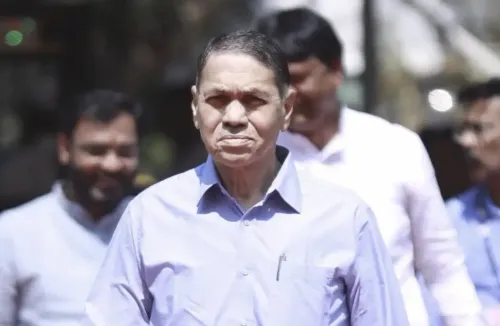
Veteran Nationalist Congress Party (NCP) leader and former state Cooperation Minister Dilip Walse-Patil said the ban was inexplicable given bumper sugar production. 'Even though there has been bumper sugar production, it is inexplicable to continue the export ban. Factories will be able to provide increased FRP only if money keeps circulating with them. The government should understand the difficulties of the sugar industry and immediately permit exports,' he said.
NCP (SP) legislator and former state Finance Minister Jayant Patil called the ban a double blow for Maharashtra's sugar mills. 'Excess stock plus increased FRP plus no exports = financial disaster. We need foreign exchange, yet we're locking away our surplus. This is a hasty and ill-prepared decision and needs an immediate rollback,' he said.
Farmer Organisations Sound the Alarm
Leaders of the All India Kisan Sabha (AIKS) also demanded the Central Government lift the export ban immediately, arguing that India should adopt an export-oriented policy to tap global markets where sugar production has reportedly declined. Raju Shetti, founder of the Swabhimani Shetkari Sanghatana, criticised the decision as 'foolish', warning it would directly hurt farmers. He questioned why factories should be barred from exporting when global prices are high, particularly since the government has declined to raise domestic prices.
Shetti also flagged that nearly ₹12,000 crore in sugarcane dues are pending across the country, with around ₹3,000 crore owed in Maharashtra alone, and demanded accountability for the crisis.
Sharad Pawar Terms Ban 'Economically Disastrous'
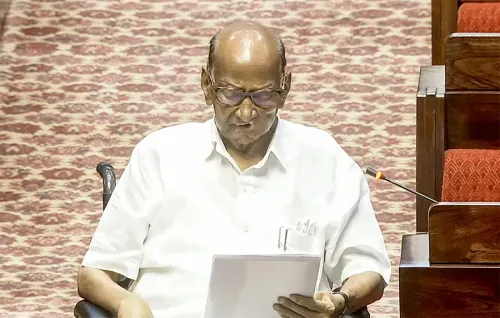
NCP (SP) president Sharad Pawar launched a sharp attack on the ban at a press conference in Pune, calling it 'economically disastrous' for Maharashtra's cooperative sector. He argued the ban had arrived precisely when the state was already grappling with excess sugar production, cutting off the liquidity mills needed to pay the recently increased Fair and Remunerative Price (FRP) to farmers. 'The industry was finally seeing a window of liquidity through international markets. By shutting this door, the government is making it impossible for mills to survive and fulfil their legal obligations to sugarcane growers,' Pawar said. He also sought government intervention over crop damage caused by unseasonal rain.
Maharashtra's Sugar Sector: Scale of the Stakes
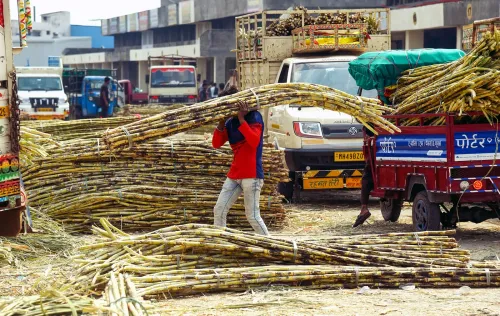
The scale of the crisis is underscored by Maharashtra's sugar footprint. During 2025-26, sugarcane cultivation covered 16.06 lakh hectares across the state, with 208 sugar factories — including private and cooperative units — in operation. The state crushed 1,045.58 lakh tonnes of sugarcane and produced 991.81 lakh tonnes of sugar. The cash crop carries significant political weight, with several political leaders directly running cooperative sugar mills that are central to local power structures.
What Happens Next
With cross-party pressure mounting and farmer bodies threatening escalation, the Centre faces growing demands to reconsider the ban before the 2026 sugar season. Industry observers note that a continued export freeze, combined with elevated FRP obligations and excess domestic stock, could trigger mill-level insolvencies — a scenario that would ripple through Maharashtra's rural economy ahead of a politically sensitive period.
Point of View
The Centre typically listens, because sugar cooperatives are the financial backbone of rural politics in the state. What mainstream coverage underplays is the structural trap: mills are legally bound to pay a government-mandated FRP that has just risen, yet the same government has shut the only valve — exports — that could generate the cash to honour that obligation. The ₹12,000 crore dues figure is not an abstraction; it is a debt owed to farmers who vote. The Centre's calculus is likely domestic inflation management, but the cost is being borne entirely by Maharashtra's rural economy. Without a clear timeline for lifting or easing the ban, this risks becoming a slow-motion crisis that explodes just before election season.
NationPress
29 Sept 2026
Frequently Asked Questions
Why has the Centre imposed a ban on sugar exports?
The Central Government has not publicly detailed its full rationale in the source reporting, but such bans are typically imposed to protect domestic sugar availability and manage food inflation. Critics, including Sharad Pawar and Jayant Patil, argue the ban is ill-timed given Maharashtra's record surplus production in 2025-26.
How much in sugarcane dues are pending across India?
According to Swabhimani Shetkari Sanghatana founder Raju Shetti, nearly ₹12,000 crore in sugarcane dues are pending nationwide, with around ₹3,000 crore owed to farmers in Maharashtra alone. Leaders argue the export ban will make it even harder for mills to clear these arrears.
What is the Fair and Remunerative Price (FRP) and why does it matter here?
The FRP is the minimum price the Central Government mandates sugar mills to pay farmers for their sugarcane. Mills are legally obligated to pay it, but leaders argue that without export revenue, cash-strapped factories cannot meet this obligation — compounding the dues crisis.
How large is Maharashtra's sugar industry?
In 2025-26, sugarcane was cultivated across 16.06 lakh hectares in Maharashtra, with 208 sugar factories — private and cooperative — in operation. The state crushed 1,045.58 lakh tonnes of sugarcane and produced 991.81 lakh tonnes of sugar, making it one of India's largest sugar-producing states.
Who is demanding the rollback and what are they asking for?
A broad coalition including NCP's Dilip Walse-Patil, NCP (SP)'s Jayant Patil and Sharad Pawar, the All India Kisan Sabha, and farmer leader Raju Shetti of Swabhimani Shetkari Sanghatana are demanding the Centre immediately lift the sugar export ban to restore liquidity to mills and protect the 2026 sugar season.