Sharad Pawar slams Centre's sugar export ban, calls it 'economically disastrous'
Synopsis
Sharad Pawar's Pune press conference was about far more than sugar policy — it was a multi-front political offensive. He called the Centre's export ban 'economically disastrous,' questioned the sincerity of the government's austerity push, demanded an all-party meeting, and signalled tactical NCP coordination against the BJP in rural Maharashtra, all in a single sitting.
Key Takeaways
Sharad Pawar on 14 May called the Centre's sugar export ban 'economically disastrous' for Maharashtra's cooperative sector.
He demanded an immediate rollback to protect mills' ability to pay the Fair and Remunerative Price (FRP) to farmers ahead of the 2026 sugar season .
Pawar questioned the sincerity of the government's austerity drive, noting he has maintained a three-car convoy for four years.
He demanded Prime Minister Modi convene an all-party meeting given the gravity of the national situation.
Pawar confirmed inter-faction NCP talks to avoid vote-splitting in upcoming Zilla Parishad elections against the BJP .
He attributed the NEET paper leak to a failure of precaution, calling its impact on students 'deeply concerning.'
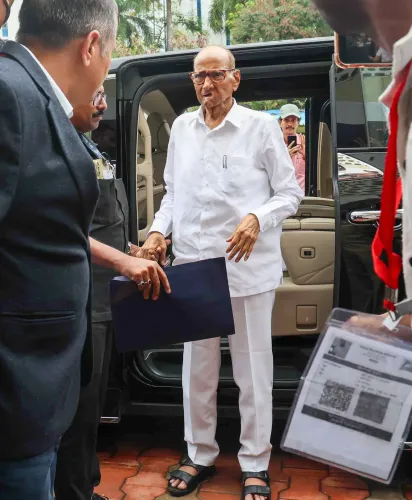
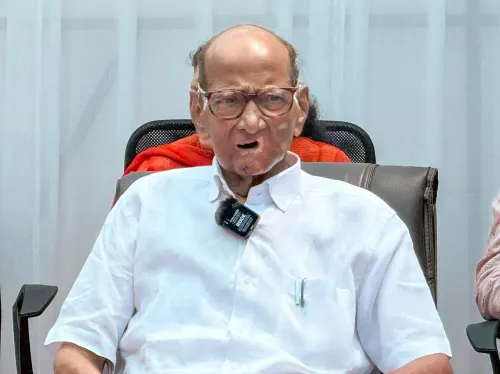
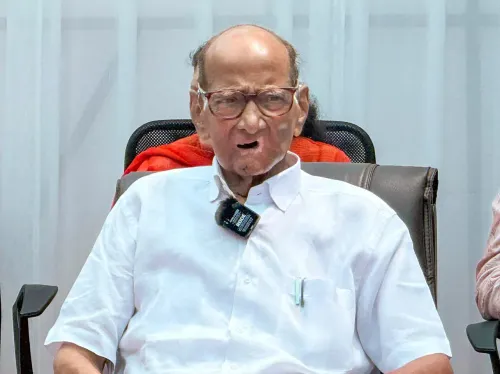
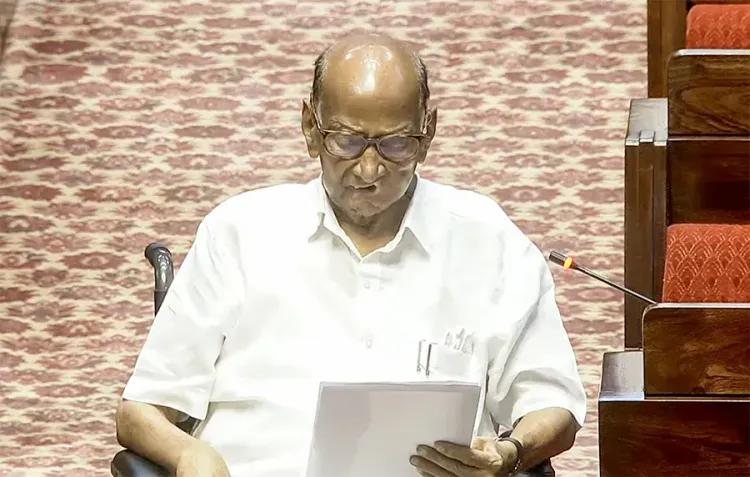
Nationalist Congress Party (SP) President Sharad Pawar on Thursday, 14 May launched a sharp attack on the Central Government's decision to ban sugar exports, calling the move 'economically disastrous' for Maharashtra's cooperative sector. Speaking at a press conference in Pune, the veteran leader demanded an immediate rollback of the policy to prevent the financial collapse of sugar mills ahead of the 2026 sugar season.
Export Ban and Its Impact on Sugar Mills
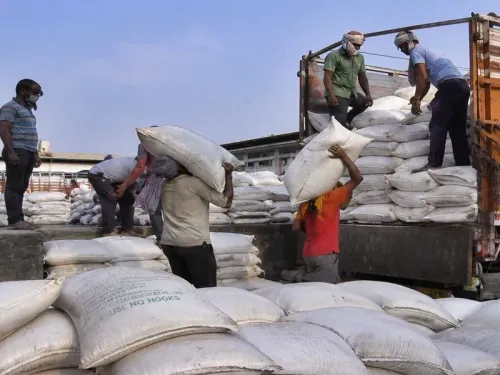
Pawar argued that the export ban has landed at the worst possible moment, with the state already dealing with excess sugar production. He contended that restricting access to international markets chokes the cash flow that mills depend on to pay the recently revised Fair and Remunerative Price (FRP) to farmers.
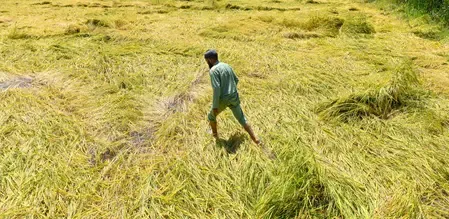
'The industry was finally seeing a window of liquidity through international markets. By shutting this door, the government is making it impossible for mills to survive and fulfill their legal obligations to the sugarcane growers,' Pawar said. He also called for government intervention to address losses caused by unseasonal rain damage to the crop.
This comes amid a broader pattern of Centre-state friction over agricultural pricing policy, with Maharashtra's sugar cooperatives having long been a politically sensitive constituency — one that Pawar's faction has historically anchored.
Austerity Appeal and Political Posturing
Pawar also weighed in on Prime Minister Narendra Modi's recent call for domestic austerity in the context of West Asian instability. While acknowledging that fiscal discipline is necessary, he cautioned that 'common citizens are not burdened by policy failures at the top.' He specifically flagged fuel and edible oil prices as pressing concerns for the rural economy.
Pawar welcomed the PM's appeal but questioned its consistency. 'The Prime Minister's appeal suggests that the situation is grave. It is being discussed everywhere; therefore, everyone should take note of it. The country has faced such situations before. Following the Prime Minister's call, there are many ways to reduce administrative expenses, and work should be done in that direction,' he said.
Referring to reports of ministers reducing their convoys or walking on foot following the PM's directive, Pawar was sceptical. 'Why are 17 cars needed in a minister's motorcade? Reducing them to 7 or 8 now is just a show. For the last four years, I have had only three cars in my convoy, and I have even requested to further reduce that number,' he remarked. He added that savings from one or two symbolic days would not yield meaningful results.
On Maharashtra Chief Minister Devendra Fadnavis arriving at the Mantralaya on a motorcycle, Pawar said people would only take it seriously if the Chief Minister continued to commute by bike every day going forward.
All-Party Meeting Demand and Fuel Policy
Pawar demanded that the Prime Minister convene an all-party meeting given the gravity of the national situation. He also questioned why the ruling party had not considered fuel conservation during elections and why such a decision had taken so long to materialise.
NCP Factions and ZP Elections
On the political front, Pawar confirmed that discussions are ongoing between the two NCP factions to avoid splitting 'like-minded' votes ahead of the upcoming Zilla Parishad (ZP) elections. He indicated that while the parties remain organisationally distinct, local-level coordination would be prioritised to mount a stronger challenge against the Bharatiya Janata Party (BJP) in rural strongholds. On the recent Baramati Assembly bye-election results, Pawar maintained that 'voter maturity' in Maharashtra is consistently underestimated by those in power, and dismissed comments about the 'downfall' of senior leadership as 'signs of political immaturity.'
NEET Paper Leak
Pawar also commented on the NEET paper leak controversy, noting that similar incidents had occurred in the past. He attributed the leak to a failure to take adequate precautions, stating that millions of students have been left in uncertainty as a result.
With the 2026 sugar season approaching and ZP elections on the horizon, Pawar's remarks signal an intensifying political and policy battle between his faction and the ruling alliance in Maharashtra.
Point of View
The Centre's policy hands him a concrete grievance that resonates directly with Maharashtra's rural cooperative base. But the press conference was also a masterclass in agenda-setting: by folding in the austerity critique, the NEET leak, and the ZP election signalling, Pawar positioned himself as the elder statesman holding the government accountable on multiple fronts simultaneously. The real question is whether the NCP (SP)'s coordination with the rival faction on ZP seats translates into votes, or remains a tactical statement that dissolves under local rivalries. Maharashtra's cooperative sugar sector has weathered policy swings before — but with excess production and export doors shut, the financial stress on mills this season is structurally different from earlier cycles.
NationPress
29 Sept 2026
Frequently Asked Questions
Why did Sharad Pawar criticise the Centre's sugar export ban?
Pawar called the ban 'economically disastrous' because it cuts off the international market liquidity that Maharashtra's sugar mills rely on to pay the Fair and Remunerative Price (FRP) to farmers. With excess production in the state and FRP obligations pending, he argued the ban threatens the financial survival of cooperative mills ahead of the 2026 sugar season.
What is the Fair and Remunerative Price (FRP) and why does it matter here?
The FRP is the minimum price the government mandates sugar mills to pay sugarcane farmers. Mills are legally required to pay it, and any cash-flow disruption — such as the loss of export revenue — can make compliance difficult, directly harming farmers' incomes.
What did Pawar say about PM Modi's austerity appeal?
Pawar acknowledged the PM's call for fiscal discipline amid West Asian instability but questioned its sincerity, pointing out that reducing ministerial motorcades from 17 to 7 or 8 cars is symbolic. He noted that he himself has maintained a three-car convoy for four years and demanded sustained action rather than one-off gestures.
What is the significance of Pawar's comments on the ZP elections?
Pawar confirmed that the two NCP factions are in talks to avoid splitting votes in the upcoming Zilla Parishad elections, signalling tactical coordination against the BJP in rural Maharashtra. This is notable because the factions have been organisationally separate since the party split.
What did Pawar say about the NEET paper leak?
Pawar said the NEET paper leak resulted from a failure to take adequate precautions, and that millions of students have been left in uncertainty as a consequence. He noted that similar incidents have occurred in the past, implying systemic lapses rather than a one-off failure.