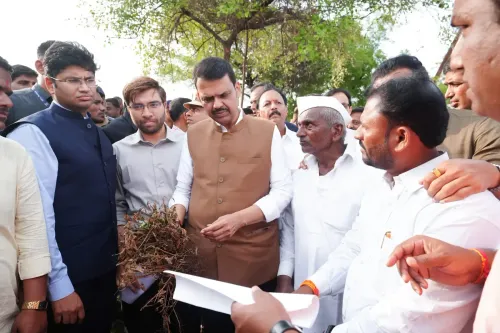
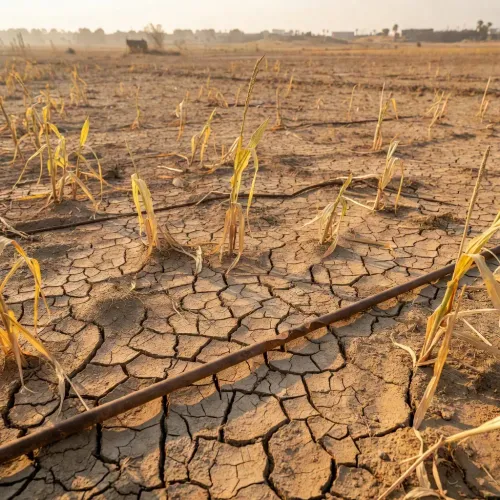
Maharashtra declares drought in 304 talukas, rolls out water and fodder relief plan
Synopsis
Maharashtra has formally declared drought across 304 talukas — roughly a quarter of the state's administrative geography — and rushed out a multi-pronged relief framework covering water conservation, capped fodder prices, CSR-funded livestock camps, and devolved powers to District Collectors. The scale of the declaration, backed by a Chief Minister-chaired oversight committee, signals that this is one of the more serious dry-spell responses the state has mounted in recent years.
Key Takeaways
Maharashtra has declared drought in 304 talukas following deficit rainfall, covering Trigger-1 and Trigger-2 conditions.
District Collectors can sanction drought relief works up to ₹25 lakh per project under the MLA LAD programme.
Fodder prices fixed at ₹12 per kg ; silage capped at ₹8 per kg (excluding transport); inter-state fodder transfer strictly banned .
The Forest Department has suspended regular grass auctions to protect livestock and wildlife fodder reserves.
A Chief Minister-chaired high-powered committee will monitor soil and water conservation works.
Administrative sanctions under the District Annual Plan 2026-27 extended to 30 November .
The Maharashtra government has declared drought in 304 talukas across the state and issued a sweeping set of directives to tackle mounting water scarcity and livestock stress, following a season of deficit rainfall. A comprehensive government statement issued late Sunday night outlined a series of Government Resolutions (GRs), circulars, and directives issued between 5 October and 6 November, covering everything from soil conservation to fodder price controls.
Administrative Powers Decentralised
To fast-track relief work, the state has decentralised administrative authority down to district and taluka levels. Deadlines under the District Annual Plan (General) for 2026-27 have been extended, with administrative sanctions permitted up to 30 November. The Chief Secretary has empowered local secretaries and District Collectors to expedite technical sanctions independently.
Under the MLA Local Area Development (LAD) programme, District Collectors are authorised to sanction drought and water-scarcity-related works up to ₹25 lakh per project in both rural and urban areas. Members of Parliament have been separately requested to recommend priority interventions under the MP LAD programme.
Water and Soil Conservation on Ground
In all 304 talukas classified under Trigger-1 and Trigger-2 drought conditions, soil and water conservation works are under way. These include deepening and widening streams, constructing farm ponds, building recharge shafts, installing check dam gates, and creating rainwater harvesting structures. The works are being executed through NGOs and the VB G RAM G scheme.
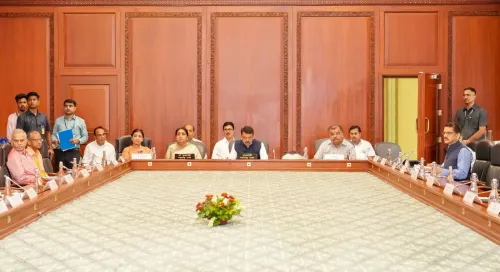
A state-level high-powered committee chaired by the Chief Minister has been constituted specifically to monitor the progress of these soil and water conservation projects. This comes amid growing concerns that prolonged dry spells are straining both rural water sources and agricultural productivity.
Fodder Security and Livestock Relief
Fodder production is being scaled up across agricultural, forest, and submergence reservoir lands. The government has fixed a base price of ₹12 per kg for fodder and capped silage at ₹8 per kg (excluding transport costs). Submergence and silt-bed lands with irrigation access are being earmarked for short-duration, multi-cut fodder crops under District Collector-led committees.
Notably, the Forest Department has suspended regular grass auctions until further notice, redirecting reserves to livestock and wildlife. Transporting fodder out of state and using it for non-fodder purposes — such as biofuels, power generation, or industrial packaging — has been strictly prohibited. District Executive Drought Management Committees will decide on establishing fodder camps, with one camp per revenue circle depending on local livestock count and water availability. Corporate Social Responsibility (CSR) funds will be tapped for fodder depots, water supply, hygiene facilities, CCTV systems, and balers.
Drinking Water and Public Health Measures
Schools and anganwadis have been directed to maintain clean drinking water, functional handwashing stations, and regular biological testing of water samples. Where construction is incomplete, temporary tanker supplies or pipeline extensions will be deployed. Priority water works include deepening wells, desilting, acquiring private borewells, implementing supplementary piped water schemes, and erecting recharge shafts near existing water sources.
Urban and rural local bodies have been permitted to restore disconnected power supplies to water schemes upon clearing one month's security deposit and reconnection fees. New water supply connections will be granted on payment of standard charges even where past dues exist. Taluka-level Chief Minister's Relief Fund cells and coordination committees are also being set up to manage public health in drought-hit areas.
What Comes Next
With taluka-level committees now operational and administrative powers devolved, ground-level implementation will be the critical test. The state's ability to sustain fodder supply, prevent distress migration, and maintain drinking water access through the coming months will determine whether the policy architecture translates into tangible relief for affected communities across Maharashtra.
Point of View
But the real accountability question is whether decentralised sanctions will speed delivery or simply diffuse responsibility. Fixing fodder prices and banning inter-state transfers are blunt instruments that can curb profiteering but also suppress supply if farmers find the controlled price unviable. The Chief Minister-chaired oversight committee is a positive structural step, but Maharashtra has a chequered history of such committees outlasting their usefulness in past drought cycles. Ground-level monitoring — not just GR issuance — will determine whether this framework actually reaches livestock holders and rural households before distress peaks.
NationPress
16 Nov 2026
Frequently Asked Questions
How many talukas has Maharashtra declared drought in?
Maharashtra has declared drought in 304 talukas across the state following a season of deficit rainfall. These talukas are classified under Trigger-1 and Trigger-2 drought conditions, triggering a range of government relief measures.
What powers have District Collectors been given under the drought relief plan?
District Collectors have been authorised to sanction drought and water-scarcity-related works up to ₹25 lakh per project under the MLA LAD programme, in both rural and urban areas. They also lead committees for allocating land for fodder cultivation and deciding on fodder camp locations.
What are the government-fixed prices for fodder during the Maharashtra drought?
The Maharashtra government has set a base price of ₹12 per kg for fodder and capped silage at a maximum of ₹8 per kg , excluding transport costs. Transporting fodder out of the state or using it for non-fodder purposes such as biofuels or industrial packaging has been strictly prohibited.
What water conservation works are being carried out in drought-hit talukas?
In the 304 affected talukas, works include deepening and widening streams, constructing farm ponds, building recharge shafts, installing check dam gates, and creating rainwater harvesting structures. These are being executed through NGOs and the VB G RAM G scheme.
How is Maharashtra managing drinking water access during the drought?
Schools and anganwadis must maintain clean drinking water, functional handwashing stations, and regularly test water samples. Where infrastructure is incomplete, temporary tanker supplies or pipeline extensions are being deployed, and priority is given to deepening wells, desilting, and supplementary piped water schemes.