CM Fadnavis expands Maharashtra mantralaya to 45 departments
Synopsis
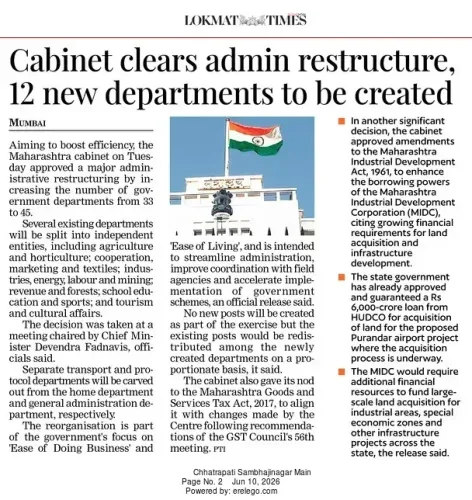
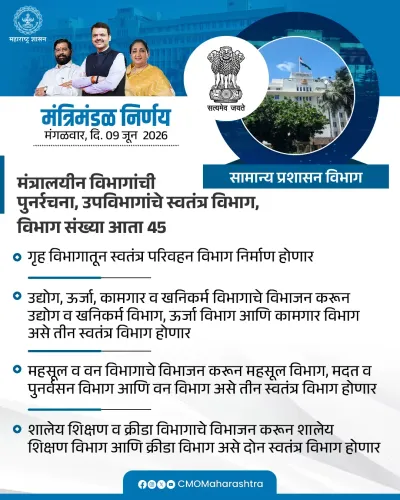
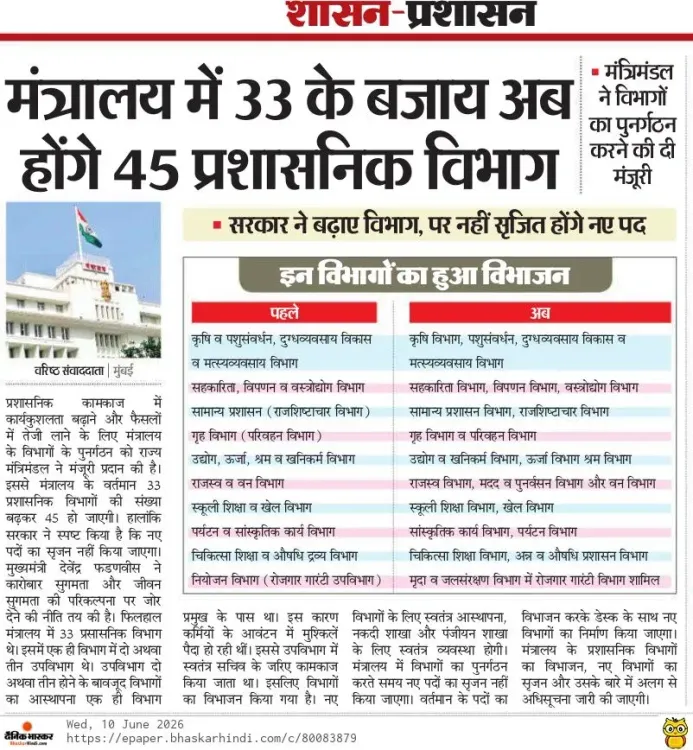
Maharashtra's Chief Minister's Office announced on June 10, 2026 that the state secretariat will expand from 33 to 45 administrative departments — a 36 per cent increase — under CM Devendra Fadnavis, in a move framed as a good governance initiative.
Key Takeaways
The Chief Minister's Office of Maharashtra announced on June 10, 2026 that Mantralaya will be restructured to house 45 administrative departments .
This is an increase of 12 departments from the existing 33 , representing a roughly 36 per cent expansion.
The announcement was made under Chief Minister Devendra Fadnavis and tagged to his official handle.
The CMO framed the move under the banner of #GoodGovernance .
Formal notifications on portfolio allocations and new departmental mandates are awaited.
The restructuring will affect state bureaucrats, IAS officers, ministers , and ultimately the delivery of public services across Maharashtra's 36 districts .
The Chief Minister's Office of Maharashtra announced on Wednesday, June 10, 2026, that the state secretariat will be restructured to house 45 administrative departments, up from the existing 33 — a significant expansion of the mantralaya's organisational footprint under Chief Minister Devendra Fadnavis.
What was announced
The CMO's post, tagged to @Dev_Fadnavis, stated in Hindi: 'Mantralaya mein 33 ke bajay ab honge 45 prashासनिक vibhag' ('In the mantralaya, there will now be 45 administrative departments instead of 33'). The announcement marks an addition of 12 new departments to Maharashtra's secretariat structure, representing a roughly 36 per cent increase in the number of administrative divisions housed at Mantralaya, Mumbai.
Context
Maharashtra's secretariat, known as Mantralaya, is the nerve centre of the state government's executive machinery, located in South Mumbai. Administrative departments at Mantralaya are responsible for policy formulation, budget management, and oversight of field-level implementation across the state's 36 districts. The number of departments has historically evolved through cabinet-level decisions and governance reviews, with reorganisations typically coinciding with new government formations or major policy shifts.
Devendra Fadnavis, a senior Bharatiya Janata Party leader, returned to the Chief Minister's office following the Mahayuti alliance's victory in the Maharashtra assembly elections. His tenure has been marked by an emphasis on administrative reform and accelerated project delivery, with the hashtag #GoodGovernance used in the official announcement signalling the framing of this restructuring as a reform measure.
Policy backdrop
Periodic expansion or reorganisation of administrative departments is a recognised tool of governance reform across large Indian states. When a government adds departments, the stated rationale typically includes reducing the span of control for individual ministers and secretaries, creating dedicated focus areas for emerging priorities such as infrastructure, technology, or social welfare, and improving inter-departmental coordination.
Maharashtra, as India's second-most-populous state and its largest economy by gross state domestic product, manages an exceptionally wide portfolio of public services — from large-scale irrigation and urban infrastructure projects to tribal welfare and coastal regulation. Proponents of such restructuring argue that a larger number of focused departments can reduce bureaucratic bottlenecks and sharpen accountability. Critics, however, sometimes caution that proliferation of departments can increase administrative overhead and complicate coordination.
Stakeholders and impact
The restructuring directly affects state bureaucrats and government employees at Mantralaya, who will see revised reporting lines, portfolio allocations, and potentially new secretariat positions created to staff the expanded structure. Senior Indian Administrative Service officers posted to Maharashtra cadre are likely to be redistributed across the new departments, and the cabinet's ministerial portfolios will need to be realigned accordingly.
For citizens and businesses, the reorganisation could affect the speed and clarity of government approvals, scheme delivery, and grievance redressal — depending on how the new departments are demarcated and staffed. The state legislature will also need to reflect the new departmental structure in budget appropriations and question-hour proceedings.
What's next
The government is expected to issue formal notifications detailing the names, mandates, and portfolio allocations of the 12 new departments. Observers will watch for any supporting cabinet resolutions or amendments to existing rules of business that govern how Maharashtra's secretariat operates. The restructuring's effectiveness will ultimately be measured by whether the expanded departmental architecture translates into faster policy execution and improved service delivery on the ground.
Point of View
And its announcement under the #GoodGovernance banner signals that the Fadnavis administration intends to use administrative architecture as a visible reform credential. Historically, department proliferation in Indian states has been a double-edged tool — it can sharpen policy focus but also fragment accountability if not accompanied by clear mandates and adequate staffing. The move fits a broader pattern of the Mahayuti government seeking to project administrative seriousness after a competitive election cycle. The real test will come in the implementation notifications: how the 12 new departments are carved out will determine whether this is substantive reorganisation or largely cosmetic expansion.
NationPress
14 Sept 2026
Frequently Asked Questions
How many departments will Maharashtra's mantralaya have after the restructuring?
Maharashtra's mantralaya will have 45 administrative departments after the restructuring, up from the existing 33 — an addition of 12 new departments.
Who announced the expansion of Maharashtra's secretariat departments?
The Chief Minister's Office of Maharashtra made the announcement on June 10, 2026 , with the post tagged to Chief Minister Devendra Fadnavis .
Why is Maharashtra increasing the number of administrative departments?
The government has framed the move as a good governance initiative. Expanding departments typically aims to reduce the span of control for ministers and secretaries, create dedicated focus areas, and improve service delivery — though formal reasons will be detailed in official notifications.
What is Mantralaya in Maharashtra?
Mantralaya is the state secretariat of Maharashtra, located in South Mumbai . It is the apex administrative hub where policy is formulated and overseen by ministers and senior bureaucrats across all government departments.
What happens after Maharashtra announces new administrative departments?
The government is expected to issue formal cabinet resolutions and gazette notifications specifying the names, mandates, and portfolio allocations of the new departments. Ministerial portfolios and IAS postings will also be realigned accordingly.