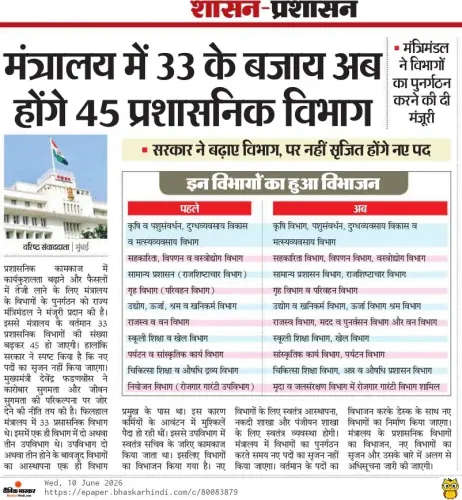
Maharashtra expands departments from 33 to 45 for faster governance
Synopsis
Maharashtra has quietly pulled off one of its largest administrative overhauls in years — splitting 33 Mantralaya departments into 45 without adding a single new post. Combined with a ₹6,000 crore HUDCO loan for Purandar Airport land acquisition and GST alignment amendments, Tuesday's Cabinet meeting packed in structural changes that will shape governance and infrastructure delivery for years.
Key Takeaways
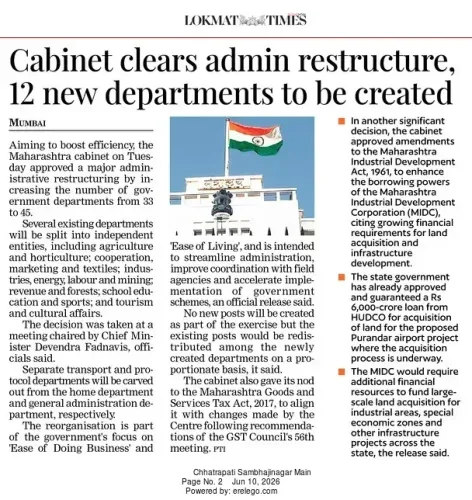
The Maharashtra Cabinet on 9 June raised ministerial departments from 33 to 45 by elevating sub-departments to independent status.
No new posts will be created; existing sanctioned and vacant positions will be redistributed proportionally.
Each new department will have its own establishment, cash branch, and registry branch.
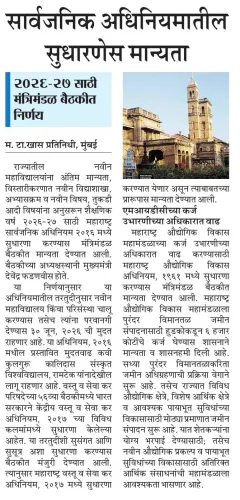
The Maharashtra Public Universities Act, 2016 was amended, setting 30 June 2026 as the deadline for new college approvals for 2026–27 .
MIDC 's borrowing powers were expanded; a ₹6,000 crore HUDCO loan for Purandar Airport land acquisition has already been approved and guaranteed.
The MGST Act, 2017 was amended to align with changes to the CGST Act recommended at the 56th GST Council meeting .
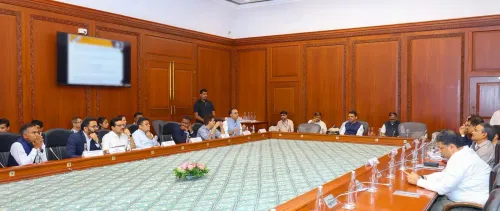
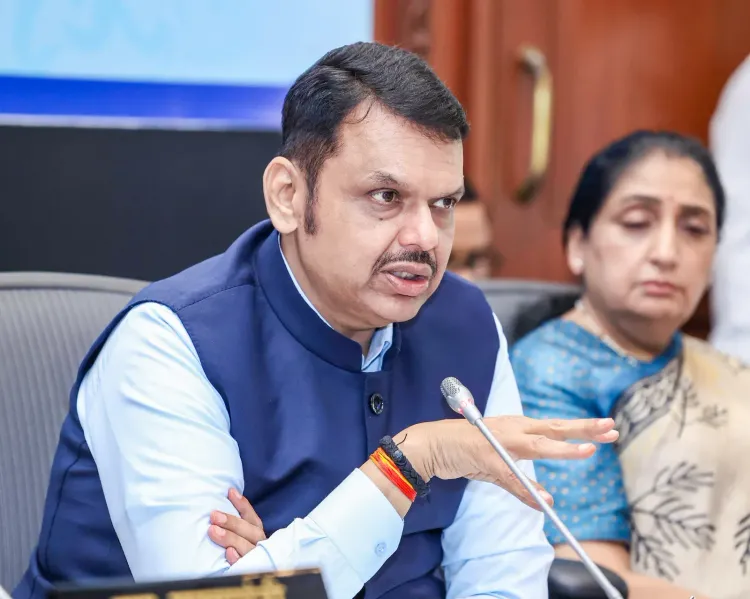
The Maharashtra Cabinet, chaired by Chief Minister Devendra Fadnavis, on Tuesday, 9 June approved a sweeping restructuring of the state's administrative machinery, raising the number of ministerial departments at Mantralaya from 33 to 45. The overhaul elevates existing sub-departments into fully independent departments, a move the government says will sharpen decision-making and accelerate welfare delivery.
What the Restructuring Involves
Until now, the Mantralaya operated with 33 administrative departments, many of which housed two or three sub-departments under a single department head. This arrangement, according to the Cabinet, created bottlenecks in human resource distribution and slowed inter-agency coordination. Under the revised structure, each of the 12 newly elevated departments will function with its own independent establishment, cash branch, and registry branch.
Critically, the restructuring will not create any new posts. Existing sanctioned and vacant positions will be redistributed among the new departments on a proportional basis, keeping the overall headcount neutral.
Fadnavis's Governance Framework
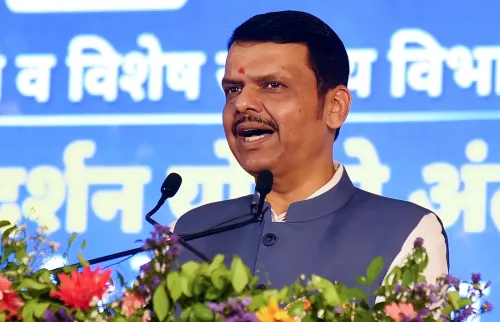
Chief Minister Devendra Fadnavis has anchored the policy on twin pillars: 'Ease of Doing Business' and 'Ease of Living'. The intent is to ensure that distinct operational mandates — currently handled by independent secretaries within a shared departmental shell — are given commensurate administrative authority. The official notification for the division and creation of new departments will be issued by the Administrative Reforms, Innovation, Entrepreneurship, and Reforms sub-department.
University Act Amendment and College Approvals
In the same Cabinet session, the state approved an amendment to the Maharashtra Public Universities Act, 2016, applicable from academic year 2026–27. The amendment sets 30 June 2026 as the deadline for granting final approvals to new colleges and for permitting new faculties, courses, subjects, and additional divisions. The revised provisions will also extend to Kavikulaguru Kalidas Sanskrit University in Ramtek.
GST and Industrial Development Amendments
The Cabinet further approved amendments to the Maharashtra Goods and Services Tax (MGST) Act, 2017, aligning state law with changes to the Central Goods and Services Tax (CGST) Act, 2017 adopted on the recommendations of the 56th GST Council meeting.
Separately, an amendment to the Maharashtra Industrial Development Act, 1961 was cleared, expanding the borrowing powers of the Maharashtra Industrial Development Corporation (MIDC). The state government has already approved and guaranteed a ₹6,000 crore loan from HUDCO for MIDC to fund land acquisition for the Purandar Airport project. Large-scale land acquisition is also underway across the state for industrial areas, Special Economic Zones (SEZs), and essential infrastructure. The expanded borrowing limit is intended to ensure fair compensation to farmers and secure additional financing for these projects.
Together, the decisions from Tuesday's Cabinet meeting signal a broad push by the Fadnavis government to modernise governance structures, align regulatory frameworks with central law, and unlock infrastructure financing ahead of a pipeline of industrial projects.
Point of View
But the real test is whether redistributing existing vacancies — many of which may be long-unfilled — actually delivers the faster decision-making the government promises. Maharashtra's bureaucracy has historically struggled less with structure and more with the pace of filling key positions. The MIDC borrowing expansion is the more consequential decision in the long run: with Purandar Airport land acquisition accelerating and SEZ pipelines growing, the state is betting that leveraged infrastructure financing will outpace the fiscal risks of a larger HUDCO liability on its books.
NationPress
16 Sept 2026
Frequently Asked Questions
Why is Maharashtra increasing the number of departments from 33 to 45?
The Maharashtra Cabinet approved the expansion to resolve administrative bottlenecks caused by multiple sub-departments operating under a single department head. By elevating sub-departments into independent units, the government aims to speed up decision-making, improve human resource distribution, and ensure faster implementation of welfare schemes.
Will the department restructuring create new government jobs?
No new posts will be created as part of the restructuring. Existing sanctioned and vacant positions within the current departments will be redistributed among the 45 new departments on a proportional basis, keeping the total headcount neutral.
What is the Maharashtra Public Universities Act amendment about?
The amendment to the Maharashtra Public Universities Act, 2016, sets 30 June 2026 as the deadline for granting final approvals to new colleges and for permitting new faculties, courses, and subjects for the academic year 2026–27. It also applies to Kavikulaguru Kalidas Sanskrit University in Ramtek.
What is the ₹6,000 crore HUDCO loan approved for MIDC?
The Maharashtra government has approved and guaranteed a ₹6,000 crore loan from HUDCO for the Maharashtra Industrial Development Corporation (MIDC) to fund land acquisition for the Purandar Airport project. The Cabinet also expanded MIDC's borrowing powers to support land acquisition for industrial areas, SEZs, and other infrastructure projects across the state.
Why was the MGST Act amended at Tuesday's Cabinet meeting?
The Maharashtra Goods and Services Tax Act, 2017, was amended to align state tax law with recent changes made to the Central GST Act, 2017, based on recommendations from the 56th GST Council meeting. The amendment ensures consistency between state and central GST provisions.