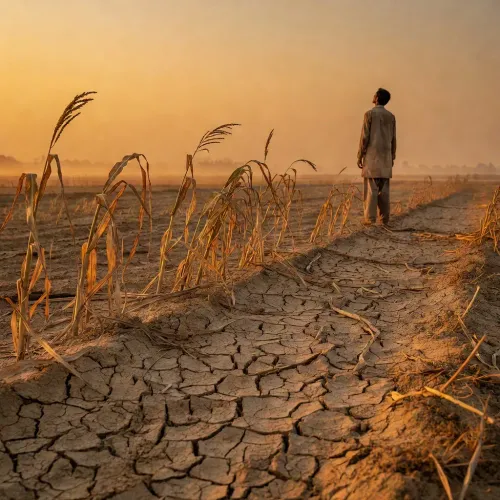
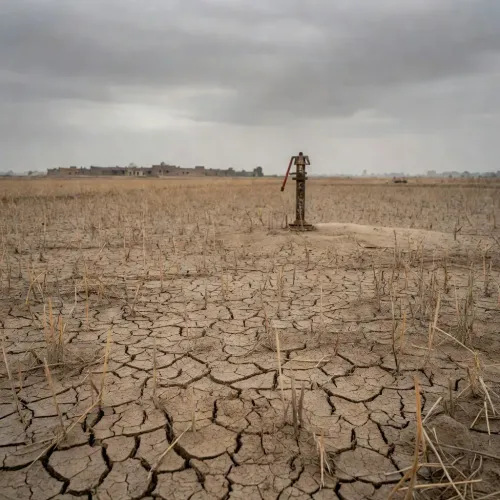
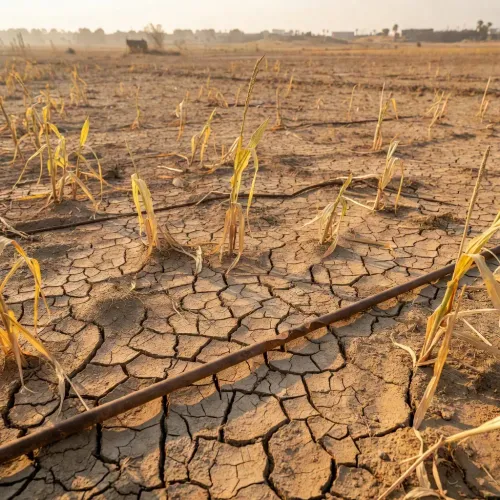
Maharashtra halts non-essential construction in 304 drought talukas, shifts funds to water relief
Synopsis
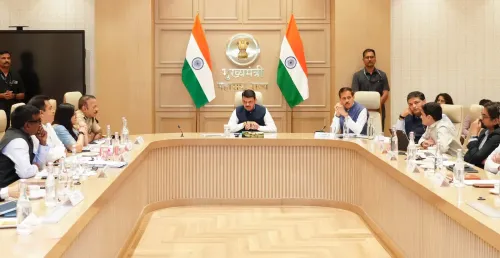
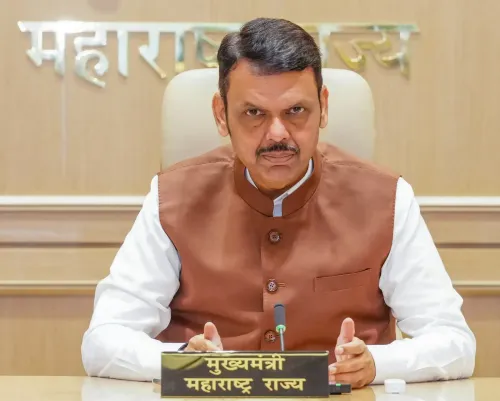
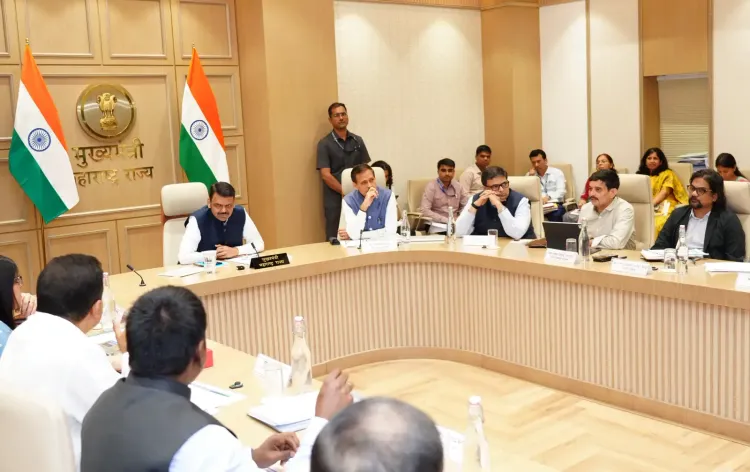
Maharashtra has formally frozen non-essential construction — from new office buildings to beautification projects — across 304 drought-declared talukas and ordered all freed funds redirected to drinking water and scarcity relief. With groundwater declining and reservoirs depleting, the state's Planning Department under Chief Minister Devendra Fadnavis is treating water access, not infrastructure aesthetics, as the fiscal priority for FY 2026–27.
Key Takeaways
The Maharashtra Planning Department issued a Government Resolution on 19 November 2026 suspending non-essential construction in 304 drought-declared talukas .
Frozen works include new gardens, office buildings, beautification projects, cement roads (budget heads 3054 and 5054 ), and new drains.
Freed funds will be reallocated to drinking water pipelines, pumps, tanks, and livestock water and fodder schemes.
Works capable of delivery during the current scarcity period get top priority; WTPs, STPs, and solar projects completing before 31 March 2027 are also eligible.
Spillover liabilities into FY 2027–28 are capped at 10% of the sanctioned 2026–27 District Annual Plan outlay.
District Collectors must submit monthly compliance reports by the 10th of every month , with geo-tagged photographs required for all works.
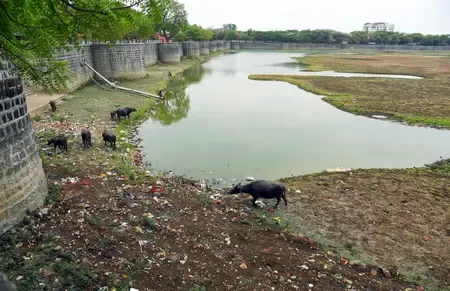
The Maharashtra Planning Department on Thursday, 19 November 2026, issued a Government Resolution (GR) ordering the temporary suspension of non-essential, water-intensive new construction works across 304 drought-declared talukas and redirecting freed-up funds toward urgent scarcity-relief and drinking water schemes under the District Annual Plan (General) for FY 2026–27. The directive cites erratic rainfall, prolonged dry spells, declining groundwater levels, and depleting reservoir storage as the triggers for the emergency reallocation.
What the Government Resolution Orders
The Planning Department — headed by Chief Minister Devendra Fadnavis — has instructed District Planning Committees (DPCs), led by District Collectors as member secretaries, to prioritise works that deliver direct water access to citizens and livestock during the scarcity period. Priority categories include completing unfinished pipelines, pumps, storage tanks, and distribution networks; repairing post-defect-liability water supply assets to cut leakage; and executing ongoing water supply schemes specifically within the 304 drought-affected talukas.
Works such as Water Treatment Plants (WTPs), Sewage Treatment Plants (STPs), solar energy projects, and solid waste management in municipal councils and nagar panchayats — where completion is feasible before 31 March 2027 — also qualify under the prioritised framework, alongside fodder and water measures for livestock, public health interventions, and essential livelihood works.
What Has Been Frozen
Collectors and DPC member secretaries have been directed to review and defer high-water-use works and non-essential new constructions until drought declarations are formally lifted. The freeze specifically covers new gardens and beautification projects, new administrative or office buildings, cement roads under budget heads 3054 and 5054, public amenity structures, major gram panchayat cement roads and gutters, new drains, and other water-intensive works. The GR explicitly bars any new construction camouflaged as minor repairs.
Funds freed through these deferrals may be reallocated via reappropriation to priority scarcity-relief works in the 304 drought-hit talukas.
Exemptions and Fiscal Guardrails
Direct drinking water supply, strengthening or creating essential new water sources, livestock water and fodder under applicable rules, essential water conservation and minor irrigation works, public health and safety works, and urgent disaster response works are all exempted from the construction freeze — subject to scheme norms and prior approvals. Works capable of delivering direct benefits within the current scarcity period receive top priority.
Exceptional cost overruns spilling into FY 2027–28 are capped at 10% of the sanctioned 2026–27 District Annual Plan (General) outlay and must be cleared from the following year's budget.
Accountability and Compliance Measures
Authorities are required to obtain administrative and technical approvals, generate unique work IDs, submit geo-tagged before-and-after photographs, and maintain monthly progress reviews submitted by the 10th of every month. All procurement, environmental, and statutory obligations remain fully in force with no exemptions, the GR stated.
The provisions apply to the 304 declared drought talukas as well as any talukas subsequently declared drought- or scarcity-affected by the Relief and Rehabilitation Department, for the duration and conditions of the declaration under FY 2026–27.
Context and What Comes Next
Maharashtra has been grappling with uneven monsoon distribution in 2026, with several districts in Marathwada, Vidarbha, and parts of Western Maharashtra recording well-below-average rainfall. The GR formalises what has increasingly become an administrative imperative: channelling finite public resources toward immediate water security rather than long-term infrastructure aesthetics. Notably, this is a recurring challenge — the state has issued similar scarcity-management directives in prior drought years — but the scale of 304 talukas under declaration signals above-average stress this cycle. District Collectors are expected to begin fund reappropriation immediately, with the first monthly compliance report due by 10 December 2026.
Point of View
But its effectiveness will hinge on enforcement at the district level — historically the weakest link in Maharashtra's drought response machinery. Reappropriating funds on paper is straightforward; ensuring they reach pipelines and pumps in Marathwada villages before the summer peak is another matter. The 10% spillover cap is a useful fiscal discipline, but monthly reporting requirements have existed in previous drought GRs and not always translated into timely delivery. The real accountability test arrives in the first quarter of 2027, when drinking water shortfalls become visible.
NationPress
19 Nov 2026
Frequently Asked Questions
What has the Maharashtra government ordered in its latest drought GR?
The Maharashtra Planning Department issued a Government Resolution on 19 November 2026 directing District Planning Committees to freeze non-essential, water-intensive new construction works across 304 drought-declared talukas and redirect all freed funds to drinking water supply and scarcity relief under the FY 2026–27 District Annual Plan. Works such as new office buildings, beautification projects, and cement roads are among those deferred until drought declarations are lifted.
Which talukas are covered under the Maharashtra drought construction freeze?
The directive covers all 304 talukas formally declared drought-affected, as well as any talukas subsequently designated drought- or scarcity-hit by Maharashtra's Relief and Rehabilitation Department during FY 2026–27. The provisions apply for the duration of each declaration.
What works are exempted from the construction freeze?
Direct drinking water supply, creation or strengthening of essential water sources, livestock water and fodder measures, essential water conservation and minor irrigation works, public health and safety works, and urgent disaster response activities are all exempt from the freeze. Water Treatment Plants, Sewage Treatment Plants, and solar projects slated for completion before 31 March 2027 also qualify under the priority framework.
What are the accountability requirements for district officials under the GR?
District Collectors and DPC member secretaries must obtain administrative and technical approvals for every work, generate unique work IDs, submit geo-tagged before-and-after photographs, and file monthly progress reports by the 10th of every month. No exemptions from procurement, environmental, or statutory rules are permitted.
Is there a cap on cost overruns spilling into the next financial year?
Yes. Exceptional liabilities spilling into FY 2027–28 are capped at 10% of the sanctioned FY 2026–27 District Annual Plan (General) outlay and must be settled from the following year's budget. The cap is intended to prevent scarcity-relief spending from creating long-term fiscal liabilities.