Maharashtra Cabinet: Criminal cases for coercive loan recovery

Synopsis
The Maharashtra cabinet under CM Devendra Fadnavis has announced that coercive loan recovery — the kind that traps rural borrowers in cycles of fear — will now attract criminal charges, in a significant welfare move for the state's farming communities.
Key Takeaways
The Chief Minister's Office of Maharashtra announced on 28 October 2026 that coercive loan recovery will be treated as a criminal offence.
Chief Minister Devendra Fadnavis led the cabinet decision, which targets predatory recovery tactics by informal moneylenders.
Maharashtra has regulated moneylending under statute since the 1960s , but enforcement against coercive practices has historically been weak.
Key stakeholders include small farmers, rural borrowers , and informal moneylenders across Maharashtra's agrarian districts.
Whether enforcement will rest with the police or civil authorities, and whether new legislation is required, remains to be clarified by the government.
The move fits a broader Indian state pattern of combining debt-relief measures with structural tightening of lending-recovery rules.
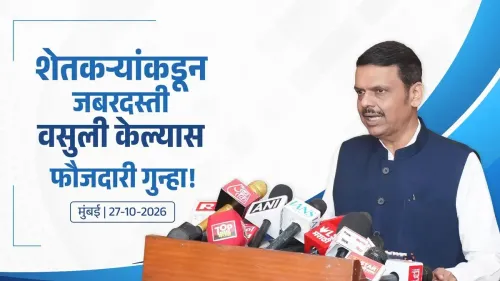
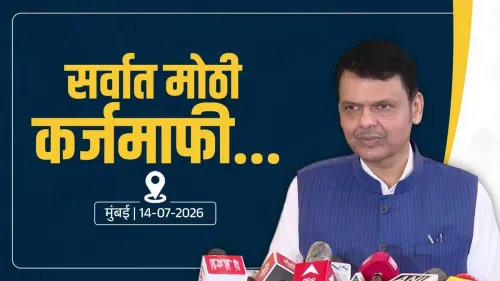
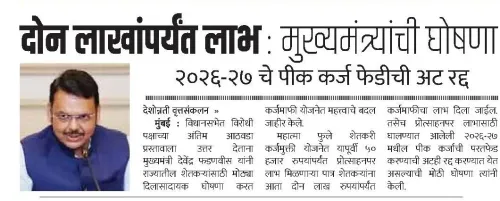
Farmers and rural borrowers across Maharashtra just got a powerful legal shield. The Chief Minister's Office of Maharashtra announced on Wednesday, 28 October 2026 that the state cabinet, led by Chief Minister Devendra Fadnavis, has decided to make coercive loan recovery a criminal offence — a direct strike against the predatory tactics that have long pushed debt-trapped households into crisis.
The announcement, posted in Hindi on the CMO's official X account, reads: 'कर्जवसुलीसाठी तगादा लावल्यास फौजदारी गुन्हे' — roughly, 'Criminal cases if harassment is used for loan recovery.' The brevity of the line belies the weight of the policy shift it signals.The debt trap Maharashtra is trying to break
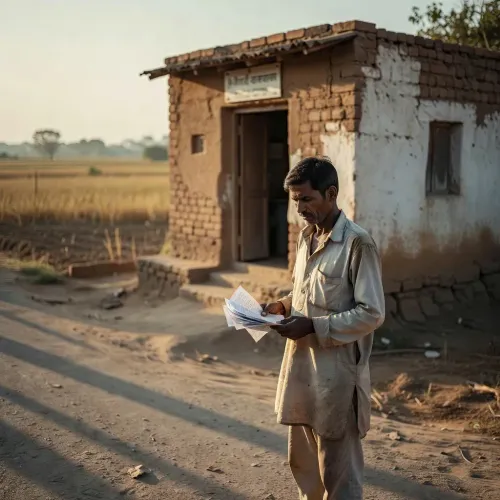
Maharashtra's agrarian heartland has long suffered under informal moneylenders who charge usurious rates and use intimidation — repeated late-night visits, public shaming, seizure of livestock and household goods — to extract repayments. The state has carried a framework to regulate moneylending since the Maharashtra Money-lending (Regulation) Act of the 1960s, but enforcement has historically been uneven, leaving small farmers and rural borrowers exposed.
The cabinet's latest move appears designed to shift that calculus decisively. By attaching criminal liability to coercive recovery tactics, the government is signalling that harassment is no longer a civil dispute to be settled quietly — it is a cognisable offence that can land a lender in a police lock-up. That distinction matters enormously to a borrower in a village who currently has little practical recourse.
Why this fits a larger state pattern on farmer distress
Maharashtra is not moving in isolation. Across India's agrarian states, periodic waves of farmer loan waivers have been followed by structural regulatory tightening — the logic being that writing off debt without fixing the lending environment simply reloads the same trap. Devendra Fadnavis, who has led multiple state cabinets and built a track record on rural economic policy, has placed this decision within that corrective tradition.
The critical enforcement question now is whether action will sit with the police or be channelled through civil-authority structures. Assigning cognisance to local police stations would lower the barrier for a distressed farmer to file a complaint; routing it through special tribunals or revenue courts could slow response but produce more consistent adjudication. The cabinet announcement has not yet clarified that mechanism.
What borrowers — and lenders — should expect next
For the state's small farmers and informal borrowers, the announcement is immediately reassuring in symbolic weight. Whether it translates into on-the-ground relief depends on implementation: police training, awareness campaigns in rural districts, and whether any amendments to existing moneylending statutes are tabled in the legislature. Those details are awaited.
For informal lenders, the move raises the cost of doing business through coercion — which, if enforced, could either push them toward regulated channels or, in the worst case, push informal credit further underground. The government's bet is clearly on the former. The next session of the Maharashtra legislature will be the first real test of how serious this intent is.
Point of View
Fadnavis is threading a needle — protecting borrowers without alienating the broader credit ecosystem. The real test, however, is enforcement: criminal provisions on paper have a poor record of translating into filed FIRs in rural Maharashtra without dedicated police sensitisation. If the government follows through with implementation machinery, this could meaningfully reduce farmer distress; if it stops at the announcement, it risks joining a long line of well-intentioned but underenforced rural credit reforms.
NationPress
28 Oct 2026
Frequently Asked Questions
What is the Maharashtra cabinet decision on loan recovery?
The Maharashtra cabinet, led by CM Devendra Fadnavis, has decided that using coercive or harassing tactics for loan recovery will be treated as a criminal offence, giving rural borrowers and farmers legal protection against moneylender intimidation.
Who does the Maharashtra loan recovery criminal law protect?
The decision primarily protects small farmers and rural borrowers who are frequently targeted by informal moneylenders using pressure tactics such as repeated harassment, public shaming, or asset seizure to force repayments.
What existing law covers moneylending in Maharashtra?
Maharashtra has regulated moneylending under the Maharashtra Money-lending (Regulation) Act, a framework that dates to the 1960s and is designed to curb usurious practices and coercive recovery by informal lenders.
Will police handle complaints about coercive loan recovery in Maharashtra?
The government has not yet clarified whether enforcement will sit with local police stations or be channelled through civil or revenue authorities; that implementation detail is being awaited.
Why are Indian states tightening loan recovery rules?
States with large agrarian populations periodically strengthen anti-coercion rules after loan waiver cycles, aiming to address farmer distress and shift borrowing toward regulated channels rather than informal private pressure.