Is Maharashtra Leading India by Partnering with Starlink?
Synopsis
Maharashtra makes history by becoming India's first state to partner with Starlink for satellite internet. This collaboration aims to bridge the digital divide in underserved regions, supporting the state's ambitious vision for a developed Maharashtra by 2047.
Key Takeaways
Maharashtra is the first state in India to partner with Starlink .
The partnership aims to provide satellite internet to underserved areas.
Key districts include Gadchiroli , Nandurbar , Dharashiv , and Washim .
This initiative supports Digital Maharashtra and various state programs.
The state's vision includes becoming a $5 trillion economy by 2047 .
Mumbai, Nov 5 (NationPress) The government of Maharashtra officially entered into a Letter of Intent (LoI) with Starlink Satellite Communications Private Limited to initiate a collaboration aiming to implement satellite-based internet services for government bodies, remote communities, and essential public facilities in underserved areas and aspirational districts like Gadchiroli, Nandurbar, Dharashiv, and Washim.
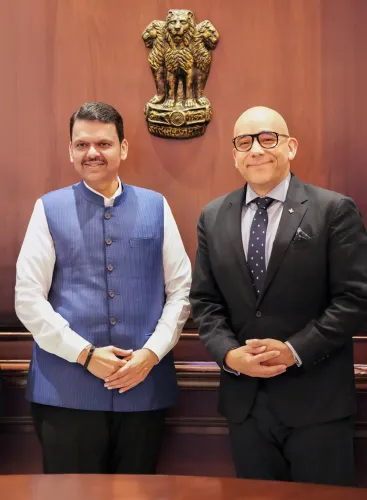
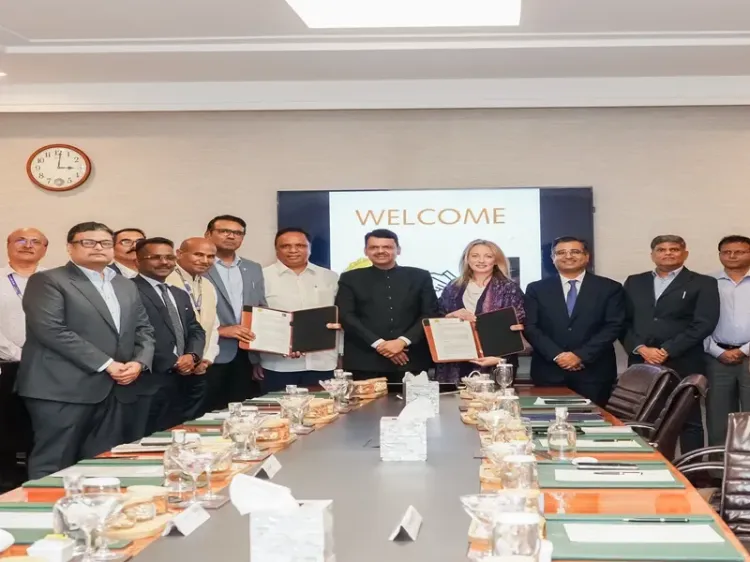
The signing of the LoI took place with Chief Minister Devendra Fadnavis and state Information Technology Minister Ashish Shelar in attendance.
CM Fadnavis shared on X, "It was a pleasure to host Lauren Dreyer, Vice President of Starlink, in Mumbai today, where the Government of Maharashtra entered into an LoI with Starlink Satellite Communications Private Limited, making Maharashtra the first state in India to partner with Starlink. Elon Musk's Starlink is among the largest entities in the ICT sector and operates the highest number of communication satellites globally. We are proud to have them in India, collaborating with Maharashtra."
He added, "The Maharashtra-Starlink partnership fortifies the State’s flagship Digital Maharashtra mission while aligning with its EV, Coastal Development, and Disaster Resilience initiatives. This pivotal decision sets Maharashtra at the forefront of satellite-enabled digital infrastructure, leading the way for a future-ready Maharashtra and establishing a benchmark for Hon PM Narendra Modi Ji's Digital India mission at the grassroots level. Congratulations to Maharashtra!"
This announcement from the CM comes shortly after the state cabinet approved a vision document aimed at achieving a developed Maharashtra by 2047, positioning the state to contribute significantly to a developed India by 2047.
The state government envisions Maharashtra as a cornerstone in India’s progress towards a developed Bharat, driven by its vision for 2047. Despite facing physical and financial challenges, the government targets an ambitious goal of transforming the current economy of over $530 billion into a $5 trillion economy by 2047, focusing on a growth-oriented economy, sustainable development, inclusiveness, and effective governance.
The vision document outlines 16 thematic areas, including agriculture and allied sectors, rural development, industries, services, tourism, urban planning, energy and sustainability, water resources, transportation and logistics, education and skill development, healthcare, social welfare, soft power, governance, technology, security, and finance.
Point of View
The partnership between Maharashtra and Starlink exemplifies a significant step toward bridging the digital divide in India. It highlights the state's commitment to digital transformation and inclusive growth, setting a precedent for other states to follow in enhancing connectivity for their citizens.
NationPress
3 Oct 2026
Frequently Asked Questions
What is the significance of the Maharashtra-Starlink partnership?
This partnership marks Maharashtra as the first Indian state to collaborate with Starlink, aiming to enhance digital connectivity in underserved areas.
Which districts in Maharashtra will benefit from this collaboration?
The collaboration will primarily benefit remote and underserved districts like Gadchiroli, Nandurbar, Dharashiv, and Washim.
What is the goal of the Maharashtra government by 2047?
The Maharashtra government aims to transform its economy into a $5 trillion economy and achieve a developed state by 2047.