Maharashtra Government Unveils Supplementary Demands of Rs 11,995 Crore in Assembly
Synopsis
In response to financial pressures, Maharashtra's Chief Minister Devendra Fadnavis has introduced supplementary demands totaling Rs 11,995 crore for the fiscal year 2025-26. This move includes key allocations for power subsidies, industry incentives, and renewable energy initiatives aimed at sustainability.
Key Takeaways
Maharashtra's supplementary demands total Rs 11,995 crore .
Key allocations focus on power subsidies and industry incentives .
Government aims for 52% renewable energy by 2030 .
Projected revenue deficit exceeds Rs two lakh crore .
Next budget presentation scheduled for March 6, 2026 .
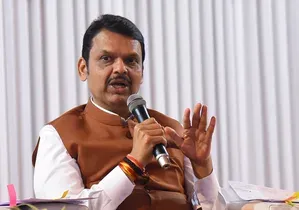
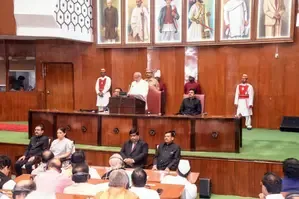
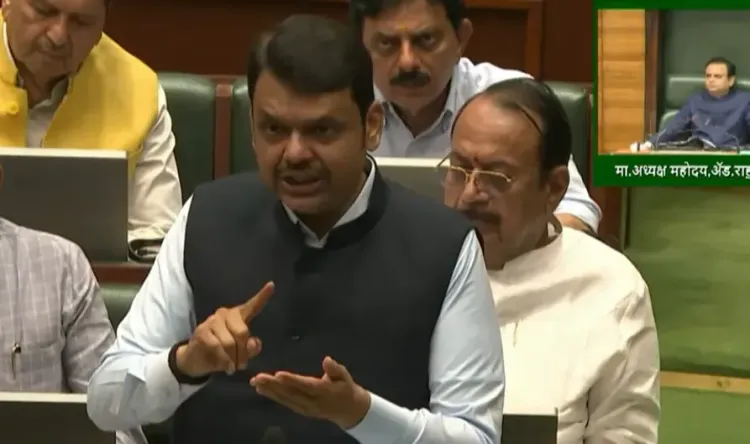
Mumbai, February 24 (NationPress) In light of the ongoing financial challenges faced by the state, Maharashtra's Chief Minister Devendra Fadnavis, who oversees the planning and finance sectors, presented supplementary demands amounting to Rs 11,995 crore for the remainder of the fiscal year 2025-26.
Out of the total Rs 11,995 crore, the state government has designated Rs 3,112.85 crore to cover expenses related to the electricity tariff concessions for agricultural pumps, power looms, and textile consumers. Additionally, Rs 803.94 crore has been earmarked as incentives for small, medium, large industries, and mega projects under the incentive package scheme.
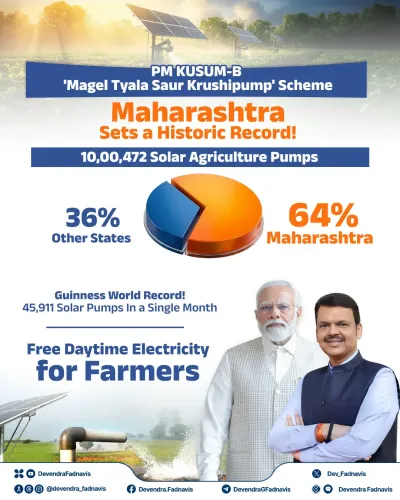
The allocation includes Rs 4,792.02 crore intended for transferring loan funds to Mahavitaran, the state power distribution entity, which it received from the Asian Infrastructure Investment Bank for the solar agricultural pump initiative. This funding is part of the government's strategy to achieve 52 percent renewable energy utilization by 2030 as part of the net zero mission.
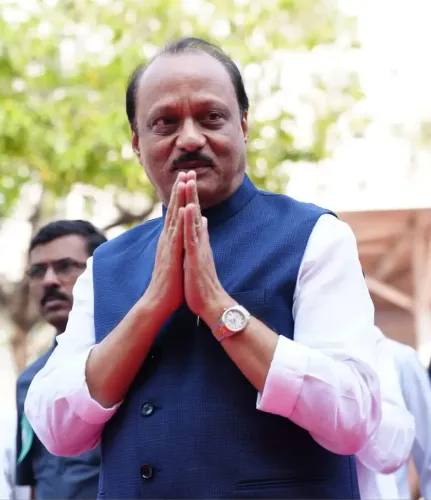
Furthermore, Rs 1,431.05 crore has been proposed as additional funding from the Central share to support the implementation of the Jal Jeevan mission. In March 2025, Ajit Pawar had unveiled a budget reflecting a revenue deficit of Rs 45,890 crore.
By June 2025, supplementary demands had surged to Rs 57,509.71 crore, pushing the revenue deficit beyond Rs one lakh crore. During the Winter Session in December 2025, supplementary demands reached Rs 75,286.37 crore, causing the revenue deficit to exceed Rs two lakh crore. Alongside the revenue deficit of Rs 45,891 crore, the budget for 2025-26 projected Maharashtra's debt to escalate to Rs 9.32 lakh crore. Notably, in the latest supplementary demands, the state government has focused on power subsidies for farmers and industry incentives without introducing any new expenses.
CM Fadnavis is set to present the state budget for the year 2026-27 on March 6. He previously indicated in a press conference that strict measures might be necessary to uphold financial discipline.
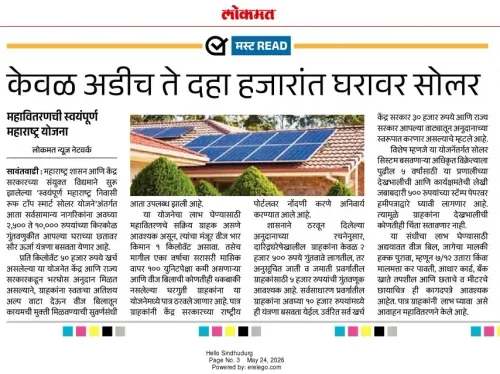
Earlier, at the World Economic Forum (WEF) annual meeting, the Chief Minister announced that the state is on track to generate 16 gigawatts (GW) of solar power by year-end, with plans to add another 45 GW by 2032, predominantly from solar sources. Renewable energy, which accounted for 13 percent four years ago, is forecasted to reach 52 percent by 2030.
In alignment with Prime Minister Narendra Modi's vision, the state has initiated Asia's most extensive decentralized solar scheme, aiming to transition all agricultural load to solar power and establish a dedicated company for farmer supply, ensuring the independence of every agricultural feeder.
The cost of electricity supply to farmers has significantly declined from Rs 8 to under Rs 3 per unit. This shift not only benefits farmers but also alleviates financial pressures on industries and households,” noted the Chief Minister.
The government is also progressing with a capital investment for pumped storage hydro projects, featuring a combined capacity of 5,630 MW and estimated total investments of Rs 24,631 crore.
Point of View
Maharashtra's supplementary demands reflect a critical approach to managing financial challenges while prioritizing essential sectors such as agriculture and renewable energy. This move indicates a balance between financial discipline and the need for sustainable development.
NationPress
3 Oct 2026
Frequently Asked Questions
What are the supplementary demands presented by the Maharashtra government?
The Maharashtra government has presented supplementary demands totaling Rs 11,995 crore for the fiscal year 2025-26, focusing on power subsidies and industry incentives.
How much funding is allocated for renewable energy initiatives?
The budget allocates Rs 4,792.02 crore for transferring loan amounts to Mahavitaran for solar agriculture pump schemes, aiming for 52% renewable energy by 2030.
What is the projected revenue deficit for Maharashtra?
The projected revenue deficit for Maharashtra has exceeded Rs two lakh crore, reflecting ongoing financial strain.
When will the next state budget be presented?
The state budget for the year 2026-27 is scheduled to be presented on March 6, 2026.
What is the significance of the decentralized solar scheme?
The decentralized solar scheme aims to shift agricultural load to solar power, enhancing energy independence for farmers and reducing costs significantly.