Maharashtra 'Quantum City' plan takes shape after London tech mission
Synopsis
Maharashtra has taken its most concrete steps yet toward building a dedicated Quantum City in Mumbai, with a state delegation completing 13 bilateral meetings at a London summit. Projections of ₹20,000 crore in economic activity over a decade sound ambitious — but GIBC itself flags that not a rupee of it is committed yet.
Key Takeaways
Government of Maharashtra completed a two-day quantum and AI investment mission in London on 7-8 October 2026 .
Delegation led by Principal Secretary P.
Anbalagan and Chief Investment Advisor Kaustubh Dhavse held 13 bilateral meetings with global investors and CEOs.
Key proposals include a Mumbai quantum computing facility , AI research infrastructure, cybersecurity systems, and MSME manufacturing centres.
City of London Corporation discussions explored a London–Mumbai institutional finance channel for infrastructure funding.
GIBC projects up to ₹20,000 crore in cumulative economic activity and 8,000 jobs over 10 years — but these remain illustrative estimates, not committed capital.
The Government of Maharashtra has advanced its ambition to become India's leading quantum and artificial intelligence (AI) hub after a high-level state delegation concluded a two-day mission to London on 7 and 8 October 2026. The visit laid the groundwork for a dedicated 'Quantum City' in Mumbai and a bilateral UK-Maharashtra Quantum Corridor.
Who Led the Mission and How It Was Organised
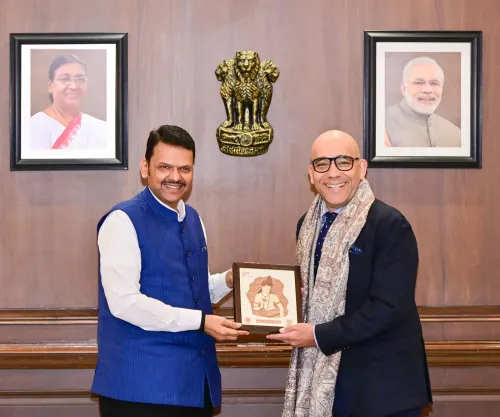
The state delegation was led by Industries Department Principal Secretary P. Anbalagan and Kaustubh Dhavse, Chief Investment Advisor to Chief Minister Devendra Fadnavis. The mission was organised and facilitated by the Global India Business Corridor (GIBC UK), which secured Maharashtra a prominent platform at The City Quantum & AI Summit in London.
Delegates conducted 13 bilateral meetings with global chief executives, institutional investors, and public-sector leaders, focused on attracting advanced deep-tech operations and capital to the state.
Key Proposals on the Table
The technical agenda spanned several priority areas. A dedicated quantum computing facility in Mumbai was the centrepiece, alongside plans to build an AI engineering and research base supported by sustainable, energy-efficient data centres. Other proposals included quantum sensing tools for safer underground transport construction, advanced cybersecurity systems for critical infrastructure, and AI-driven platforms to streamline investor approvals.
On the industrial side, discussions covered establishing advanced manufacturing centres to help micro, small and medium enterprises (MSMEs) integrate into global supply chains, as well as targeted workforce training programmes and incubation support for technology start-ups.
London–Mumbai Finance Channel
Separately, the delegation held discussions with representatives of the City of London Corporation to explore creating an institutional finance channel between London and Mumbai. This channel, if established, would be aimed at funding large-scale infrastructure development projects across Maharashtra.
Economic Projections: Promising but Unconfirmed
An illustrative planning scenario developed by GIBC estimates that, if proposed projects secure formal funding and reach operational maturity, the initiative could generate approximately ₹20,000 crore in cumulative economic activity over a 10-year horizon. That figure encompasses investments, operational expenditure, and broader economic spillover effects, with the potential to support up to 8,000 direct and indirect jobs.
Critically, GIBC itself noted that these figures are illustrative planning projections and do not represent committed capital or confirmed hiring. The distinction matters: Maharashtra has hosted several high-profile investment missions in recent years where announced intentions later translated into significantly lower on-the-ground commitments. This initiative will be watched for how quickly formal agreements follow the bilateral conversations.
What Comes Next
If the corridor is fully realised, it is expected — according to government sources — to give local engineers, researchers, and entrepreneurs expanded global access while strengthening Maharashtra's administrative efficiency and critical infrastructure resilience. The state government has not yet announced a formal timeline for the Quantum City project or confirmed any anchor investors.
Point of View
000 crore projection is explicitly labelled illustrative by GIBC itself — a rare admission that deserves more attention than it will likely receive. The state still has no announced anchor investor, no confirmed funding, and no formal timeline for the Quantum City. India's quantum computing ambitions are genuine and well-funded at the Centre level, but for Maharashtra to carve out a distinct corridor, it needs binding commitments, not bilateral conversations. The next 90 days — and whether formal MoUs emerge — will reveal whether this was strategy or spectacle.
NationPress
9 Oct 2026
Frequently Asked Questions
What is Maharashtra's Quantum City plan?
Maharashtra's Quantum City plan is a government initiative to establish a dedicated quantum computing hub in Mumbai, alongside AI research infrastructure, energy-efficient data centres, and cybersecurity systems. The plan also envisions a UK-Maharashtra Quantum Corridor to attract global deep-tech investment and expertise to the state.
What happened at the London mission on 7-8 October 2026?
A high-level Maharashtra government delegation attended The City Quantum & AI Summit in London and held 13 bilateral meetings with global CEOs, investors, and public institution leaders. The meetings, facilitated by GIBC UK, focused on attracting advanced technology operations and capital to Maharashtra, including a potential London–Mumbai institutional finance channel.
How much economic activity could the Quantum Corridor generate?
GIBC's illustrative planning scenario estimates approximately ₹20,000 crore in cumulative economic activity over 10 years, with up to 8,000 direct and supported jobs. However, GIBC explicitly notes these are projections and do not represent committed capital or confirmed hiring.
Who represented Maharashtra at the London summit?
The state delegation comprised Industries Department Principal Secretary P. Anbalagan and Kaustubh Dhavse, who serves as Chief Investment Advisor to Chief Minister Devendra Fadnavis.
What role does the City of London Corporation play in this initiative?
Representatives of the City of London Corporation held discussions with the Maharashtra delegation about creating an institutional finance channel between London and Mumbai. This channel, if formalised, would be designed to fund large-scale infrastructure development projects across Maharashtra.