Is Mamata Banerjee Meeting CEC Gyanesh Kumar Today in Delhi Regarding the SIR Issue?

Synopsis
West Bengal's Chief Minister Mamata Banerjee is set to meet the Chief Election Commissioner Gyanesh Kumar amid rising tensions regarding the Special Intensive Revision (SIR) process. Her visit coincides with a critical Budget Session, where significant motions will be introduced, making this a pivotal moment in West Bengal politics.
Key Takeaways
Mamata Banerjee is meeting the CEC regarding the SIR issue.
Her visit coincides with the Budget Session in Delhi.
Contentious motions are expected in the West Bengal Assembly.
Concerns over the authority of observers in the election process have been raised.
The outcome of this meeting could impact West Bengal's political landscape.
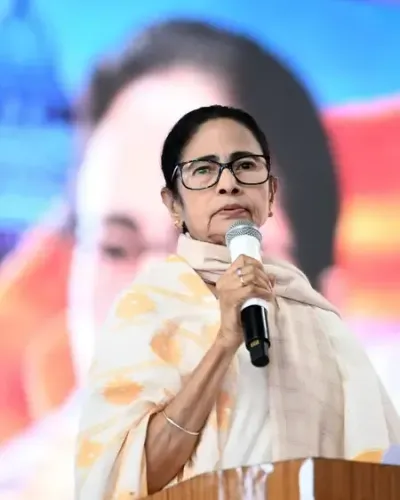
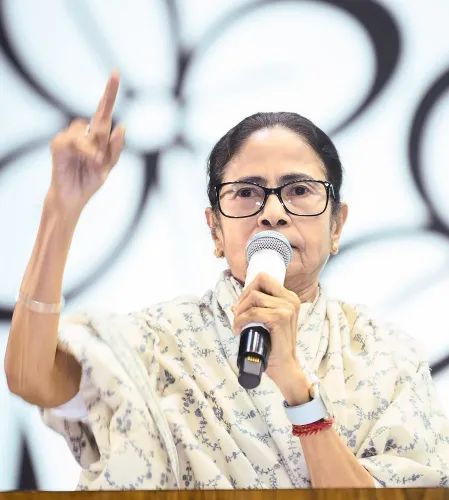
New Delhi, Feb 2 (NationPress) The Chief Minister of West Bengal, Mamata Banerjee, is scheduled to meet the Chief Election Commissioner (CEC), Gyanesh Kumar, at the Election Commission of India (ECI) headquarters in New Delhi on Monday.
She will be traveling to the national capital on Sunday afternoon, with several engagements planned, primarily centered around the ongoing Special Intensive Revision (SIR) taking place within the state.
Additionally, she is expected to engage with leading figures of opposition parties, striving to build a consensus against the revision process.
According to party insiders, Banerjee timed her visit to coincide with the presence of key opposition leaders in Delhi due to the ongoing Budget Session.
While her return to Kolkata has not been scheduled yet, insiders from the Trinamool Congress indicated she would likely return before February 5, as the “vote on account” is set to be presented in the West Bengal Assembly on that date.
The budget session is pivotal, with the treasury bench planning to introduce two significant motions in the House.
One of the motions will criticize the role of central investigative agencies such as the Central Bureau of Investigation (CBI) and the Enforcement Directorate (ED) within the state. The second aims to denounce the conduct of the ongoing SIR.
There are already indications that the meeting between the Chief Minister and the CEC may be contentious, as her strongly worded letter to the CEC on Saturday suggests.
In her correspondence, she raised questions regarding the authority of special roll observers (SROs) and micro-observers, who, as per her claims, have been exclusively appointed in West Bengal to oversee the ongoing SIR.
According to her letter, Banerjee argues that the roles of SROs and micro-observers extend beyond merely overseeing the SIR process, as they have also been granted approving authority.
In her communication to the CEC, she asserted that this authority bestowed upon micro-observers has rendered electoral registration officers (EROs) and assistant electoral registration officers (AEROs) “helpless, isolated, and reduced to mere spectators.”
She contended that granting this additional authority to observers and micro-observers contradicts the essence of “democratic ethos, federalism, and fundamental rights” as enshrined in the Indian Constitution.
Point of View
The upcoming meeting between Mamata Banerjee and the CEC is significant. It highlights the tension between state and central authorities, especially concerning the electoral process. While opposition figures rally against the SIR, the Chief Minister's strong stance raises important questions about democratic oversight and federalism. The situation reflects broader political dynamics that are essential to monitor.
NationPress
12 Oct 2026
Frequently Asked Questions
What is the purpose of Mamata Banerjee's meeting with the CEC?
The meeting aims to address concerns regarding the Special Intensive Revision (SIR) process in West Bengal and to discuss the authority of special observers involved in the oversight.
When is Mamata Banerjee expected to return to Kolkata?
While the date of her return has not been finalized, it is expected that she will return before February 5, when the 'vote on account' will be presented in the West Bengal Assembly.
What significant motions will be introduced in the West Bengal Assembly?
Two important motions will be proposed: one condemning the role of central investigative agencies and another criticizing the conduct of the ongoing SIR.
What concerns did Mamata Banerjee raise in her letter to the CEC?
In her letter, she questioned the authority of SROs and micro-observers and argued that their additional powers undermine the role of electoral registration officers.
How does this meeting reflect the political climate in India?
This meeting underscores the ongoing tensions between state and central governments, especially in the context of electoral integrity and federalism in India.