Will Mamata Banerjee Discuss the SIR Issue with CEC Tomorrow?
Synopsis
Mamata Banerjee's upcoming meeting with CEC Gyanesh Kumar in Delhi is set to center around the controversial Special Intensive Revision (SIR) in West Bengal. With a series of strategic engagements planned, this visit aims to address significant concerns raised by the Chief Minister regarding the oversight of the electoral process. Will this meeting pave the way for political consensus?
Key Takeaways
Mamata Banerjee is set to meet the CEC regarding the SIR.
The meeting aims to address concerns over the electoral process.
Banerjee's letter to the CEC indicates a contentious discussion ahead.
Opposition leaders may join to discuss a united stance.
The budget session is crucial for West Bengal's governance.
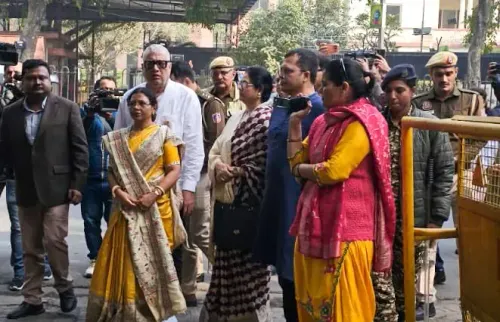
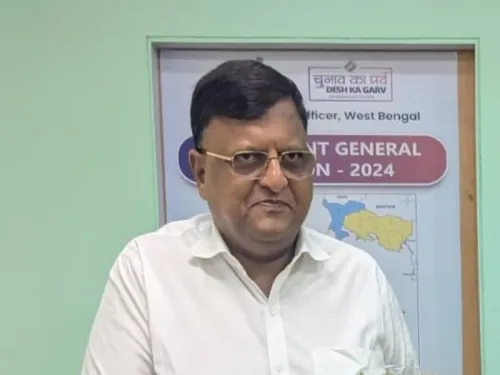
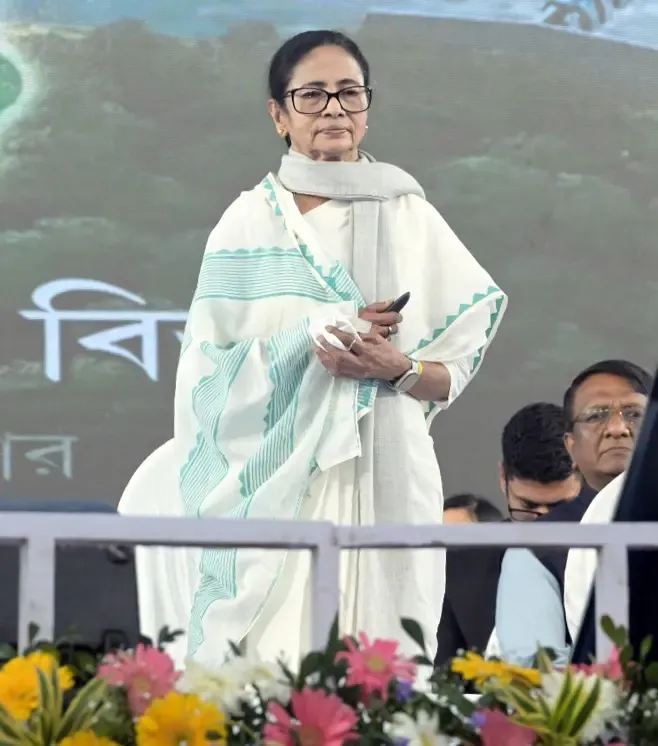
Kolkata, Feb 1 (NationPress) - The Chief Minister of West Bengal, Mamata Banerjee, is set to meet the Chief Election Commissioner (CEC), Gyanesh Kumar, at the Election Commission of India (ECI) headquarters in New Delhi on Monday.
She will be traveling to the national capital on Sunday afternoon and has a series of engagements planned, primarily concerning the ongoing Special Intensive Revision (SIR) in the state.
In addition, she is expected to meet with key opposition leaders to foster agreement against the revision process.
Insiders from her party indicated that the timing of her trip is strategic, coinciding with the presence of other opposition leaders in Delhi due to the ongoing Budget Session.
Although her return date to Kolkata is not yet confirmed, sources from the Trinamool Congress suggest she will be back before February 5, as the “vote on account” is to be presented in the West Bengal Assembly that day.
The West Bengal Assembly's budget session is pivotal, with the treasury bench planning to introduce two significant motions.
The first motion aims to denounce the actions of central investigative agencies, such as the Central Bureau of Investigation (CBI) and the Enforcement Directorate (ED), within the state. The second seeks to criticize the manner in which the ongoing SIR is being handled.
There are already signs that the meeting between the Chief Minister and the CEC could be contentious, as suggested by her strongly worded letter to the CEC on Saturday.
In her correspondence, she raised concerns about the legitimacy of special roll observers (SROs) and micro-observers, who, according to her, have been appointed solely in West Bengal to monitor the ongoing Special Intensive Revision (SIR).
The letter expresses her belief that the responsibilities of SROs and micro-observers extend beyond merely supervising the SIR process, as they have also been given the role of approving authorities.
Mamata Banerjee argued that this extra power granted to micro-observers leaves electoral registration officers (EROs) and assistant electoral registration officers (AEROs) feeling “helpless, isolated, and reduced to mere spectators.”
She contended that bestowing this authority upon observers and micro-observers undermines the principles of democratic ethos, federalism, and fundamental rights, as enshrined in the Indian Constitution.
Point of View
The upcoming discussions between Mamata Banerjee and the CEC are essential to understanding the evolving dynamics of electoral integrity in India. As the political landscape shifts, the scrutiny of processes like the Special Intensive Revision highlights the need for transparency and accountability. This meeting could set a precedent for future interactions between state leaders and the Election Commission.
NationPress
2 Oct 2026
Frequently Asked Questions
What is the purpose of Mamata Banerjee's meeting with the CEC?
The meeting aims to address concerns regarding the Special Intensive Revision (SIR) process in West Bengal and to discuss the role of special observers assigned to oversee it.
What are the implications of the SIR in West Bengal?
The SIR is intended to ensure accurate electoral rolls, but it has raised concerns about the oversight and authority of observers, which could affect the electoral process's integrity.
Who are the key figures involved in this meeting?
The key figures include West Bengal Chief Minister Mamata Banerjee and Chief Election Commissioner Gyanesh Kumar.
When is the meeting scheduled?
The meeting is scheduled for Monday, following Mamata Banerjee's arrival in Delhi on Sunday.
What actions will the West Bengal Assembly take during the budget session?
The West Bengal Assembly will move two significant motions, one condemning the role of central investigative agencies and the other criticizing the conduct of the SIR.