Mamata Banerjee blamed for Trinamool's rise and unravelling in Bengal
Synopsis
The party Mamata Banerjee built to defeat the Left Front now appears to be unravelling under the weight of cut money scandals, teacher recruitment bribery, cross-border smuggling allegations, and a corrosive internal split between Mamata and her nephew Abhishek. After the TMC's bruising Assembly election result, West Bengal's most dominant political figure in a generation is squarely in the dock — and the question is no longer just who leads the party next, but whether the party can survive the reckoning.
Key Takeaways
Mamata Banerjee , 71 , is being held responsible for the Trinamool Congress (TMC) 's decline in West Bengal following a poor Assembly election result.
In June 2019 , Mamata herself publicly acknowledged the 'cut money' extortion racket, citing leaders siphoning ₹200 from a ₹2,000 government cremation grant.
Additional scandals included allegations of cattle and coal smuggling across the Bangladesh border and large-scale bribery in teacher recruitment .
A factional split between Mamata Banerjee and her nephew Abhishek Banerjee — linked partly to the influence of political consultancy IPAC — deepened internal disarray.
Veterans including Sougata Ray , Sudip Bandyopadhyay , and Kalyan Banerjee were reportedly targeted for sidelining before the 2024 Lok Sabha elections .
Mamata has acknowledged drifting away from party organisation during her years in governance, a coordination failure seen as a key factor in the TMC's decline.
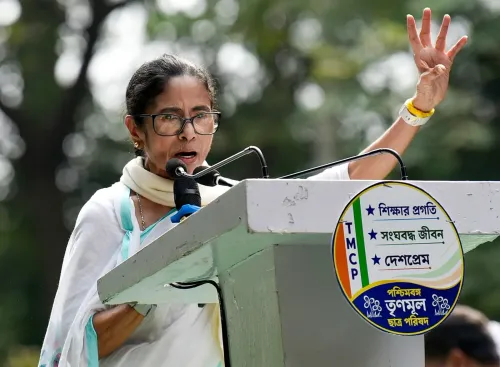
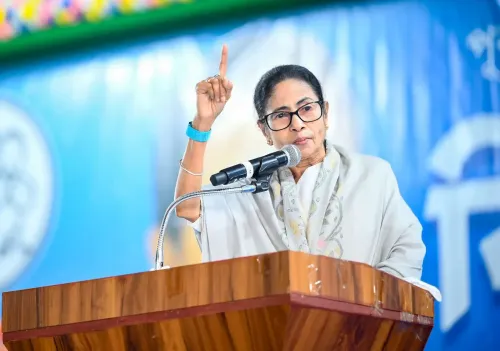
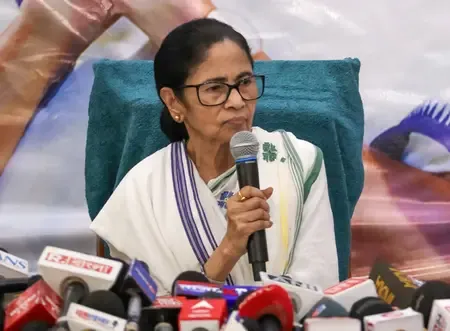
Mamata Banerjee, the founder and supremo of the All India Trinamool Congress (TMC), is facing intense scrutiny over her party's trajectory in West Bengal — from its historic ousting of the Left Front government to its current political unravelling marked by corruption scandals, internal factionalism, and a bruising defeat in the state Assembly election.
A Party Built on One Goal
The TMC's singular mission for years was to end the Left Front's three-decade stranglehold over West Bengal. When that goal was achieved, the party appeared poised to deliver on promises of good governance and effective administration. Instead, critics argue, what followed was a superficial makeover — symbolised by the government's signature white-and-blue colour scheme — that failed to address deeper structural failures in governance.
Welfare schemes and direct benefit programmes, initially welcomed by voters, reportedly became instruments of political patronage rather than genuine social delivery. As expectations grew, the gap between promise and performance widened.
The 'Cut Money' Crisis and Corruption Allegations
The rot became impossible to ignore when Mamata Banerjee herself publicly confronted it. In June 2019, while addressing civic body leaders in Kolkata, she acknowledged that some local leaders were extorting a so-called 'cut money' — a percentage siphoned from government welfare payments — from ordinary beneficiaries. She cited a particularly egregious example: leaders allegedly taking a cut of ₹200 from the ₹2,000 her government allocated to low-income families to cover cremation costs for deceased relatives.
The public admission, while seen by some as a show of accountability, was widely interpreted as damage control ahead of the 2020 civic polls and 2021 Assembly elections. The Bharatiya Janata Party (BJP) had been raising the issue during campaigns for years, but the scale of the acknowledgement caught even the party faithful off guard.
Compounding the crisis were allegations of cross-border smuggling — from cattle to coal — across the Bangladesh border, followed by large-scale bribery in teacher recruitment. Reports pointed to the involvement of several senior TMC leaders in these alleged misdeeds, deepening the perception of systemic institutional failure.
The Mamata-Abhishek Fault Line
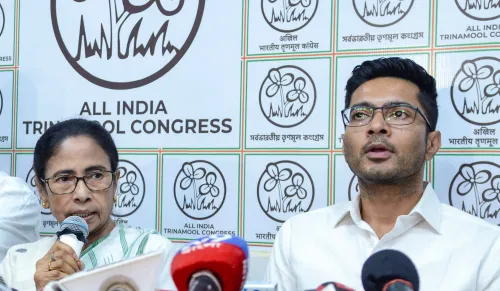
Internal divisions, long simmering beneath the surface, eventually fractured into open factionalism. Two camps emerged: one loyal to Mamata Banerjee and another rallying around her nephew and party General Secretary Abhishek Banerjee. Posters and slogans positioning Abhishek as the organisational 'general' appeared across the state.
Before the 2024 Lok Sabha elections, reports indicated that Abhishek Banerjee pushed to sideline veteran leaders — including Sougata Ray, Sudip Bandyopadhyay, and Kalyan Banerjee — who had been with Mamata since the party's early days or even before. Mamata, according to reports, resisted this move and reportedly put her foot down to protect her old guard.
Much of Abhishek's strategic direction was attributed to the influence of a professional political consultancy associated with Prashant Kishor, operating through the organisation IPAC. Senior district and state leaders complained that IPAC's operatives — seen as 'outsiders' to West Bengal's political culture — were given disproportionate influence over the party's electoral strategy. Despite the discontent, Abhishek reportedly prevailed, and dissenting voices were reduced to murmurs.
A Defeated Leader in the Dock
Mamata Banerjee, now 71, may have been preparing to transition leadership to her nephew, according to political observers. But the pace and scale of the party's decline appear to have outrun any such managed succession plan. The TMC's disastrous performance in the most recent Assembly election has brought the internal contradictions into sharp relief.
Mamata herself has acknowledged, by her own admission, that her years in governance drew her focus away from party organisation — a coordination failure that may have proved decisive. A perception has taken hold that she could promise, but struggled to deliver. Critics argue that the leader who built the party must now answer for its current state.
Whether the TMC can recover its footing — or whether it faces a deeper structural decline — will likely depend on how Banerjee resolves the succession question and whether she can rebuild trust with a voter base that feels let down.
Point of View
Cadre control, and institutional capture — but without the Left's ideological discipline. The 'cut money' episode was not an aberration; it was a symptom of a party that confused welfare delivery with political loyalty-building. What is often missed is that the Mamata-Abhishek split is as much a generational contest over political modernisation as it is a family rivalry — and the outcome of that contest will determine not just TMC's future, but the shape of Bengal's opposition landscape for the next decade.
NationPress
19 Sept 2026
Frequently Asked Questions
Why is Mamata Banerjee being blamed for Trinamool Congress's decline?
Mamata Banerjee is being held responsible because she simultaneously led the government and the party, and critics argue that her focus on governance came at the cost of party discipline and organisation. Corruption scandals, internal factionalism, and the TMC's poor showing in the recent Assembly election have placed her squarely at the centre of accountability.
What was the 'cut money' controversy in West Bengal?
'Cut money' referred to illegal commissions extorted from beneficiaries of government welfare schemes — including housing grants and even cremation assistance — by local TMC leaders. The controversy became undeniable in June 2019 when Mamata Banerjee herself publicly raised the issue before civic body leaders in Kolkata, citing a specific example of ₹200 being siphoned from a ₹2,000 cremation grant for low-income families.
Who is Abhishek Banerjee and what role did he play in the TMC's internal conflict?
Abhishek Banerjee is Mamata Banerjee's nephew and the party's General Secretary. A rival camp formed around him, at odds with the old guard loyal to Mamata. Before the 2024 Lok Sabha elections, he reportedly pushed to sideline senior leaders including Sougata Ray and Sudip Bandyopadhyay, a move Mamata is said to have resisted.
What is IPAC and how did it affect the Trinamool Congress?
IPAC is a political consultancy associated with strategist Prashant Kishor that played a significant advisory role in TMC's electoral campaigns. Many senior TMC leaders reportedly resented IPAC's influence, viewing its operatives as outsiders unfamiliar with West Bengal's culture and politics. Its close association with Abhishek Banerjee made it a flashpoint in the internal power struggle.
What other corruption allegations has the Trinamool Congress faced?
Beyond cut money, the TMC has faced allegations of cattle and coal smuggling across the Bangladesh border, and large-scale bribery in teacher recruitment processes in West Bengal. Reports have pointed to the involvement of several senior party leaders in these alleged irregularities, compounding the party's governance credibility crisis.