Mamata Condemns Delhi Police Action on Students

Synopsis
West Bengal Chief Minister Mamata Banerjee on July 20, 2026 condemned police action against student protesters in Delhi, calling it brutality and demanding accountability. She declared dissent is not a crime and saluted the students' courage, continuing her pattern of opposing central government responses to mass demonstrations.
Key Takeaways
Mamata Banerjee condemned police use of batons and tear gas on students and youth in Delhi on July 20, 2026 .
She stated 'dissent is not a crime' and 'brutality is not governance,' demanding non-negotiable accountability.
This follows her earlier opposition to central government handling of the 2019–2020 CAA protests and the 2020–2021 farmers' agitation .
Policing in Delhi falls under central jurisdiction, making the episode a centre-state flashpoint.
The All India Trinamool Congress has consistently positioned civil liberties and federal autonomy as core political values.
Responses from the Ministry of Home Affairs and coordinated opposition statements are expected in the coming days.
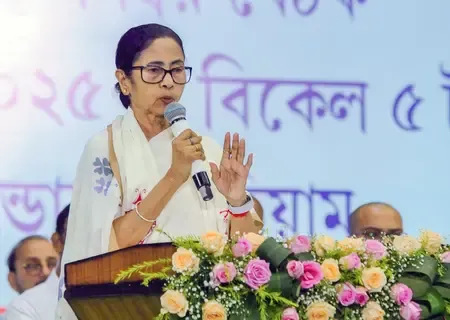
West Bengal Chief Minister Mamata Banerjee on Monday, July 20, 2026, sharply condemned what she called police brutality against students and youth in Delhi, demanding accountability from the central government and expressing solidarity with the protesters.
Context
In a post on X, Banerjee wrote: 'I strongly condemn the police brutality unleashed on our youth and students in Delhi today. What kind of government fears its own students? What kind of democracy responds to questions with batons and tear gas instead of dialogue?' She saluted the students for their 'courage, resilience and indomitable spirit,' declaring that 'dissent is not a crime' and 'brutality is not governance.'
The statement came in the backdrop of a demonstration in Delhi on July 20 that reportedly saw police deploy force against student protesters. The precise nature and trigger of the protest have not been independently confirmed.
Policy Backdrop
Banerjee has a consistent record of opposing central government responses to mass agitations. She was among the most vocal critics during the 2019–2020 student-led protests against the Citizenship Amendment Act, and again during the 2020–2021 farmers' agitation at Delhi's borders, when she publicly questioned the government's handling of demonstrators.
Opposition chief ministers have repeatedly used such moments to highlight centre-state tensions over law-and-order powers, since policing in Delhi falls under central jurisdiction rather than the elected state government. These statements form part of a wider pattern of federal political contestation on civil liberties and the right to dissent.
Stakeholders and Impact
The immediate stakeholders are Delhi's student community and youth organisations, whose members were at the centre of the police action. Banerjee's intervention signals that the episode is likely to draw coordinated opposition responses, with regional parties and national opposition leaders potentially joining in demanding answers from the Ministry of Home Affairs and Delhi Police.
The All India Trinamool Congress, founded by Banerjee in 1998 and the ruling party in West Bengal, has historically positioned itself as a defender of civil liberties and federal autonomy — a stance that resonates with its electoral base and also with broader opposition coalitions ahead of legislative sessions.
What's Next
Attention will now turn to whether the Ministry of Home Affairs or Delhi Police issue a formal response to the criticism. Coordinated statements from other opposition-ruled states could amplify pressure and push the matter into parliamentary debate.
If opposition parties move notices in upcoming assembly or parliamentary sessions, the July 20 incident could become a flashpoint in the broader national conversation about the limits of state force and the constitutional right to peaceful protest — a debate that has resurfaced repeatedly since the CAA agitations of 2019.
Point of View
Opposition chief ministers — particularly those heading regional parties with national ambitions — use the moment to frame the ruling dispensation as authoritarian. By invoking farmers, women, and workers alongside students, she is deliberately broadening the solidarity coalition beyond campus politics. The timing, ahead of likely parliamentary and assembly sessions, suggests the statement is designed to seed a legislative offensive. Whether it translates into sustained pressure or fades as a one-day news cycle will depend on how many opposition leaders coordinate around the same narrative.
NationPress
21 Jul 2026
Frequently Asked Questions
Why did Mamata Banerjee condemn Delhi police action on July 20 2026?
Mamata Banerjee condemned what she described as police brutality — use of batons and tear gas — against student and youth protesters in Delhi on July 20, 2026, calling it undemocratic and demanding accountability.
What did Mamata Banerjee say about the Delhi student protest?
She said 'dissent is not a crime' and 'brutality is not governance,' saluted the students for their courage and resilience, and declared that the nation belongs to its students, farmers, women, and workers.
Has Mamata Banerjee opposed Delhi police action before?
Yes. She publicly opposed the central government's handling of the 2019–2020 CAA student protests and the 2020–2021 farmers' agitation at Delhi's borders, making this part of a consistent pattern.
Who controls Delhi Police and why does that matter?
Delhi Police falls under the jurisdiction of the central government, not the elected Delhi state government. This makes any police action in Delhi a potential centre-state political flashpoint.
What happens next after Mamata Banerjee's statement on Delhi students?
Observers are watching for a formal response from the Ministry of Home Affairs or Delhi Police, and for coordinated statements by other opposition leaders that could push the matter into parliamentary debate.