Mamata Banerjee slams BJP's hawker eviction drive on International Hawkers Day
Synopsis
On International Hawkers Day, Mamata Banerjee went beyond political point-scoring — she invoked the Street Vendors Act 2014, Supreme Court precedent, and Article 21 to frame BJP's eviction drives in West Bengal as a constitutional violation, not just a policy dispute. The move positions hawker rights as a central TMC battleground ahead of the next electoral cycle.
Key Takeaways
Mamata Banerjee condemned the BJP government in West Bengal on Tuesday over eviction drives against street vendors and hawkers.
Banerjee posted on X that she was 'angry and deeply pained' at the treatment of the hawker community.
She cited the Street Vendors (Protection of Livelihood and Regulation of Street Vending) Act, 2014 and Supreme Court rulings upholding hawkers' rights under Articles 19(1)(g) and 21 .
Banerjee called for hawker management through democratic Town Vending Committees (TVCs) rather than arbitrary evictions.
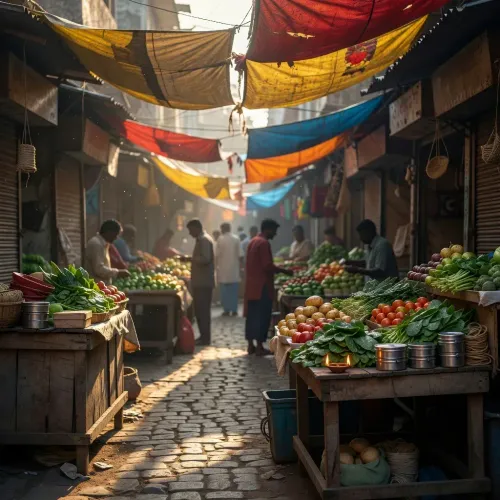
She argued that well-planned cities should integrate vendors into structured municipal markets, not displace them.
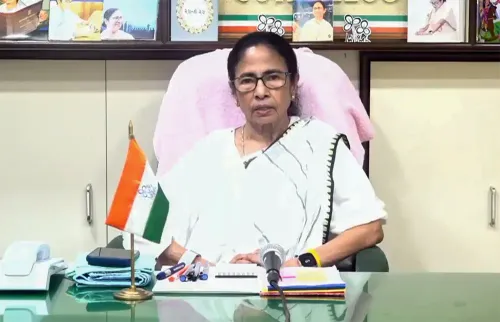
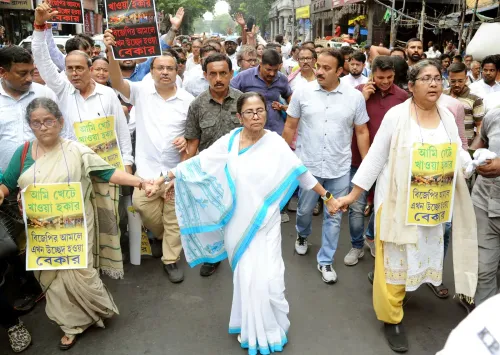
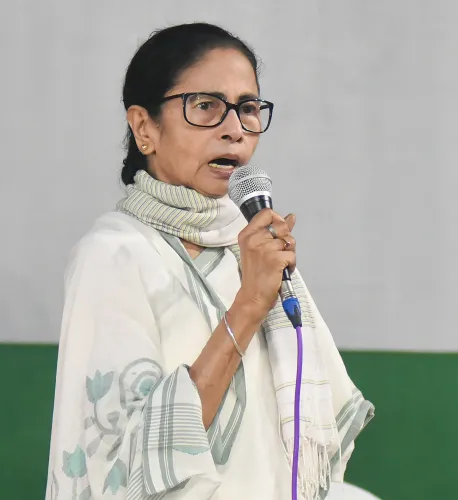
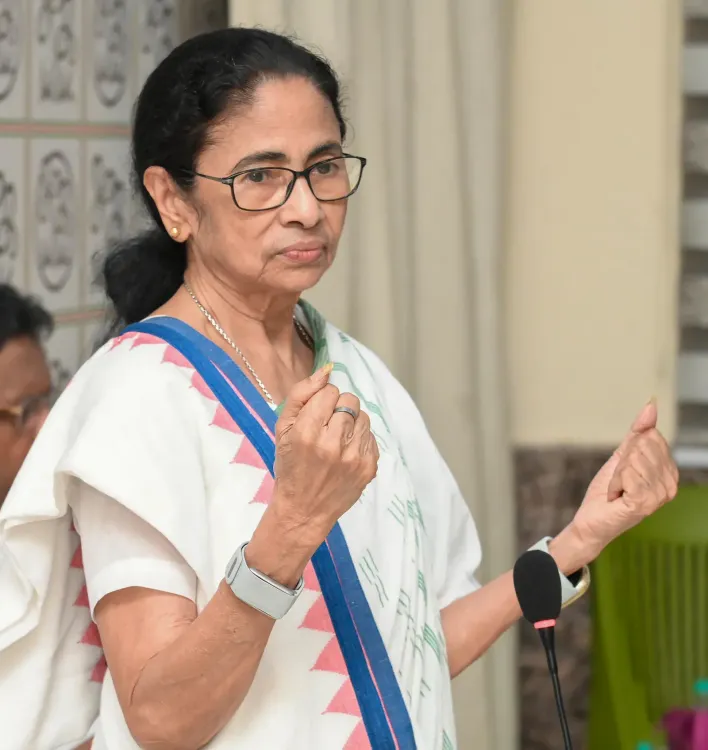
Trinamool Congress (TMC) supremo and former Chief Minister Mamata Banerjee on Tuesday launched a sharp attack on the Bharatiya Janata Party (BJP) government in West Bengal over its ongoing eviction drives targeting street vendors and hawkers, calling the action an assault on constitutional rights and the informal economy.
Banerjee's Condemnation
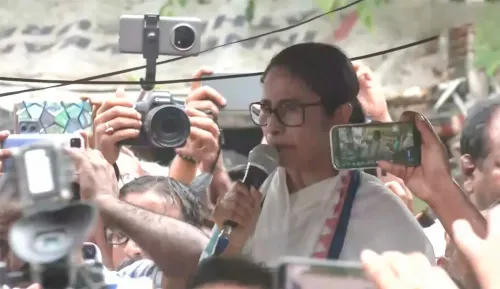
In a post on X, Banerjee stated she was 'angry and deeply pained' at the treatment being meted out to hawkers. Marking International Hawkers Day, she said: 'The BJP government had unleashed atrocities on hawkers shortly after coming to power, demolishing their stalls and forcing them onto the streets without regard for their distress. Those who oppress will certainly face the consequences. I was, am, and will always stand by you.'
Legal and Constitutional Grounds
Banerjee invoked the Street Vendors (Protection of Livelihood and Regulation of Street Vending) Act, 2014, which was enacted specifically to shield hawkers from arbitrary displacement. She also cited a series of Supreme Court judgments that recognise the constitutional right to livelihood under Articles 19(1)(g) and 21 of the Indian Constitution.
She argued that 'sudden or arbitrary eviction of the right to livelihood without any opportunity for review or alternative arrangements is a violation of Article 21 (Right to Life and Livelihood) of the Constitution.' She called for hawker management to be routed through democratic bodies such as the Town Vending Committee (TVC), so that vendors' voices are embedded in urban planning decisions.
Role of Hawkers in the Economy
The TMC chief used the occasion to highlight the economic significance of the informal vending sector, describing street hawkers as 'the symbol of the grassroots economy.' She noted that vendors simultaneously connect daily consumer needs to large-scale production systems while delivering essential goods at affordable prices to ordinary households.
Banerjee acknowledged that a balance must be maintained between the survival of the hawking ecosystem and the demands of urban planning — but argued the solution lies in integrating vendors into structured municipal markets, not displacing them.
Broader Context
This comes amid a wider political battle between the BJP and the TMC over governance in West Bengal, with both parties regularly trading accusations over civic administration. The eviction of street vendors has historically been a flashpoint in Indian cities, pitting urban development priorities against the livelihoods of millions in the informal sector. International Hawkers Day is observed annually to recognise the contributions of street vendors and small traders who form the backbone of local economies across the country.
With assembly elections on the horizon and the BJP's footprint in West Bengal under scrutiny, Banerjee's public intervention signals that hawker rights will remain a key mobilisation issue for the TMC going forward.
Point of View
Making its invocation against a BJP government a pointed piece of political messaging. The deeper tension is structural: Indian cities have never resolved the conflict between formal urban planning and the informal economy that employs tens of millions. As long as Town Vending Committees remain under-resourced and politically subordinate, hawker evictions will recur regardless of which party holds power — and politicians on both sides will continue to exploit the cycle.
NationPress
10 Oct 2026
Frequently Asked Questions
Why did Mamata Banerjee condemn the hawker eviction drive?
Mamata Banerjee condemned the BJP government in West Bengal for demolishing hawker stalls and evicting street vendors, calling it a violation of the constitutional right to livelihood under Article 21. She made the remarks on International Hawkers Day, describing the evictions as arbitrary and unconstitutional.
What legal protections exist for street vendors in India?
The Street Vendors (Protection of Livelihood and Regulation of Street Vending) Act, 2014 protects hawkers from arbitrary eviction and mandates the formation of Town Vending Committees to manage vendor rights. The Supreme Court has also upheld hawkers' right to livelihood under Articles 19(1)(g) and 21 of the Constitution.
What is International Hawkers Day?
International Hawkers Day is observed annually to recognise the contributions of street vendors, hawkers, and small traders in the informal sector. It highlights their role as a backbone of local economies, linking consumer demand to large-scale production at affordable prices.
What solution did Mamata Banerjee propose for hawker management?
Banerjee argued that the goal of a well-planned city should be to integrate hawkers into structured municipal markets rather than evict them. She called for hawker rights to be managed through democratic Town Vending Committees so that vendors' perspectives are reflected in urban planning decisions.
How does this fit into the broader BJP-TMC political rivalry?
The hawker eviction row is part of an ongoing political battle between the BJP and the TMC over governance in West Bengal. With elections approaching, Banerjee's public defence of street vendors signals that informal-sector livelihoods will be a key mobilisation issue for the TMC.